wetland wildflower
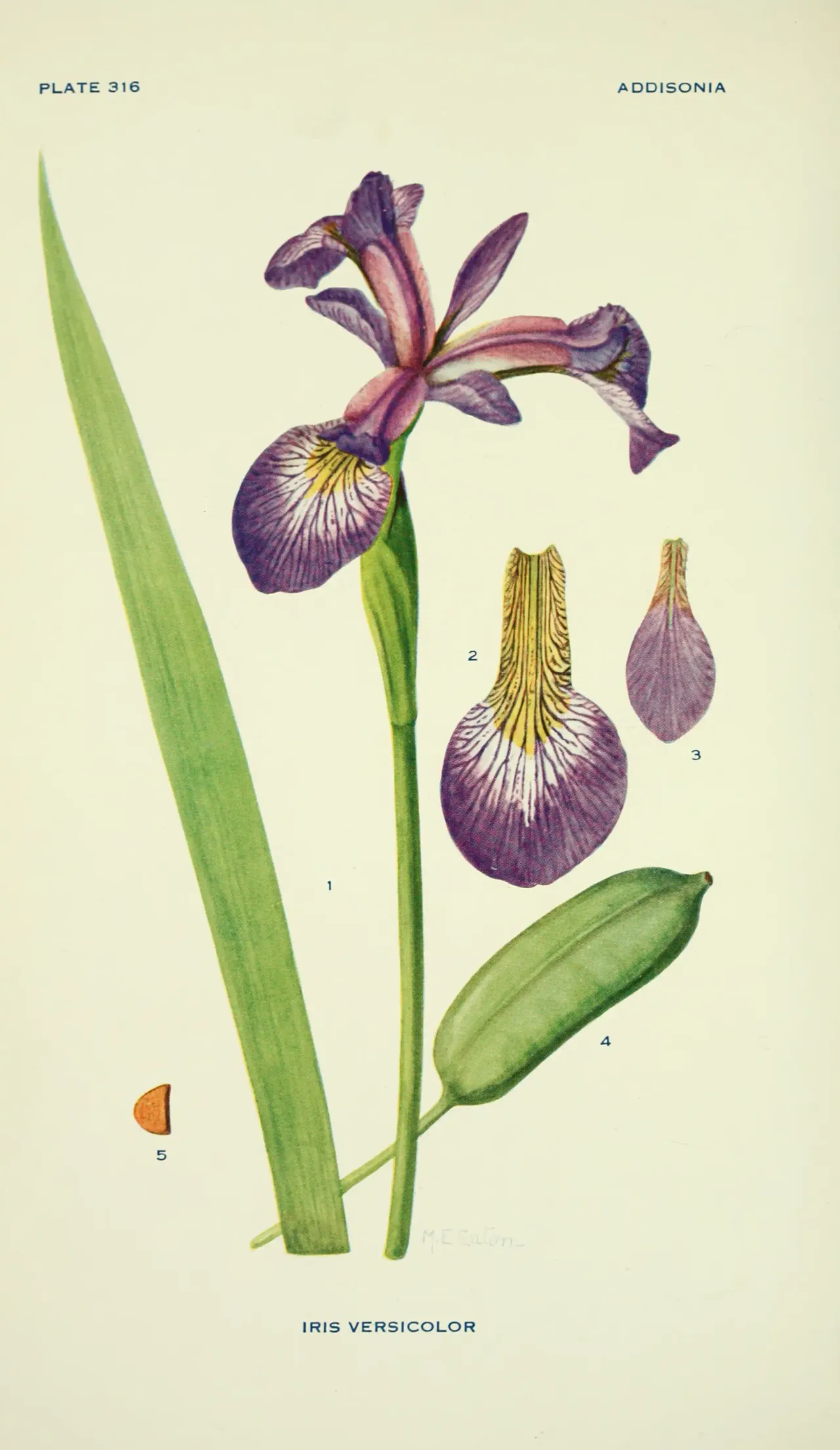
Northern blue flag
Iris versicolor
Also known as Harlequin Blueflag, Large Blue Iris
 1 of 2
Native to the Northeast and the Midwest and southern Canada
Southern Labrador to Man, south to western Virginia, northern Ohio, Michigan and Minnesota
- Light Full sun to part shade Sun tolerance
- Moisture Moist to wet Moisture preference
- Zones 2–8 Cold to heat range
- Bloom May–Jul Flowering time
- Height up to 3 ft to 0.9 m
- Life cycle Perennial Annual to perennial
In the garden
A wetland wildflower for full sun to part shade and consistently moist to wet soil. Its blue and purple flowers peak in June. At up to 3 ft, it suits rain gardens, pond edges, and damp low spots. Hardy in USDA zones 2–8.
Growing conditions
Light
Full sun Partial shade Full shade
Moisture
Dry Moist Wet
Hardiness zones
Find your zone:
When it blooms
The Northern blue flag's blue and purple flowers bloom May to July, peaking in June. This early-summer display draws bees and butterflies.
Northern blue flag blooms blue & purpleFoliage
Pollinators & wildlife
- Bees Common Eastern Bumble Bee
also Western Honey Bee, Eastern Carpenter Bee, Brown-belted Bumble Bee +33 more
Two-spotted Bumble Bee, American Bumble Bee, Ligated Furrow Bee, Tricolored Bumble Bee, Pure Green Sweat bee, Bombus fervidus, Black-and-gold Bumble Bee, Orange-legged Furrow Bee, Agapostemon texanus, Northern Amber Bumble Bee, Spurred Ceratina, Orange-tipped Wood-digger, Bufflehead Mason Bee, Patchwork Leafcutter Bee, Say's Cuckoo Leafcutter Bee, Agile Longhorn Bee, Ceratina dupla, Ceratina mikmaqi, Anthophora ursina, Cyclops Blood Bee, Experienced Sweat Bee, Lasioglossum cinctipes, Illinois Sweat Bee, False Sunflower Cuckoo Nomad Bee, Eucera rosae, Goatsbeard Miner Bee, Leioproctus clypeatus, Waterleaf Mining Bee, Denticulate Nomad, Andrena miserabilis, Lasioglossum zonulum, Garden Bumble Bee, Tetragona dissecta - Butterflies Monarch
also Pearl Crescent, Silver-spotted Skipper, Spicebush Swallowtail +12 more
Viceroy, Zabulon Skipper, Peck's Skipper, Canadian Tiger Swallowtail, Hobomok Skipper, Atlantis Fritillary, Long Dash, American Silver-bordered Fritillary, Arctic Skipper, Indian Skipper, Two-spotted Skipper, Atrytone delaware - Beetles Yellow Velvet Beetle
also Lined Longhorn Beetle, Bee-mimic Beetle, Stripe-legged Long-horned Beetle +2 more
Pseudotolida lutea, Downy Long-horned Beetle - Also visited by
- Flower flies:
Black-shouldered Drone Fly, Yellow-shouldered Drone Fly +4 more
Hairy-eyed Bee-mimic Fly, Dusky Bog Fly, Eurimyia stipatus, Parhelophilus laetus - Moths:
Virginian Tiger Moth, Hummingbird Clearwing +3 more
Nessus Sphinx, White-spotted Sable, Slender Clearwing - Wasps: Euodynerus foraminatus
- Hummingbirds: Ruby-throated Hummingbird
- Flower flies:
Butterflies that use this plant
Documented host and nectar records. Each links to a planting guide for that butterfly.
- Canadian tiger swallowtailnectar
- Eastern tiger swallowtailnectar
- Monarch butterflynectar
- Pearl crescentnectar
- Silver-bordered fritillarynectar
- Silver-spotted skippernectar
- Spicebush swallowtailnectar
- Viceroynectar
Full plant details
Where it grows
- Habitat
- WetlandThe wild plant community it grows in.
- Native range
- The Northeast and the Midwest and southern CanadaUnited States (18): CT, DC, DE, IL, MA, MD, ME, MI, MN, NH, NJ, NY, OH, PA, RI, VA, VT, WI. Canada (7): MB, NB, NL, NS, ON, PE, QC. Where it grows wild on its own, by state and province.
- Native distribution
- Southern Labrador to Man, south to western Virginia, northern Ohio, Michigan and MinnesotaThe same native range, usually more exact than the state list, and often noting where it has spread beyond it.
Growing conditions
- Light
- Full sun to part shadeHow much sun it takes, from full sun to full shade.
- Moisture
- Moist to wetThe soil dampness it prefers, from dry to wet.
- Hardiness zones
- USDA 2–8 · Canadian 1–7The cold-to-heat climate range it survives.
- Soil
- Moist, rich soilsThe soils it grows in naturally.
- Soil texture
- Light to medium (sandy to loamy)The soil grade it prefers, from sand to clay.
- Soil pH
- Mildly acid to mildly alkalineThe acidity to alkalinity it tolerates (7 is neutral).
Growth & form
- Height
- up to 3 ft (to 0.9 m)Typical mature height.
- Spread
- ~3 ft (1 m)How wide one plant gets, a guide to spacing.
- Life cycle
- PerennialWhether it lives a single season (annual), two (biennial), or returns for years (perennial).
Flowers, foliage & fruit
- Type
- WildflowerWhat kind of plant it is.
- Bloom
- May–JulWhen it flowers.
- Flower color
- Blue, PurpleThe bloom color, or colors.
- Fruit/Seeds
- Capsule; ripens Jun–OctThe seed or fruit it sets after flowering.
- Toxicity
- Poisonous if eatenWhether any part is poisonous to people or pets.