prairie wildflower
Orange coneflower
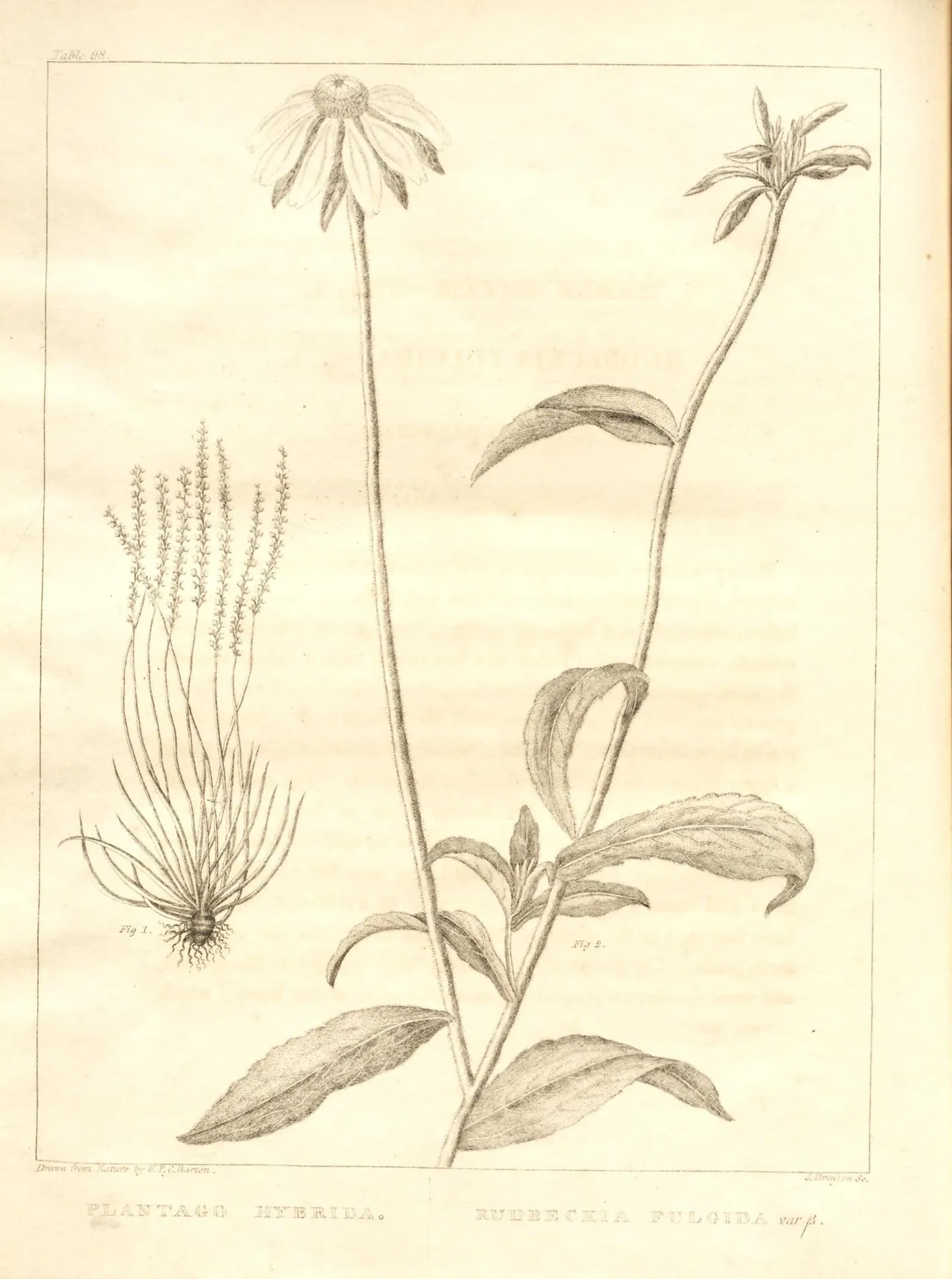
Rudbeckia fulgida
Also known as Orange Rudbeckia, Perennial Black-eyed Susan, Goldsturm
 1 of 2
Native to much of the USA
New Jersey to Indiana, south to Florida and eastern Texas
- Light Full sun Sun tolerance
- Moisture Moist Moisture preference
- Zones 4–9 Cold to heat range
- Bloom Jul–Oct Flowering time
- Height up to 4 ft to 1.2 m
- Life cycle Perennial Annual to perennial
In the garden
A prairie wildflower for full sun and evenly moist soil. At up to 4 ft, it suits meadows and sunny borders. Hardy in USDA zones 4–9.
Growing conditions
Light
Full sun Partial shade Full shade
Moisture
Dry Moist Wet
Hardiness zones
Find your zone:
Pollinators & wildlife
- Bees Common Eastern Bumble Bee
also Western Honey Bee, Eastern Carpenter Bee, Brown-belted Bumble Bee +37 more
Ligated Furrow Bee, Tricolored Bumble Bee, Bicolored Striped Sweat Bee, Pure Green Sweat bee, Red-belted Bumble Bee, Two-spotted Longhorn Bee, Fuzzy-Horned Bumble Bee, Half-black Bumble Bee, Orange-legged Furrow Bee, Lemon Cuckoo Bumble Bee, Brown-winged Striped Sweat Bee, Carpenter-mimic Leafcutter Bee, Poey's Furrow Bee, Confusing Furrow Bee, Dark-veined Longhorn Bee, broad-handed leafcutter bee, Southern Plains Bumble Bee, Pugnacious Leafcutter Bee, Lucorum-group Bumble Bees, Louisiana Painted-Dark bee, Megachile albitarsis, Calliopsis Cuckoo Nomad Bee, Hylaeus affinis, Sandhills Longhorn bee, Megachile inimica sayi, Red-tailed Bumble Bee, Sunflower Burrowing-Resin bee, Svastra obliqua, Early Bumble Bee, Common Carder Bumble Bee, Drury's Long-horned Bee, Melissodes microsticta, Tree Bumble Bee, Forest Cuckoo Bumble bee, Halictidae sp., Halictus sp., Lunate Longhorn-cuckoo Bee - Butterflies Monarch
also Gulf Fritillary, Pearl Crescent, Common Buckeye +18 more
Fiery Skipper, Painted Lady, Gray Hairstreak, American Lady, Orange Sulphur, Variegated Fritillary, Zabulon Skipper, Cloudless Sulphur, Peck's Skipper, Horace's Duskywing, Red-banded Hairstreak, American Copper, Common Sootywing, Small Copper, European Comma, Silvery Checkerspot, Zebra Longwing, Little Yellow - Flower flies Margined Calligrapher
also Eastern Calligrapher, Common Drone Fly, Transverse-banded Flower Fly +10 more
Long-tailed Aphideater, Thick-legged Hover Fly, Black-shouldered Drone Fly, Virginia Giant Hover Fly, Northern Plushback, Hunchbacked Bee Fly, Adorned Bee Fly, Broad-banded Aphideater, Paravilla separata, Platycheirus scutatus - Also visited by
- Moths:
Elegant Grass-veneer, Yellow-collared Scape Moth +9 more
Lucerne Moth, Orange Mint Moth, Orange-spotted Flower Moth, Pyrausta acrionalis, Giant Leopard Moth, Drab Brown Wave, Blackberry Looper Moth, Celery Leaftier Moth, Hawaiian Beet Webworm Moth - Wasps:
Perennial Mason Wasp, European tube wasp +4 more
Euodynerus hidalgo boreoorientalis, Parancistrocerus histrio, Hidalgo Mason Wasp, Zethus spinipes - Beetles: Goldenrod Soldier Beetle, Shield-backed Cryptocephalus
- Moths:
Butterflies that use this plant
Documented host and nectar records. Each links to a planting guide for that butterfly.
- Silvery checkerspothost & nectar
- Gorgone checkerspotcaterpillar host
- American coppernectar
- American ladynectar
- Banded hairstreaknectar
- Cloudless sulphurnectar
- Common buckeyenectar
- Fiery skippernectar
- Gray hairstreaknectar
- Gulf fritillarynectar
- Little yellownectar
- Monarch butterflynectar
- Orange sulphurnectar
- Painted ladynectar
- Pearl crescentnectar
- Red-banded hairstreaknectar
- Variegated fritillarynectar
Full plant details
Where it grows
- Habitat
- PrairieThe wild plant community it grows in.
- Native range
- Much of the USAUnited States (23): AL, AR, DC, DE, FL, GA, IL, IN, KY, MD, MO, MS, NC, NJ, NY, OH, OK, PA, SC, TN, TX, VA, WV. Where it grows wild on its own, by state and province.
- Native distribution
- New Jersey to Indiana, south to Florida and eastern TexasThe same native range, usually more exact than the state list, and often noting where it has spread beyond it.
Growing conditions
- Light
- Full sunHow much sun it takes, from full sun to full shade.
- Moisture
- MoistThe soil dampness it prefers, from dry to wet.
- Hardiness zones
- USDA 4–9 · Canadian 5–7The cold-to-heat climate range it survives.
- Soil
- Various soilsThe soils it grows in naturally.
Growth & form
- Height
- up to 4 ft (to 1.2 m)Typical mature height.
- Life cycle
- PerennialWhether it lives a single season (annual), two (biennial), or returns for years (perennial).
Flowers, foliage & fruit
- Type
- WildflowerWhat kind of plant it is.
- Bloom
- Jul–OctWhen it flowers.
- Flower color
- Orange, YellowThe bloom color, or colors.
- Fruit/Seeds
- AcheneThe seed or fruit it sets after flowering.
- Toxicity
- None knownWhether any part is poisonous to people or pets.