prairie wildflower
Prairie milkweed
Asclepias sullivantii
Also known as Sullivant's Milkweed, Smooth Milkweed
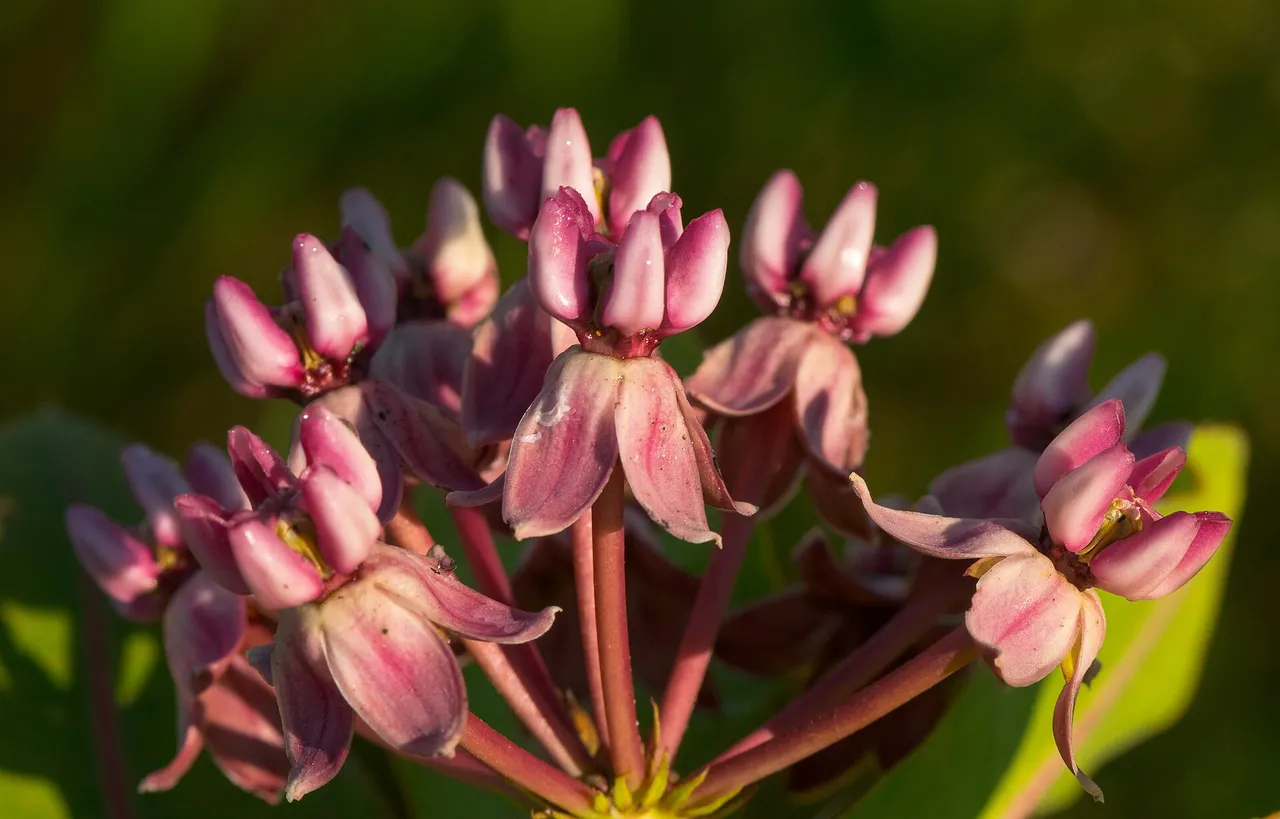
Native to the Midwest and southern Canada
Southern Ontario to Minnesota, south to Ohio, Kentucky, northern Arkansas and eastern Kansas
- Light Full sun Sun tolerance
- Moisture Moist to wet Moisture preference
- Zones 4–7 Cold to heat range
- Bloom Jun–Aug Flowering time
- Height up to 3 ft to 0.9 m
- Life cycle Perennial Annual to perennial
In the garden
A prairie wildflower for full sun and consistently moist to wet soil. Its pink flowers peak in July. At up to 3 ft, it suits meadows and sunny borders. Hardy in USDA zones 4–7.
Growing conditions
Light
Full sun Partial shade Full shade
Moisture
Dry Moist Wet
Hardiness zones
Find your zone:
When it blooms
The Prairie milkweed's pink flowers bloom June to August, peaking in July. This midsummer display draws bees and butterflies.
Prairie milkweed blooms pinkFoliage
Pollinators & wildlife
- Bees Brown-belted Bumble Bee
also Western Honey Bee, American Bumble Bee, Ligated Furrow Bee +37 more
Pure Green Sweat bee, Bombus fervidus, Black-and-gold Bumble Bee, Orange-legged Furrow Bee, Agapostemon texanus, Flat-tailed Leafcutter Bee, Sculptured Resin Bee, Golden Sweat Bee, broad-handed leafcutter bee, Southern Plains Bumble Bee, Orange-tipped Wood-digger, Pugnacious Leafcutter Bee, Texas Leafcutter Bee, Bristle Sweat Bee, Patchwork Leafcutter Bee, Petulant Leafcutter Bee, Worthy Longhorn, Least Cellophane-cuckoo Bee, Megachile brevis, Ceratina dupla, Experienced Sweat Bee, Triepeolus cressonii, Illinois Sweat Bee, Colorado Calliopsis Bee, Variable Cuckoo Bumble Bee, Tickseed Longhorn Bee, Two-banded Cellophane-cuckoo Bee, Pseudopanurgus labrosus, Tetragona dissecta, Eastern Cuckoo Sweat Bee, cranberry leafcutter bee, Sphecodes dichrous, Augochlora nominata, Coelioxys brevis, Lasioglossum tegulare, Peponapis pruinosa, Sphecodes confertus - Butterflies Monarch
also Red Admiral, Pearl Crescent, Great Spangled Fritillary +7 more
Clouded Sulphur, Indian Red Admiral, Speyeria cybele, Polites coras, Elkalyce comyntas, Anosia plexippus, Thorybes pylades - Flower flies Thick-legged Hover Fly
also Common Lagoon Fly, Yellow-legged Bog Fly, Scar-horned Blacklet +4 more
White-haired Pithead, Epistrophe emarginata, Ocyptamus costatus, Tropidia quadrata - Also visited by
- Beetles:
Pubescent Tumbling Flower Beetle, Onthophagus pennsylvanicus +2 more
Double-lined Longhorn Beetle, Chlorophorus glaucus - Hummingbirds: Ruby-throated Hummingbird
- Moths: Snowberry Clearwing
- Beetles:
Butterflies that use this plant
Documented host and nectar records. Each links to a planting guide for that butterfly.
- Monarch butterflyhost & nectar
- Queencaterpillar host
- Clouded sulphurnectar
- Great spangled fritillarynectar
- Pearl crescentnectar
- Red admiralnectar
Full plant details
Where it grows
- Habitat
- PrairieThe wild plant community it grows in.
- Native range
- The Midwest and southern CanadaUnited States (11): AR, IA, IL, IN, KS, MI, MN, MO, NE, OH, WI. Canada (1): ON. Where it grows wild on its own, by state and province.
- Native distribution
- Southern Ontario to Minnesota, south to Ohio, Kentucky, northern Arkansas and eastern KansasThe same native range, usually more exact than the state list, and often noting where it has spread beyond it.
Growing conditions
- Light
- Full sunHow much sun it takes, from full sun to full shade.
- Moisture
- Moist to wetThe soil dampness it prefers, from dry to wet.
- Hardiness zones
- USDA 4–7 · Canadian 5–7The cold-to-heat climate range it survives.
- Soil
- Various moist soilsThe soils it grows in naturally.
- Soil texture
- Light (sandy)The soil grade it prefers, from sand to clay.
- Soil pH
- Mildly acid to mildly alkalineThe acidity to alkalinity it tolerates (7 is neutral).
- Water use
- MediumHow thirsty it is, a rough guide to how often to water.
Growth & form
- Height
- up to 3 ft (to 0.9 m)Typical mature height.
- Life cycle
- PerennialWhether it lives a single season (annual), two (biennial), or returns for years (perennial).
Flowers, foliage & fruit
- Type
- WildflowerWhat kind of plant it is.
- Bloom
- Jun–AugWhen it flowers.
- Flower color
- PinkThe bloom color, or colors.
- Fruit/Seeds
- Follicle (seed pod); ripens Jul–SepThe seed or fruit it sets after flowering.
- Toxicity
- None knownWhether any part is poisonous to people or pets.