woodland wildflower
Prairie phlox
Phlox pilosa
Also known as Downy Phlox, Fragrant Phlox
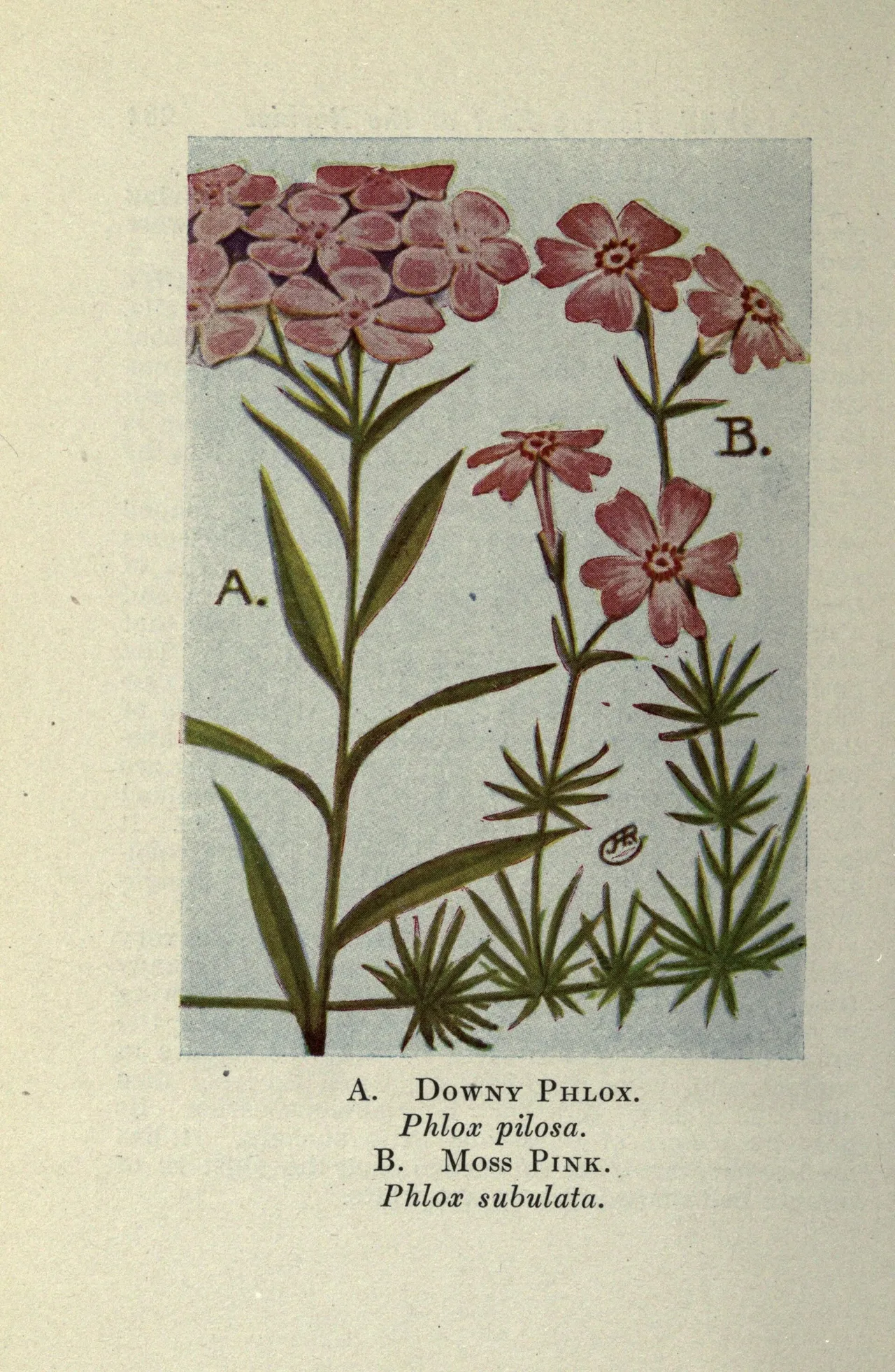 1 of 2
Native to much of the USA
Connecticut south to Florida, west to eastern North Dakota, south through the eastern part of the prairie states to most of Oklahoma and Texas as far as west Texas, south into Coahuila
- Light Full sun to part shade Sun tolerance
- Moisture Dry Moisture preference
- Zones 4–9 Cold to heat range
- Bloom Mar–May Flowering time
- Height up to 2 ft to 0.6 m
- Life cycle Perennial Annual to perennial
In the garden
A woodland wildflower for full sun to part shade and lean, dry soil. At up to 2 ft, it suits shade gardens and woodland edges. Hardy in USDA zones 4–9.
Growing conditions
Light
Full sun Partial shade Full shade
Moisture
Dry Moist Wet
Hardiness zones
Find your zone:
Pollinators & wildlife
- Bees Common Eastern Bumble Bee
also Eastern Carpenter Bee, American Bumble Bee, Tricolored Bumble Bee +13 more
Black-and-gold Bumble Bee, Eastern Thistle Longhorn Bee, Anthophora ursina, Nomada superba, Triepeolus cressonii, Cresson's Nomad Bee, False Sunflower Cuckoo Nomad Bee, Broad-faced Masked Bee, Forbes's Sweat Bee, Denticulate Nomad, Coelioxys modesta, Blueberry Digger Bee, Tetragona dissecta - Butterflies Monarch
also Pearl Crescent, Silver-spotted Skipper, American Lady +11 more
Orange Sulphur, Clouded Sulphur, Eastern Black Swallowtail, Peck's Skipper, Least Skipper, Dusted Skipper, Papilio cresphontes, Cynthia cardui, Thorybes daunus, Polites coras, Thorybes pylades - Flower flies Wavy Mucksucker also Bombylius atriceps, Maize Calligrapher
- Also visited by
- Moths:
Yellow-collared Scape Moth, Nessus Sphinx +1 more
Celery Looper Moth - Beetles: Zebra Longhorn Beetle, Acmaeodera tubulus
- Moths:
Butterflies that use this plant
Documented host and nectar records. Each links to a planting guide for that butterfly.
- American ladynectar
- Black swallowtailnectar
- Clouded sulphurnectar
- Giant swallowtailnectar
- Monarch butterflynectar
- Orange sulphurnectar
- Pearl crescentnectar
- Silver-spotted skippernectar
Full plant details
Where it grows
- Habitat
- WoodlandThe wild plant community it grows in.
- Native range
- Much of the USAUnited States (33): AL, AR, CT, DC, DE, FL, GA, IA, IL, IN, KS, KY, LA, MD, MI, MN, MO, MS, NC, ND, NE, NJ, NY, OH, OK, PA, SC, SD, TN, TX, VA, WI, WV. Where it grows wild on its own, by state and province.
- Native distribution
- Connecticut south to Florida, west to eastern North Dakota, south through the eastern part of the prairie states to most of Oklahoma and Texas as far as west Texas, south into CoahuilaThe same native range, usually more exact than the state list, and often noting where it has spread beyond it.
Growing conditions
- Light
- Full sun to part shadeHow much sun it takes, from full sun to full shade.
- Moisture
- DryThe soil dampness it prefers, from dry to wet.
- Hardiness zones
- USDA 4–9 · Canadian 4–7The cold-to-heat climate range it survives.
- Soil
- Sandy or rocky, well-drained soilsThe soils it grows in naturally.
- Water use
- LowHow thirsty it is, a rough guide to how often to water.
Growth & form
- Height
- up to 2 ft (to 0.6 m)Typical mature height.
- Life cycle
- PerennialWhether it lives a single season (annual), two (biennial), or returns for years (perennial).
Flowers, foliage & fruit
- Type
- WildflowerWhat kind of plant it is.
- Bloom
- Mar–MayWhen it flowers.
- Flower color
- White, Pink, PurpleThe bloom color, or colors.
- Fruit/Seeds
- CapsuleThe seed or fruit it sets after flowering.
- Toxicity
- None knownWhether any part is poisonous to people or pets.