prairie wildflower
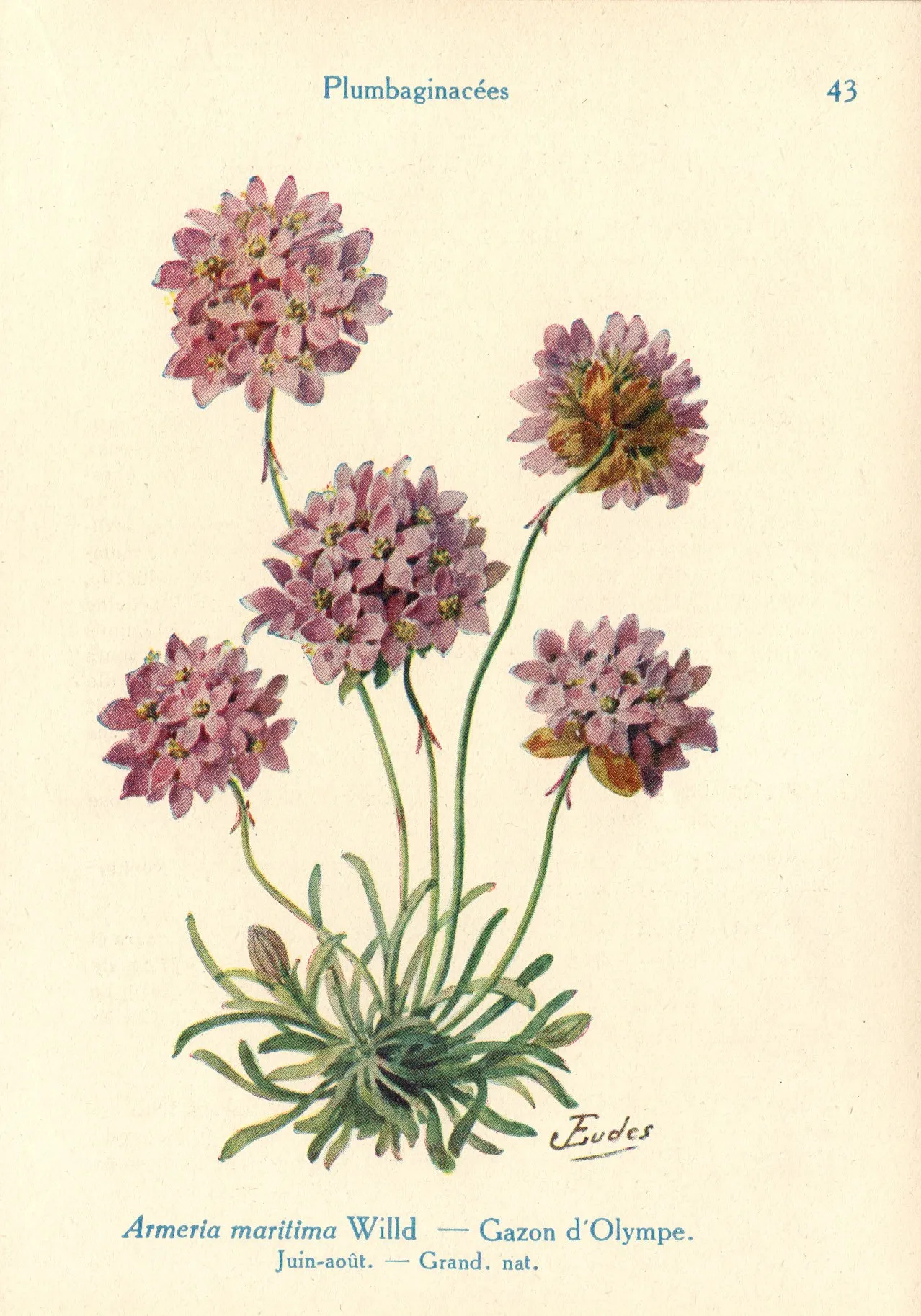
Sea Thrift
Armeria maritima
Also known as Thrift Seapink
 1 of 2
Native to Alaska, California, Oregon, and Washington and Canada
Circumpolar, southern in the U.S. from the Aleutian Islands along the Pacific Coast to southern California.
- Light Full sun Sun tolerance
- Moisture Dry to moist Moisture preference
- Zones 1–10 Cold to heat range
- Bloom Mar–Jul Flowering time
- Height up to 2 ft to 0.6 m
- Life cycle Perennial Annual to perennial
In the garden
A prairie wildflower for full sun and dry to moist soil. At up to 2 ft, it suits meadows and sunny borders. It shrugs off drought once established. Hardy in USDA zones 1–10.
Growing conditions
Light
Full sun Partial shade Full shade
Moisture
Dry Moist Wet
Hardiness zones
Find your zone:
Pollinators & wildlife
- Butterflies Monarch
also Painted Lady, Spicebush Swallowtail, Gray Buckeye +43 more
Woodland Skipper, Polyommatus icarus, Zerene Fritillary, Old World Swallowtail, Hecla Sulphur, Large White, Silver-washed Fritillary, Chequered Skipper, Small Copper, Large Skipper, Common Branded Skipper, Marbled White, Silver-studded Blue, Ringlet, Map, Green Hairstreak, Meadow Brown, Small Heath, Nymphalis urticae, Coenonympha iphis, Eastern Bath White, Common Brimstone, Aricia agestis, Mellicta britomartis, Mazarine Blue, Large Copper, Speyeria aglaja, Dingy Skipper, Lysandra coridon, Lulworth Skipper, Thymelicus sylvestris, Heath Fritillary, Queen of Spain Fritillary, Small Tortoiseshell, Green-veined White, Loweia tityrus, European Peacock Butterfly, Glanville Fritillary, Purple-shot Copper, Erebia alberganus, Argynnis zerene puntareyes, Clossiana chariclea, Atalopedes campestris - Bees Yellow-faced Bumble Bee
also Western Honey Bee, Tricolored Bumble Bee, Black-tailed Bumble Bee +37 more
Orange-legged Furrow Bee, Agapostemon texanus, Wilke's Mining Bee, Lucorum-group Bumble Bees, Patchwork Leafcutter Bee, Long-lipped Miner, Hairy masked Bee, Ashy Mining Bee, Buff-tailed Bumble Bee, Black-headed Leafcutter Bee, Red-tailed Bumble Bee, Black Mining Bee, Yellow-legged Mining Bee, Grey-patched Mining Bee, Buffish Mining Bee, Green Furrow Bee, White-banded Sweat Bee, Gold-fringed Mason Bee, Gooden's Nomad Bee, Andrena similis, Bare-saddled Blood Bee, Early Mining Bee, Cliff Mining Bee, Bloomed Furrow Bee, Garden Bumble Bee, Welted Mason Bee, Orange-horned Nomad Bee, Painted Nomad Bee, Small Gorse Mining Bee, Silvery Leafcutter Bee, Smeathman's Furrow Bee, Early Bumble Bee, Stelis signata, Forest Cuckoo Bumble bee, Common Carder Bumble Bee, Panzer's Nomad Bee, Bombus vancouverensis vancouverensis - Flower flies Margined Calligrapher
also Common Drone Fly, The Merodon equestris Group, Common Lagoon Fly +4 more
Woolly-tailed Marsh Fly, Migrant Hover Fly, Common Globetail, Marmalade Hover Fly - Also visited by
- Moths: Thrift Clearwing
Butterflies that use this plant
Documented host and nectar records. Each links to a planting guide for that butterfly.
- Common buckeyenectar
- Common ringletnectar
- Monarch butterflynectar
- Painted ladynectar
- Queennectar
- Silver-bordered fritillarynectar
- Spicebush swallowtailnectar
Full plant details
Where it grows
- Habitat
- PrairieThe wild plant community it grows in.
- Native range
- Alaska, California, Oregon, and Washington and CanadaUnited States (4): AK, CA, OR, WA. Canada (9): BC, MB, NL, NT, NU, ON, QC, SK, YT. Where it grows wild on its own, by state and province.
- Native distribution
- Circumpolar, southern in the U.S. from the Aleutian Islands along the Pacific Coast to southern California.The same native range, usually more exact than the state list, and often noting where it has spread beyond it.
Growing conditions
- Light
- Full sunHow much sun it takes, from full sun to full shade.
- Moisture
- Dry to moistThe soil dampness it prefers, from dry to wet.
- Hardiness zones
- USDA 1–10 · Canadian 0–9The cold-to-heat climate range it survives.
- Soil
- Well-drained soilsThe soils it grows in naturally.
- Soil texture
- Light to medium (sandy to loamy)The soil grade it prefers, from sand to clay.
- Soil pH
- 4.7–7.5The acidity to alkalinity it tolerates (7 is neutral).
- Soil quality
- MediumHow rich a soil it needs. Many natives prefer lean soil and flop in rich beds.
- Water use
- MediumHow thirsty it is, a rough guide to how often to water.
- Drought tolerance
- HighRelative to plants of the same type and region, inferred from where it grows, not a days-without-water figure.
- Salinity tolerance
- LowHow well it copes with salty soil, near roads or the coast.
- Lime (CaCO₃) tolerance
- LowHow well it copes with chalky, lime-rich soil.
Growth & form
- Height
- up to 2 ft (to 0.6 m)Typical mature height.
- Spread
- ~1 ft (0.2 m)How wide one plant gets, a guide to spacing.
- Life cycle
- PerennialWhether it lives a single season (annual), two (biennial), or returns for years (perennial).
- Growth rate
- ModerateA relative ranking versus other plants of the same type (USDA), not an absolute rate.
- Shape
- ErectIts overall silhouette.
- Root depth
- 10+ in (25+ cm)How far the roots reach, a guide to drought resilience and transplanting.
Flowers, foliage & fruit
- Type
- WildflowerWhat kind of plant it is.
- Bloom
- Mar–JulWhen it flowers.
- Flower color
- Pink, PurpleThe bloom color, or colors.
- Toxicity
- None knownWhether any part is poisonous to people or pets.
Propagation & seed
- Cold stratification
- Not requiredWhether seed needs a cold, moist spell before it will germinate.
- Propagation
- Container, sprigsHow to start new plants.
- Seed spread rate
- SlowHow readily it self-sows. Slow or none means well-behaved, not a spreader.
- Seedling vigor
- LowHow strongly young seedlings establish.
- Vegetative spread
- ModerateWhether it creeps outward or stays put in a clump.