woodland wildflower
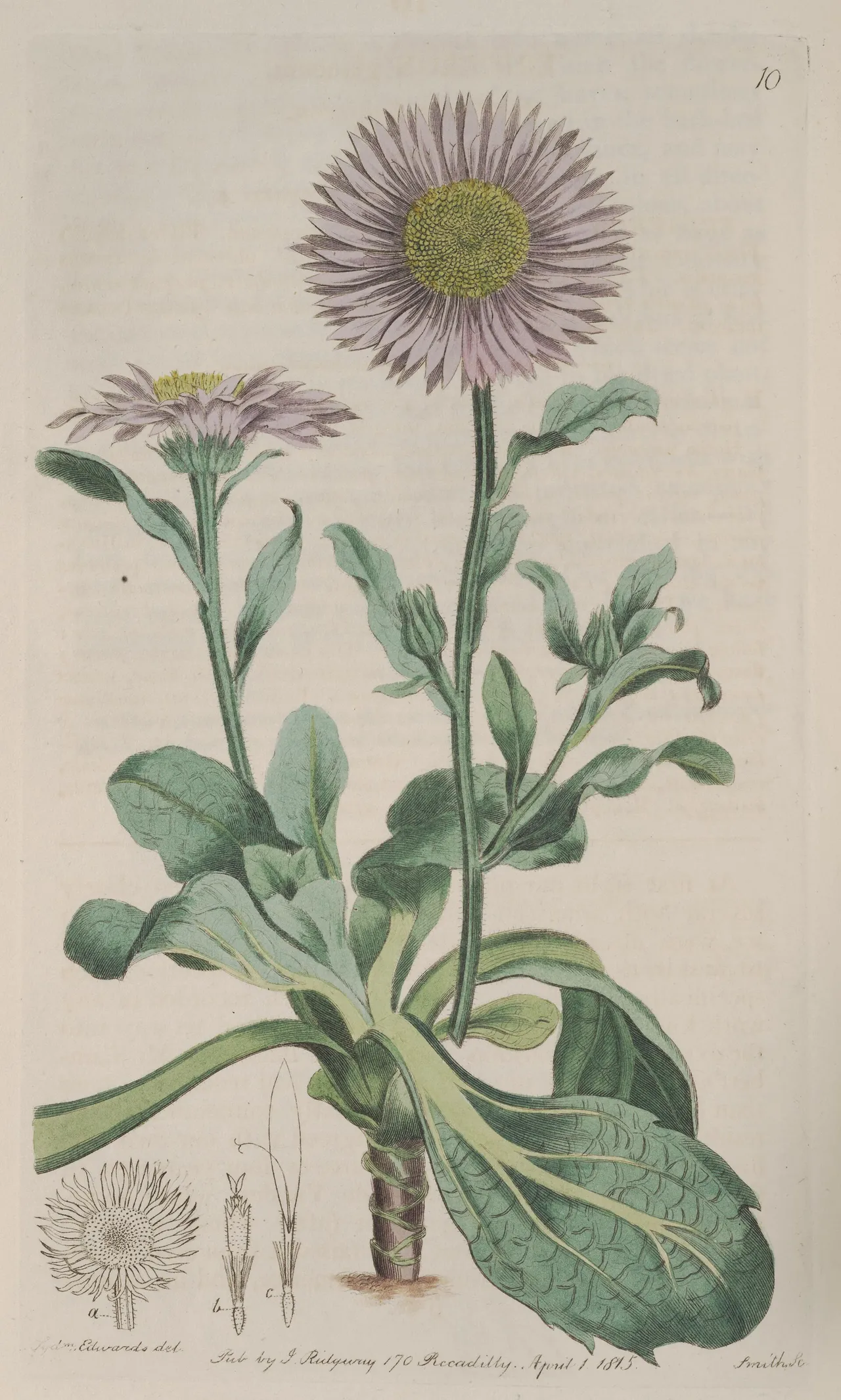
Seaside daisy
Erigeron glaucus
 1 of 2
Native to California and Oregon
Coastal areas from San Luis Obispo county, California to Clatsop county, Oregon
- Light Partial shade Sun tolerance
- Moisture Moisture preference
- Zones n/a Cold to heat range
- Bloom Jan–Dec Flowering time
- Height up to 16 in to 41 cm
- Life cycle Perennial Annual to perennial
In the garden
A woodland wildflower for partial shade. Its white flowers peak in May. At up to 16 in, it tucks into shade gardens and woodland edges.
Growing conditions
Light
Full sun Partial shade Full shade
Moisture
Dry Moist Wet
When it blooms
The Seaside daisy's white flowers bloom January to December, peaking in May. This late-spring display draws butterflies and bees.
Seaside daisy blooms white, yellow, blue & purpleFoliage
Pollinators & wildlife
- Butterflies Monarch
also Red Admiral, Pearl Crescent, Fiery Skipper +21 more
Painted Lady, Gray Hairstreak, Mourning Cloak, American Lady, Orange Sulphur, Common Checkered-Skipper and Allies, Common Wood-Nymph, Gray Buckeye, Woodland Skipper, Variable Checkerspot, Anise Swallowtail, Echo Azure, Acmon Blue, Pale Swallowtail, West Coast Lady, Boisduval's Blue, Zerene Fritillary, Lotus Hairstreak, Argynnis zerene puntareyes, Blue Copper, Eresia aveyrona mylitta - Bees Yellow-faced Bumble Bee
also Western Honey Bee, Ligated Furrow Bee, Black-tailed Bumble Bee +11 more
Fuzzy-Horned Bumble Bee, Tripartite Sweat Bee, Agapostemon texanus, Western Leafcutter Bee, Lucorum-group Bumble Bees, Kincaid's Sweat Bee, Buff-tailed Bumble Bee, Red-tailed Bumble Bee, Forest Cuckoo Bumble bee, Foothill Carpenter Bee, Early Bumble Bee - Flower flies Margined Calligrapher
also Common Drone Fly, The Merodon equestris Group, Common Grass Skimmer +5 more
Poecilanthrax arethusa, Marmalade Hover Fly, Stripe-backed Brusheye, Black-thighed Flower Fly, Western Forest Sedgesitter - Also visited by
- Beetles: Spotted Cucumber Beetle, Bronze Leaf Beetle
- Wasps: Prairie Yellowjacket
Butterflies that use this plant
Documented host and nectar records. Each links to a planting guide for that butterfly.
- Acmon bluenectar
- American ladynectar
- Boisduval's bluenectar
- Common buckeyenectar
- Common wood-nymphnectar
- Fiery skippernectar
- Gray hairstreaknectar
- Monarch butterflynectar
- Mourning cloaknectar
- Orange sulphurnectar
- Painted ladynectar
- Pale swallowtailnectar
- Pearl crescentnectar
- Red admiralnectar
Full plant details
Where it grows
- Habitat
- WoodlandThe wild plant community it grows in.
- Native range
- California and OregonUnited States (2): CA, OR. Where it grows wild on its own, by state and province.
- Native distribution
- Coastal areas from San Luis Obispo county, California to Clatsop county, OregonThe same native range, usually more exact than the state list, and often noting where it has spread beyond it.
Growing conditions
- Light
- Partial shadeHow much sun it takes, from full sun to full shade.
- Soil
- Sandy soilsThe soils it grows in naturally.
- Soil texture
- Light to heavy (sandy to clay)The soil grade it prefers, from sand to clay.
- Soil pH
- Mildly acid to mildly alkalineThe acidity to alkalinity it tolerates (7 is neutral).
Growth & form
- Height
- up to 16 in (to 41 cm)Typical mature height.
- Spread
- ~1 ft (0.2 m)How wide one plant gets, a guide to spacing.
- Life cycle
- PerennialWhether it lives a single season (annual), two (biennial), or returns for years (perennial).
Flowers, foliage & fruit
- Type
- WildflowerWhat kind of plant it is.
- Bloom
- Jan–DecWhen it flowers.
- Flower color
- White, Yellow, Blue, PurpleThe bloom color, or colors.
- Fruit/Seeds
- ripens Jun–NovThe seed or fruit it sets after flowering.
- Toxicity
- None knownWhether any part is poisonous to people or pets.