woodland wildflower
Showy goldenrod species complex
Solidago speciosa
Also known as Showy Goldenrod, Noble Goldenrod
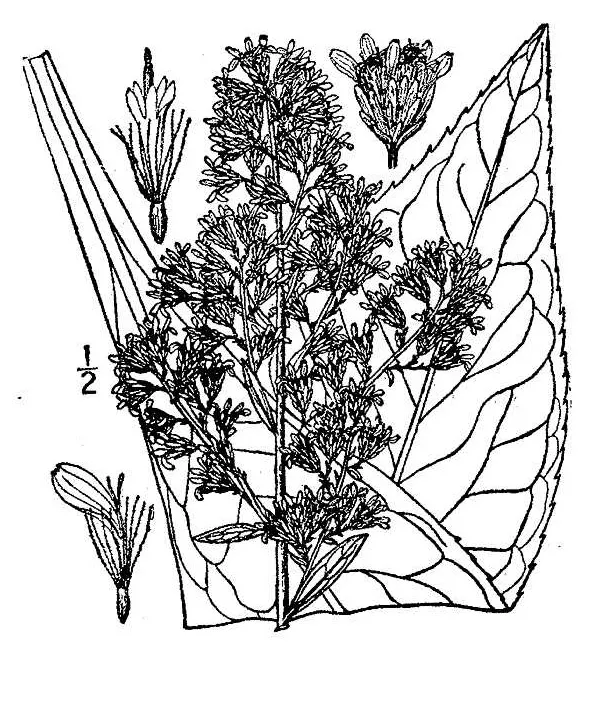 1 of 2
Native to much of the USA and southern Canada
Massachusetts to Georgia mountains, west to Wyoming, eastern Colorado, northeastern New Mexico, and central Texas
- Light Partial shade Sun tolerance
- Moisture Moist Moisture preference
- Zones 3–9 Cold to heat range
- Bloom Aug–Sep Flowering time
- Height up to 6 ft to 1.8 m
- Life cycle Perennial Annual to perennial
In the garden
A woodland wildflower for partial shade and evenly moist soil. At up to 6 ft, it needs room in shade gardens and woodland edges. Hardy in USDA zones 3–9.
Growing conditions
Light
Full sun Partial shade Full shade
Moisture
Dry Moist Wet
Hardiness zones
Find your zone:
Pollinators & wildlife
- Bees Common Eastern Bumble Bee
also Western Honey Bee, Eastern Carpenter Bee, Brown-belted Bumble Bee +33 more
Two-spotted Bumble Bee, American Bumble Bee, Ligated Furrow Bee, Tricolored Bumble Bee, Pure Green Sweat bee, Bombus fervidus, Red-belted Bumble Bee, Fuzzy-Horned Bumble Bee, Two-form Bumble Bee, Black-and-gold Bumble Bee, Half-black Bumble Bee, Orange-legged Furrow Bee, Lemon Cuckoo Bumble Bee, Rusty-patched Bumble Bee, Spurred Ceratina, Indiscriminate Cuckoo Bumble Bee, Southern Plains Bumble Bee, Dark-winged Sweat Bee, Hairy-banded Mining Bee, Louisiana Painted-Dark bee, Aster Mining Bee, Megachile exilis, Davis's Cuckoo Sweat Bee, Cherry Mining Bee, Eastern Spine-shouldered Cellophane Bee, Swenk's Fairy Bee, Banks' Nomad Bee, Goatsbeard Miner Bee, Variable Cuckoo Bumble Bee, Eastern Cuckoo Sweat Bee, Andrena miserabilis, Xylocopa virginica virginica, Drury's Long-horned Bee - Moths Green Cloverworm Moth
also Yellow-collared Scape Moth, Lucerne Moth, Bristly Cutworm Moth +13 more
Corn Earworm Moth, Ipsilon Dart Moth, Dingy Cutworm Moth, Reaper Dart, Leach's Grass-veneer, Northern Flower Moth, Common Looper Moth, Peridroma saucia, Bronzed Cutworm Moth, Mythimna unipuncta, Nycterosea obstipata, Acontia candefacta, Venerable Dart - Flower flies Margined Calligrapher
also Eastern Calligrapher, Common Drone Fly, Transverse-banded Flower Fly +10 more
Narrow-headed Marsh Fly, Thick-legged Hover Fly, Eurasian Drone Fly, Black-shouldered Drone Fly, Eastern Hornet Fly, Oblique-banded Pond Fly, Common Lagoon Fly, Orange-legged Drone Fly, Bald-faced Hornet Fly, Bombylius helvus - Also visited by
- Wasps:
Bald-faced Hornet, Eastern Yellowjacket +10 more
Metric Paper Wasp, Fraternal Potter Wasp, Four-toothed Mason Wasp, Common Aerial Yellowjacket, Bramble Mason Wasp, Ancistrocerus catskill, European tube wasp, Zethus spinipes variegatus, Ancistrocerus campestris, Zethus spinipes - Beetles:
Asian Lady Beetle, Spotted Cucumber Beetle +8 more
Goldenrod Soldier Beetle, Spotted Pink Lady Beetle, Locust Borer, Polished Lady Beetle, Yellow-horned Flower Longhorn Beetle, Mordellistena aspersa, Disonycha glabrata, Chauliognathus pennsylvanicus - Butterflies:
Monarch, American Lady +7 more
Eastern Tailed-Blue, Viceroy, Clouded Sulphur, American Copper, Aphrodite Fritillary, White M Hairstreak, Little Yellow
- Wasps:
Butterflies that use this plant
Documented host and nectar records. Each links to a planting guide for that butterfly.
- American coppernectar
- American ladynectar
- Aphrodite fritillarynectar
- Clouded sulphurnectar
- Eastern tailed-bluenectar
- Little yellownectar
- Monarch butterflynectar
- Viceroynectar
Full plant details
Where it grows
- Habitat
- WoodlandThe wild plant community it grows in.
- Native range
- Much of the USA and southern CanadaUnited States (36): AL, AR, CO, CT, DE, GA, IA, IL, IN, KS, KY, LA, MA, MD, MI, MN, MO, MS, NC, ND, NE, NJ, NM, NY, OH, OK, PA, RI, SC, SD, TN, TX, VA, WI, WV, WY. Canada (1): ON. Where it grows wild on its own, by state and province.
- Native distribution
- Massachusetts to Georgia mountains, west to Wyoming, eastern Colorado, northeastern New Mexico, and central TexasThe same native range, usually more exact than the state list, and often noting where it has spread beyond it.
Growing conditions
- Light
- Partial shadeHow much sun it takes, from full sun to full shade.
- Moisture
- MoistThe soil dampness it prefers, from dry to wet.
- Hardiness zones
- USDA 3–9 · Canadian 4–7The cold-to-heat climate range it survives.
- Soil
- Rocky or clay soilsThe soils it grows in naturally.
Growth & form
- Height
- up to 6 ft (to 1.8 m)Typical mature height.
- Life cycle
- PerennialWhether it lives a single season (annual), two (biennial), or returns for years (perennial).
Flowers, foliage & fruit
- Type
- WildflowerWhat kind of plant it is.
- Bloom
- Aug–SepWhen it flowers.
- Flower color
- YellowThe bloom color, or colors.
- Fruit/Seeds
- AcheneThe seed or fruit it sets after flowering.
- Toxicity
- None knownWhether any part is poisonous to people or pets.