prairie wildflower
Siberian Aster
Eurybia sibirica
Also known as Arctic Aster, Siberian Wood-aster
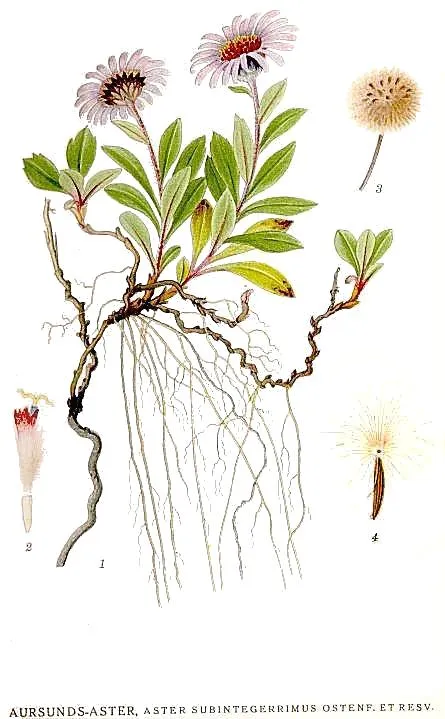 1 of 2
Native to Alaska, Idaho, Montana, and Washington and southern Canada
Circumboreal, southern in northern America to Mount Baker, Washington; the Wallowa Mountains, Oregon; Sawtooth Mountains, Idaho; Bighorn Mountains, Wyoming; and Uinta Mountains, Utah
- Light Full sun Sun tolerance
- Moisture Dry Moisture preference
- Zones 1–7 Cold to heat range
- Bloom Jun–Aug Flowering time
- Height up to 2 ft to 0.6 m
- Life cycle Perennial Annual to perennial
In the garden
A prairie wildflower for full sun and lean, dry soil. Its purple flowers peak in July. At up to 2 ft, it suits meadows and sunny borders. Hardy in USDA zones 1–7.
Growing conditions
Light
Full sun Partial shade Full shade
Moisture
Dry Moist Wet
Hardiness zones
Find your zone:
When it blooms
The Siberian Aster's purple flowers bloom June to August, peaking in July. This midsummer display draws butterflies and bees.
Siberian Aster blooms purpleFoliage
Pollinators & wildlife
- Butterflies Monarch
also Red Admiral, Pearl Crescent, Common Buckeye +15 more
Fiery Skipper, Painted Lady, American Lady, Orange Sulphur, Clouded Sulphur, Green Comma, Pale Grass Blue, Scarce Copper, Melissa Arctic, Pallas's Fritillary, Boloria perryi, Nymphalis c-aureum, Junonia coenia coenia, Panoquina ocola, Argyronome ruslana - Bees Common Eastern Bumble Bee
also Western Honey Bee, Eastern Carpenter Bee, Brown-belted Bumble Bee +11 more
Bicolored Striped Sweat Bee, Pure Green Sweat bee, Bombus fervidus, Fuzzy-Horned Bumble Bee, Yellow-fronted Bumble Bee, Oblong Woolcarder Bee, Yellowish Cuckoo Bumble bee, Indiscriminate Cuckoo Bumble Bee, American Cellophane-cuckoo Bee, Subalpine Cuckoo Nomad Bee, Bombus flavidus flavidus - Flower flies Eastern Calligrapher
also Common Drone Fly, Transverse-banded Flower Fly, Long-tailed Aphideater +8 more
Narrow-headed Marsh Fly, Thick-legged Hover Fly, Eurasian Drone Fly, Black-shouldered Drone Fly, Eastern Hornet Fly, Common Dainty, Phytomia zonata, Sericomyia militaris - Also visited by
- Wasps:
Bald-faced Hornet, Four-toothed Mason Wasp +3 more
Common Aerial Yellowjacket, Pseudodynerus quadrisectus, German Yellowjacket - Moths:
Yellow-collared Scape Moth, Soybean Looper Moth +2 more
Celery Looper Moth, Caradrina montana - Beetles: Lasiotrichius succinctus
- Wasps:
Butterflies that use this plant
Documented host and nectar records. Each links to a planting guide for that butterfly.
- Pearl crescenthost & nectar
- Silvery checkerspotcaterpillar host
- American ladynectar
- Clouded sulphurnectar
- Common buckeyenectar
- Fiery skippernectar
- Melissa bluenectar
- Monarch butterflynectar
- Orange sulphurnectar
- Painted ladynectar
- Red admiralnectar
Full plant details
Where it grows
- Habitat
- PrairieThe wild plant community it grows in.
- Native range
- Alaska, Idaho, Montana, and Washington and southern CanadaUnited States (4): AK, ID, MT, WA. Canada (5): AB, BC, NT, NU, YT. Where it grows wild on its own, by state and province.
- Native distribution
- Circumboreal, southern in northern America to Mount Baker, Washington; the Wallowa Mountains, Oregon; Sawtooth Mountains, Idaho; Bighorn Mountains, Wyoming; and Uinta Mountains, UtahThe same native range, usually more exact than the state list, and often noting where it has spread beyond it.
Growing conditions
- Light
- Full sunHow much sun it takes, from full sun to full shade.
- Moisture
- DryThe soil dampness it prefers, from dry to wet.
- Hardiness zones
- USDA 1–7 · Canadian 0–7The cold-to-heat climate range it survives.
- Soil
- Rocky soilsThe soils it grows in naturally.
Growth & form
- Height
- up to 2 ft (to 0.6 m)Typical mature height.
- Life cycle
- PerennialWhether it lives a single season (annual), two (biennial), or returns for years (perennial).
Flowers, foliage & fruit
- Type
- WildflowerWhat kind of plant it is.
- Bloom
- Jun–AugWhen it flowers.
- Flower color
- PurpleThe bloom color, or colors.
- Toxicity
- None knownWhether any part is poisonous to people or pets.