woodland wildflower
Sundial Lupine
Lupinus perennis
Also known as Wild Lupine
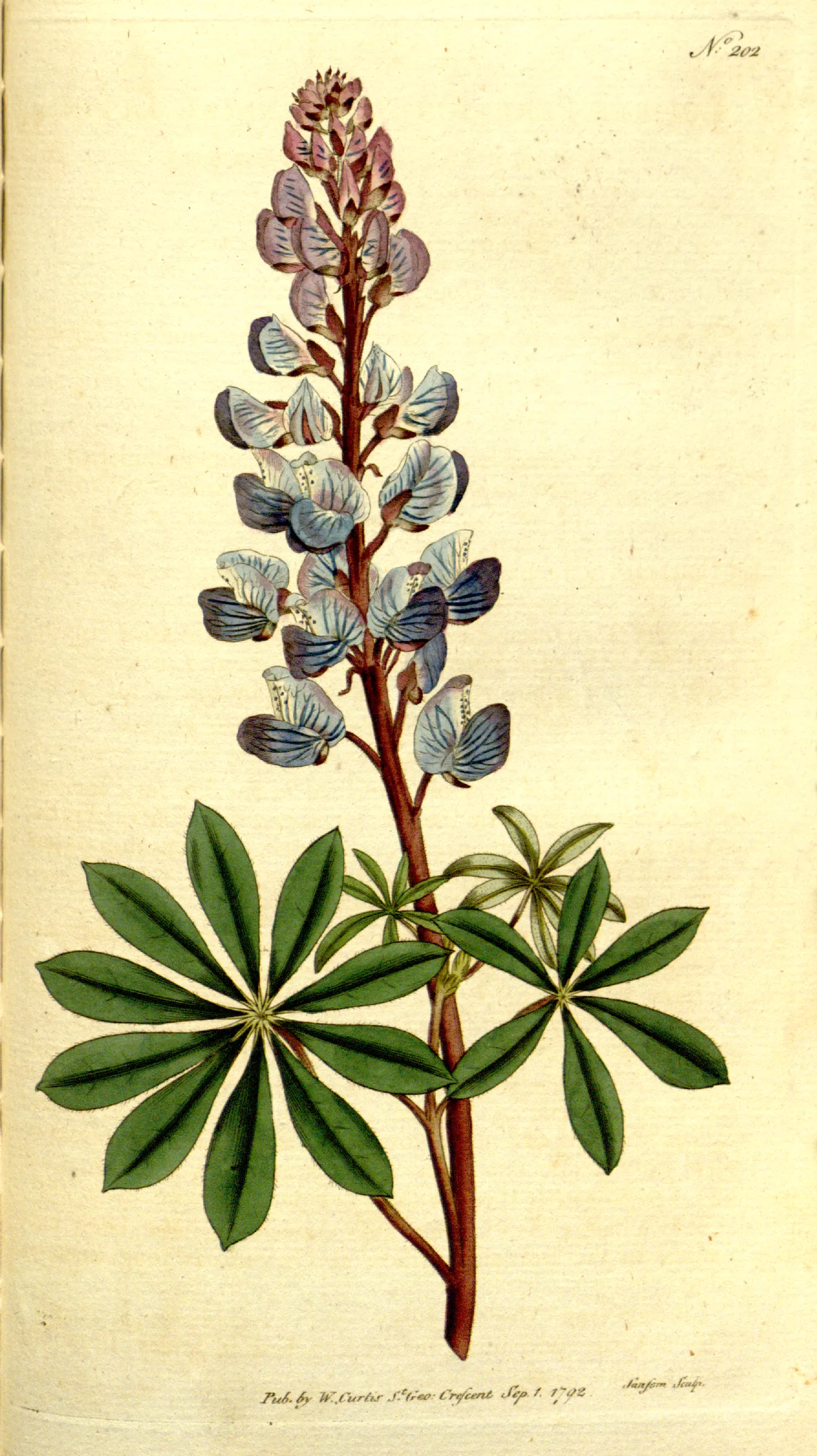 1 of 2
Native to much of the USA and southern Canada
New Hampshire to southern Ontario, northern Illinois, northern Indiana and eastern Minnesota, south to Florida and Louisiana
- Light Full sun to part shade Sun tolerance
- Moisture Dry to moist Moisture preference
- Zones 3–9 Cold to heat range
- Bloom Apr–Jul Flowering time
- Height up to 2 ft to 0.6 m
- Life cycle Perennial Annual to perennial
In the garden
A woodland wildflower for full sun to part shade and dry to moist soil. At up to 2 ft, it suits shade gardens and woodland edges. Hardy in USDA zones 3–9.
Growing conditions
Light
Full sun Partial shade Full shade
Moisture
Dry Moist Wet
Hardiness zones
Find your zone:
Pollinators & wildlife
- Bees Common Eastern Bumble Bee
also Western Honey Bee, Eastern Carpenter Bee, Brown-belted Bumble Bee +20 more
Two-spotted Bumble Bee, American Bumble Bee, Yellow-faced Bumble Bee, Tricolored Bumble Bee, Bombus fervidus, Red-belted Bumble Bee, Black-and-gold Bumble Bee, Colletes inaequalis, Yellow-fronted Bumble Bee, Lemon Cuckoo Bumble Bee, Northern Amber Bumble Bee, Oblong Woolcarder Bee, Rusty-patched Bumble Bee, Blue Orchard Bee, Wilke's Mining Bee, Bufflehead Mason Bee, Maine Blueberry Bee, Osmia inspergens, Xylocopa virginica virginica, cranberry leafcutter bee - Butterflies Monarch
also Viceroy, Peck's Skipper, Wild Indigo Duskywing +6 more
American Copper, Karner Blue, Indian Skipper, Frosted Elfin, Incisalia niphon, Juvenal's Duskywing - Moths White Slant-line also Norman's Quaker
- Also visited by
- Beetles: Two-lined Leatherwing
Butterflies that use this plant
Documented host and nectar records. Each links to a planting guide for that butterfly.
- Acmon bluecaterpillar host
- Boisduval's bluecaterpillar host
- Melissa bluecaterpillar host
- Silvery bluecaterpillar host
- American coppernectar
- Eastern pine elfinnectar
- Monarch butterflynectar
- Viceroynectar
Full plant details
Where it grows
- Habitat
- WoodlandThe wild plant community it grows in.
- Native range
- Much of the USA and southern CanadaUnited States (29): AL, CT, DC, DE, FL, GA, IA, IL, IN, KY, LA, MA, MD, ME, MI, MN, MS, NC, NH, NJ, NY, OH, PA, RI, SC, VA, VT, WI, WV. Canada (1): ON. Where it grows wild on its own, by state and province.
- Native distribution
- New Hampshire to southern Ontario, northern Illinois, northern Indiana and eastern Minnesota, south to Florida and LouisianaThe same native range, usually more exact than the state list, and often noting where it has spread beyond it.
Growing conditions
- Light
- Full sun to part shadeHow much sun it takes, from full sun to full shade.
- Moisture
- Dry to moistThe soil dampness it prefers, from dry to wet.
- Hardiness zones
- USDA 3–9 · Canadian 4–7The cold-to-heat climate range it survives.
- Soil
- Dry, sandy soilsThe soils it grows in naturally.
- Soil texture
- Light to medium (sandy to loamy)The soil grade it prefers, from sand to clay.
- Soil pH
- Acid to neutralThe acidity to alkalinity it tolerates (7 is neutral).
- Soil quality
- Low (tolerates poor soil)How rich a soil it needs. Many natives prefer lean soil and flop in rich beds.
Growth & form
- Height
- up to 2 ft (to 0.6 m)Typical mature height.
- Life cycle
- PerennialWhether it lives a single season (annual), two (biennial), or returns for years (perennial).
Flowers, foliage & fruit
- Type
- WildflowerWhat kind of plant it is.
- Bloom
- Apr–JulWhen it flowers.
- Flower color
- Blue, PurpleThe bloom color, or colors.
- Toxicity
- None knownWhether any part is poisonous to people or pets.