woodland shrub
Yellow trumpet flower
Tecoma stans
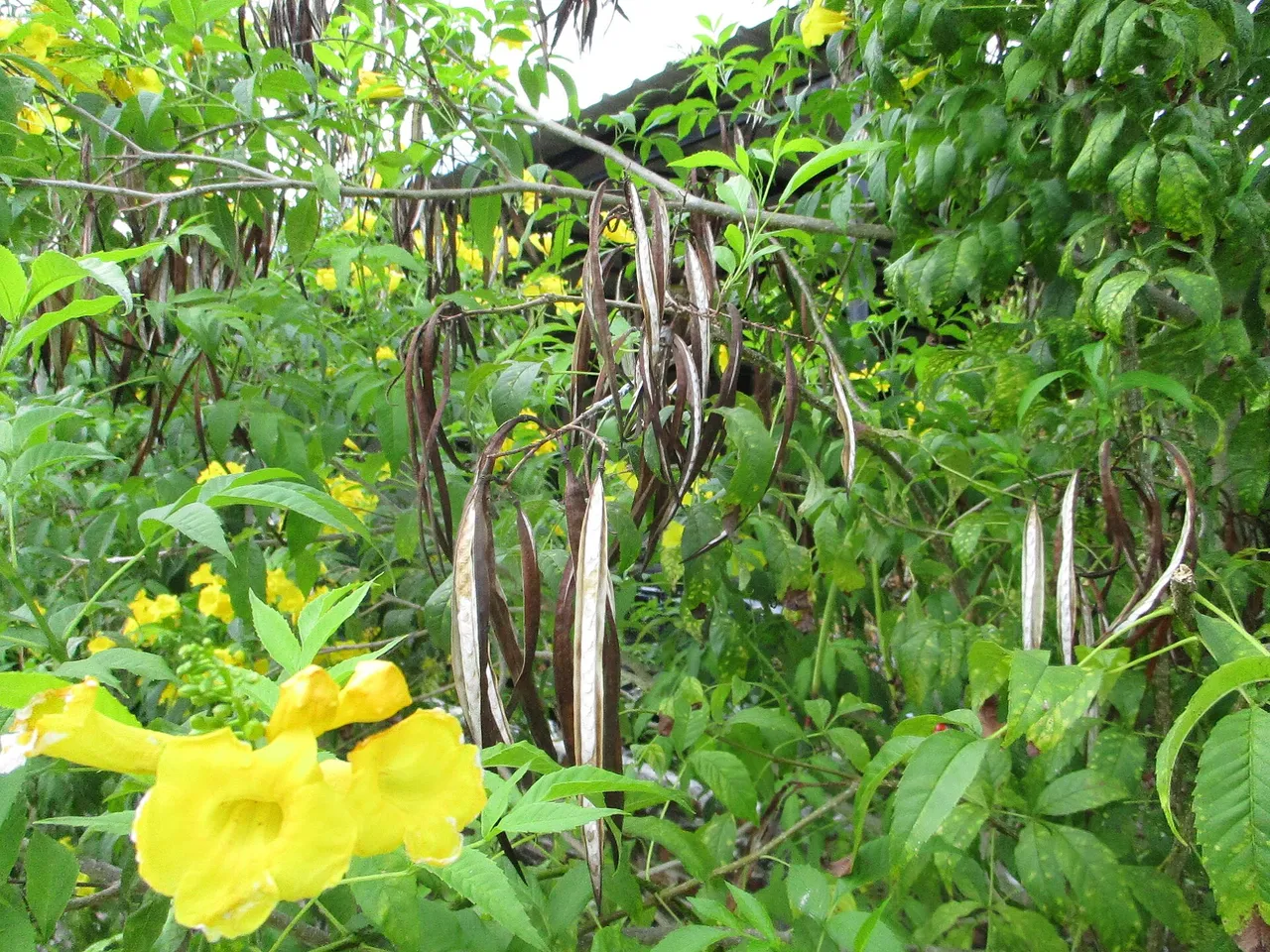
Native to Arizona, Florida, New Mexico, and Texas
South-central Texas west to Arizona, south through Mexico and Central America to South America as far as northern Argentina. Southern Florida south through the Caribbean.
- Light Full sun to part shade Sun tolerance
- Moisture Dry Moisture preference
- Zones n/a Cold to heat range
- Bloom Apr–Nov Flowering time
- Height 3–6 ft 0.9–1.8 m
- Life cycle Perennial Annual to perennial
In the garden
A woodland shrub for full sun to part shade and lean, dry soil. At 3–6 ft, it needs room in shade gardens and woodland edges. It shrugs off drought once established.
Growing conditions
Light
Full sun Partial shade Full shade
Moisture
Dry Moist Wet
Pollinators & wildlife
- Bees Common Eastern Bumble Bee
also Western Honey Bee, Eastern Carpenter Bee, American Bumble Bee +18 more
Western Carpenter Bee, Urbane Digger Bee, Dilemma Orchid Bee, Centris mexicana, Greater Antillean Carpenter, Centris haemorrhoidalis, Aztec Horse-fly Carpenter, Andean Gardener Bumble Bee, Eufriesea caerulescens, Broad-handed Carpenter Bee, Eulaema polychroma, Red Dwarf Honey Bee, Giant Honey Bee, Black Orchid bee, Collared Carpenter Bee, Sonoran Bumble Bee, Valley Carpenter Bee, Spiny-legged Stingless bee - Butterflies Monarch
also Gulf Fritillary, Fiery Skipper, Pipevine Swallowtail +19 more
Gray Hairstreak, Cloudless Sulphur, Dun Skipper, Eufala Skipper, Southern Dogface, Polydamas Swallowtail, Curve-winged Metalmark, Guava Skipper, White Angled-Sulphur, Papilio palamedes leontis, Common Birdwing, Black-veined Hairstreak, Asbolis capucinus, Battus philenor philenor, Phoebis philea, Rainbow Skipper, Common Crow, Papilio rumiko, Brazilian Skipper - Hummingbirds Anna's Hummingbird
also Costa's Hummingbird, Broad-billed Hummingbird, Mellisuga minima vielloti +6 more
Cozumel Emerald, Antillean Crested Hummingbird, Glittering-bellied Emerald, Leucolia violiceps, Green-throated Carib, Sparkling Violetear - Also visited by
- Moths:
White-lined Sphinx, Obscure Sphinx +2 more
Hawaiian Beet Webworm Moth, Sesame Leafroller - Birds: Bullock's Oriole, Black Flowerpiercer
- Beetles: Seven-spotted Lady Beetle, Acmaeodera tuta
- Wasps: Fraternal Potter Wasp, Red-marked Pachodynerus Wasp
- Moths:
Butterflies that use this plant
Documented host and nectar records. Each links to a planting guide for that butterfly.
- Cloudless sulphurnectar
- Dainty sulphurnectar
- Fiery skippernectar
- Gray hairstreaknectar
- Gulf fritillarynectar
- Monarch butterflynectar
- Palamedes swallowtailnectar
- Pipevine swallowtailnectar
Full plant details
Where it grows
- Habitat
- WoodlandThe wild plant community it grows in.
- Native range
- Arizona, Florida, New Mexico, and TexasUnited States (4): AZ, FL, NM, TX. Where it grows wild on its own, by state and province.
- Native distribution
- South-central Texas west to Arizona, south through Mexico and Central America to South America as far as northern Argentina. Southern Florida south through the Caribbean.The same native range, usually more exact than the state list, and often noting where it has spread beyond it.
Growing conditions
- Light
- Full sun to part shadeHow much sun it takes, from full sun to full shade.
- Moisture
- DryThe soil dampness it prefers, from dry to wet.
- Soil
- Well drained, rocky, limestone, sand, and loam soilsThe soils it grows in naturally.
- Soil pH
- 6.5–8.0The acidity to alkalinity it tolerates (7 is neutral).
- Soil quality
- LowHow rich a soil it needs. Many natives prefer lean soil and flop in rich beds.
- Water use
- LowHow thirsty it is, a rough guide to how often to water.
- Drought tolerance
- HighRelative to plants of the same type and region, inferred from where it grows, not a days-without-water figure.
- Salinity tolerance
- NoneHow well it copes with salty soil, near roads or the coast.
- Lime (CaCO₃) tolerance
- HighHow well it copes with chalky, lime-rich soil.
Growth & form
- Height
- 3–6 ft (0.9–1.8 m)Typical mature height.
- Life cycle
- PerennialWhether it lives a single season (annual), two (biennial), or returns for years (perennial).
- Growth rate
- RapidA relative ranking versus other plants of the same type (USDA), not an absolute rate.
- Shape
- ErectIts overall silhouette.
- Root depth
- 12+ in (30+ cm)How far the roots reach, a guide to drought resilience and transplanting.
Flowers, foliage & fruit
- Type
- ShrubWhat kind of plant it is.
- Bloom
- Apr–NovWhen it flowers.
- Flower color
- YellowThe bloom color, or colors.
- Toxicity
- None knownWhether any part is poisonous to people or pets.
Propagation & seed
- Cold stratification
- Not requiredWhether seed needs a cold, moist spell before it will germinate.
- Propagation
- Bare root, container, cuttings, seedHow to start new plants.
- Seed
- ~0.1 million seeds per poundNotes on the seed and how to sow it.
- Seed spread rate
- NoneHow readily it self-sows. Slow or none means well-behaved, not a spreader.
- Seedling vigor
- HighHow strongly young seedlings establish.
- Vegetative spread
- NoneWhether it creeps outward or stays put in a clump.