woodland shrub
Bottlebrush buckeye
Aesculus parviflora
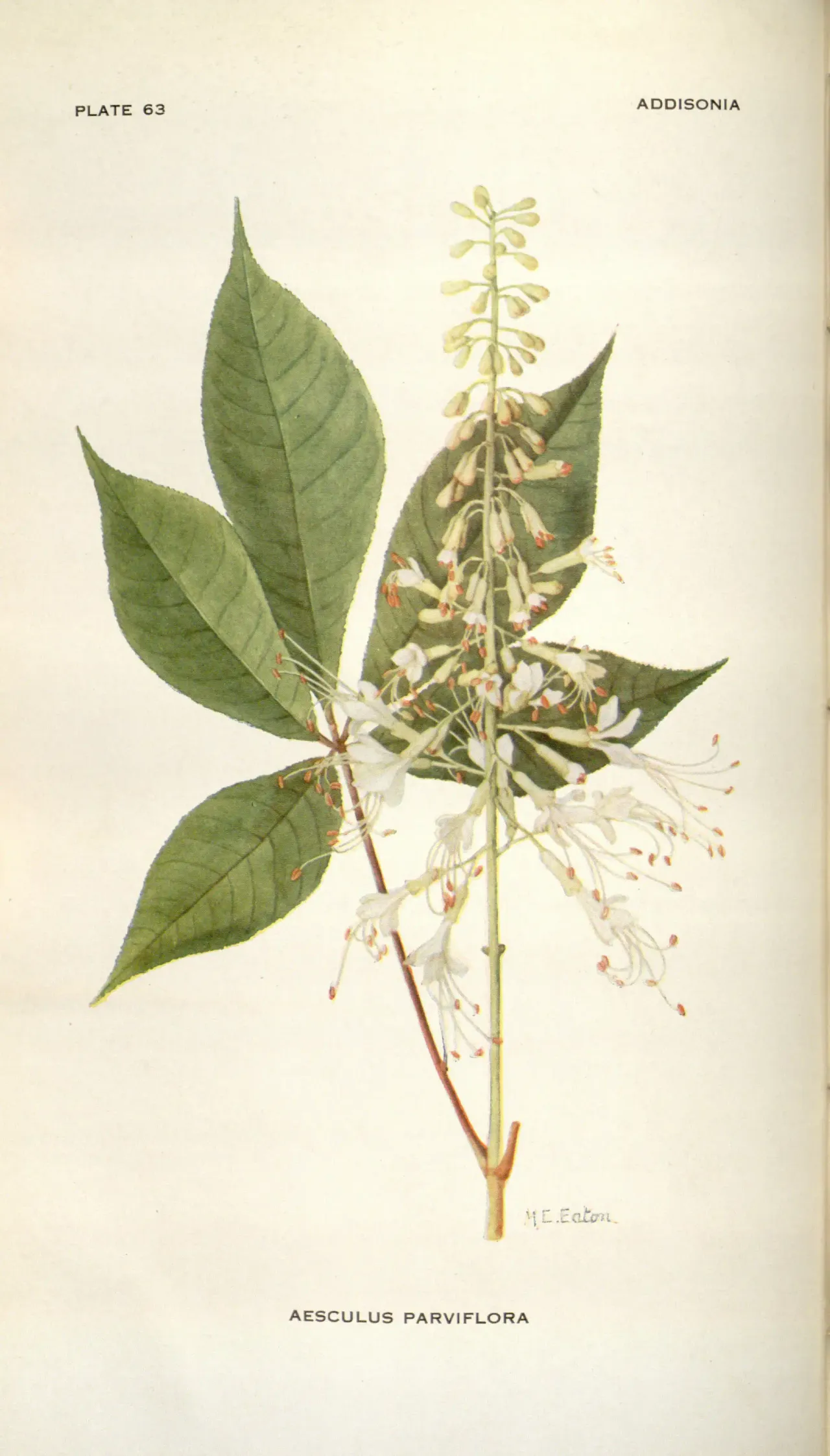 1 of 2
Native to Alabama, Georgia, and South Carolina
Central Georgia to Alabama and South Carolina
- Light Partial shade Sun tolerance
- Moisture Moisture preference
- Zones 4–8 Cold to heat range
- Bloom Jun–Aug Flowering time
- Height
- Life cycle Perennial Annual to perennial
In the garden
A woodland shrub for partial shade. Its white flowers peak in July. Hardy in USDA zones 4–8.
Growing conditions
Light
Full sun Partial shade Full shade
Moisture
Dry Moist Wet
Hardiness zones
Find your zone:
When it blooms
The Bottlebrush buckeye's white flowers bloom June to August, peaking in July. This midsummer display draws bees and butterflies.
Bottlebrush buckeye blooms whiteFoliage
Pollinators & wildlife
- Bees Common Eastern Bumble Bee
also Western Honey Bee, Eastern Carpenter Bee, Two-spotted Bumble Bee +8 more
Bicolored Striped Sweat Bee, Black-and-gold Bumble Bee, Sculptured Resin Bee, Golden Sweat Bee, Dark-winged Sweat Bee, Lasioglossum politum, Common Carder Bumble Bee, Xylocopa virginica virginica - Butterflies Monarch
also Eastern Tiger Swallowtail, Red Admiral, Black Swallowtail +6 more
Fiery Skipper, Silver-spotted Skipper, Spicebush Swallowtail, Tawny-edged Skipper, Midsummer Tiger Swallowtail, Protographium marcellus - Moths Banded Tussock Moth
also Snowberry Clearwing, Hummingbird Clearwing, Eight-spotted Forester Moth +2 more
Dark-banded Owlet, Lilac Borer Moth - Also visited by
- Wasps:
Southern Yellowjacket, Common Aerial Yellowjacket +1 more
Parancistrocerus leionotus - Flower flies: Eastern Calligrapher, Yellow-legged Flower Fly
- Hummingbirds: Ruby-throated Hummingbird
- Beetles: Slender Flower Longhorn Beetle
- Wasps:
Butterflies that use this plant
Documented host and nectar records. Each links to a planting guide for that butterfly.
- Black swallowtailnectar
- Eastern tiger swallowtailnectar
- Fiery skippernectar
- Monarch butterflynectar
- Red admiralnectar
- Silver-spotted skippernectar
- Spicebush swallowtailnectar
- Zebra swallowtailnectar
Full plant details
Where it grows
- Habitat
- WoodlandThe wild plant community it grows in.
- Native range
- Alabama, Georgia, and South CarolinaUnited States (3): AL, GA, SC. Where it grows wild on its own, by state and province.
- Native distribution
- Central Georgia to Alabama and South CarolinaThe same native range, usually more exact than the state list, and often noting where it has spread beyond it.
Growing conditions
- Light
- Partial shadeHow much sun it takes, from full sun to full shade.
- Hardiness zones
- USDA 4–8 · Canadian 5–7The cold-to-heat climate range it survives.
- Soil
- Moist, well-drained, shallow soils over limestone or loamy sandsThe soils it grows in naturally.
- Soil texture
- Light to heavy (sandy to clay)The soil grade it prefers, from sand to clay.
- Soil pH
- Mildly acid to mildly alkalineThe acidity to alkalinity it tolerates (7 is neutral).
Growth & form
- Spread
- ~13 ft (4 m)How wide one plant gets, a guide to spacing.
- Life cycle
- PerennialWhether it lives a single season (annual), two (biennial), or returns for years (perennial).
- Growth rate
- SlowA relative ranking versus other plants of the same type (USDA), not an absolute rate.
Flowers, foliage & fruit
- Type
- ShrubWhat kind of plant it is.
- Bloom
- Jun–AugWhen it flowers.
- Flower color
- WhiteThe bloom color, or colors.
- Fruit/Seeds
- ripens Jul–OctThe seed or fruit it sets after flowering.
- Toxicity
- Poisonous if eatenWhether any part is poisonous to people or pets.