prairie wildflower
Lemon beebalm
Monarda citriodora
Also known as Purple Horsemint, Lemon Mint, Plains Horsemint, Lemon Horsemint, Horsemint, Purple Lemon Mint
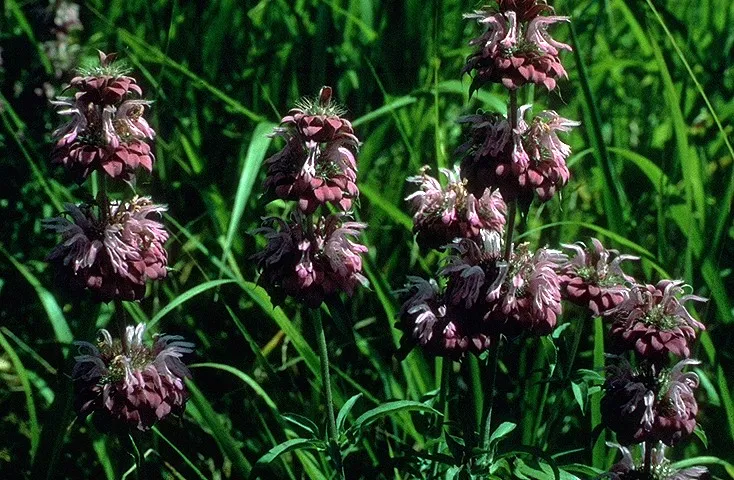
Native to the Great Plains and the Southeast
Eastern Kentucky, Missouri and Kansas, south to Arkansas, Texas, New Mexico and Mexico; introduced eastward
- Light Full sun to part shade Sun tolerance
- Moisture Dry Moisture preference
- Zones n/a Cold to heat range
- Bloom May–Jul Flowering time
- Height up to 30 in to 76 cm
- Life cycle Annual, Biennial, or perennial Annual to perennial
In the garden
A prairie wildflower for full sun to part shade and lean, dry soil. At up to 30 in, it suits meadows and sunny borders.
Growing conditions
Light
Full sun Partial shade Full shade
Moisture
Dry Moist Wet
Pollinators & wildlife
- Bees Common Eastern Bumble Bee
also Western Honey Bee, Eastern Carpenter Bee, Brown-belted Bumble Bee +22 more
American Bumble Bee, Bicolored Striped Sweat Bee, Bombus fervidus, Red-belted Bumble Bee, Hunt's Bumble Bee, Two-spotted Longhorn Bee, European Woolcarder Bee, Black-and-gold Bumble Bee, Tripartite Sweat Bee, Southern Carpenter Bee, Lemon Cuckoo Bumble Bee, Northern Amber Bumble Bee, Flat-tailed Leafcutter Bee, California Digger Bee, Southern Plains Bumble Bee, Norton's Alkali Bee, Peponapis pruinosa, Sonoran Bumble Bee, Abrupt Digger Bee, Xylocopa virginica virginica, Centris caesalpiniae, Protandrena abdominalis - Butterflies Eastern Tiger Swallowtail
also Red Admiral, Black Swallowtail, Fiery Skipper +13 more
Painted Lady, Gray Hairstreak, American Lady, Orange Sulphur, Spicebush Swallowtail, Question Mark, Eastern Black Swallowtail, Horace's Duskywing, Dun Skipper, Prairie Arogos Skipper, Battus philenor philenor, Asterocampa clyton, Abaeis nicippe - Moths Yellow-collared Scape Moth also Hummingbird Clearwing, Nessus Sphinx
- Also visited by
- Beetles: Goldenrod Soldier Beetle, Checkered Melon Beetle
- Wasps: Metric Paper Wasp
- Hummingbirds: Black-chinned Hummingbird
Butterflies that use this plant
Documented host and nectar records. Each links to a planting guide for that butterfly.
- American ladynectar
- Black swallowtailnectar
- Eastern tiger swallowtailnectar
- Fiery skippernectar
- Gray hairstreaknectar
- Orange sulphurnectar
- Painted ladynectar
- Question marknectar
- Red admiralnectar
- Sleepy orangenectar
- Spicebush swallowtailnectar
Full plant details
Where it grows
- Habitat
- PrairieThe wild plant community it grows in.
- Native range
- The Great Plains and the SoutheastUnited States (10): AR, IL, KS, KY, LA, MO, NM, OK, TN, TX. Where it grows wild on its own, by state and province.
- Native distribution
- Eastern Kentucky, Missouri and Kansas, south to Arkansas, Texas, New Mexico and Mexico; introduced eastwardThe same native range, usually more exact than the state list, and often noting where it has spread beyond it.
Growing conditions
- Light
- Full sun to part shadeHow much sun it takes, from full sun to full shade.
- Moisture
- DryThe soil dampness it prefers, from dry to wet.
- Soil
- Sandy loam to rocky soils. Clay Loam, Medium Loam, Sandy Loam, Sandy, ClayThe soils it grows in naturally.
- Soil texture
- Light to heavy (sandy to clay)The soil grade it prefers, from sand to clay.
- Soil pH
- Mildly acid to mildly alkalineThe acidity to alkalinity it tolerates (7 is neutral).
- Water use
- LowHow thirsty it is, a rough guide to how often to water.
Growth & form
- Height
- up to 30 in (to 76 cm)Typical mature height.
- Life cycle
- Annual, biennial, or perennialWhether it lives a single season (annual), two (biennial), or returns for years (perennial).
- Growth rate
- RapidA relative ranking versus other plants of the same type (USDA), not an absolute rate.
Flowers, foliage & fruit
- Type
- WildflowerWhat kind of plant it is.
- Bloom
- May–JulWhen it flowers.
- Flower color
- White, Pink, PurpleThe bloom color, or colors.
- Fruit/Seeds
- NutletsThe seed or fruit it sets after flowering.
- Toxicity
- None knownWhether any part is poisonous to people or pets.