prairie wildflower
Snow-on-the-mountain
Euphorbia marginata
Also known as Snow On The Mountain
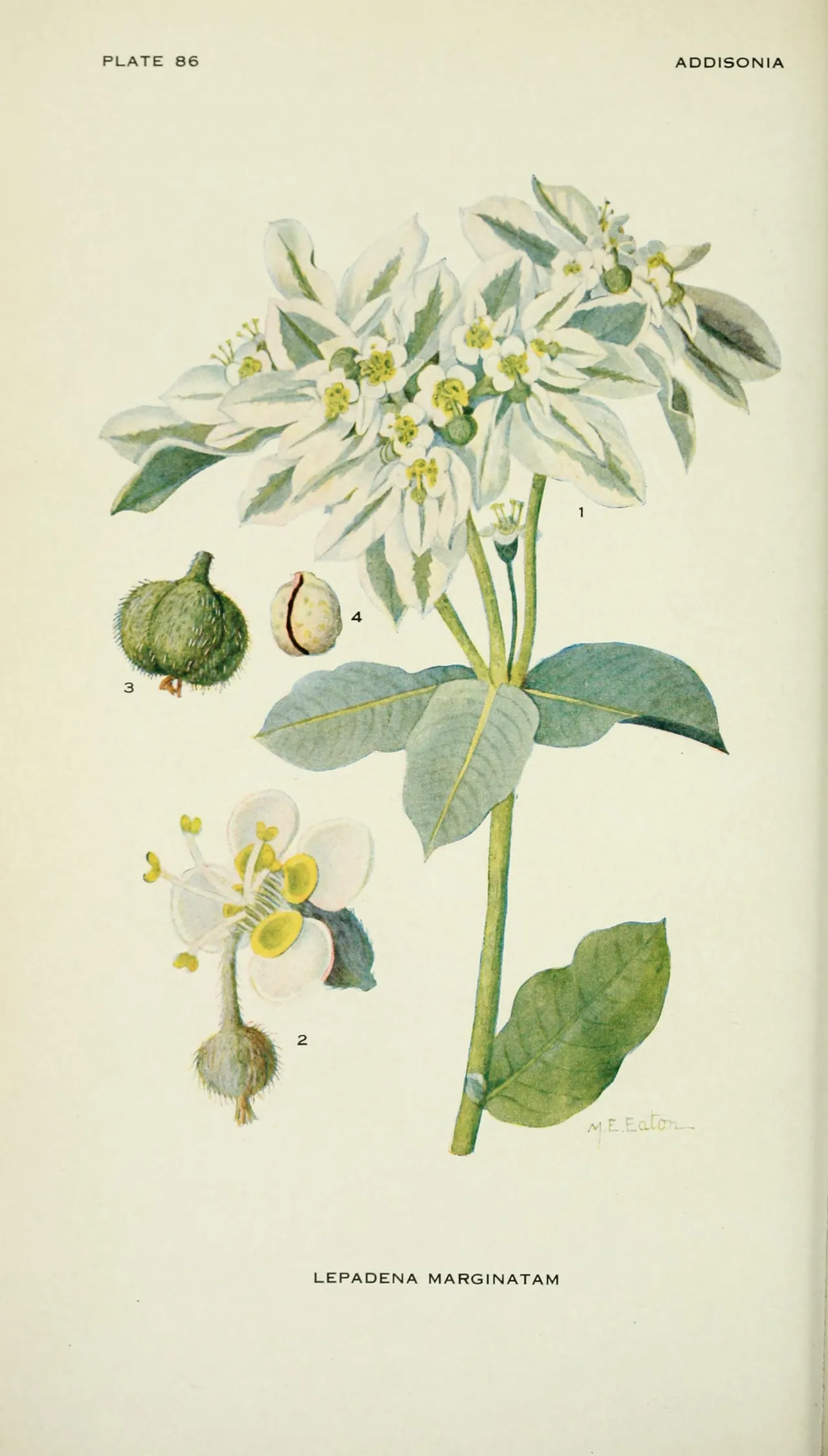 1 of 2
Native to the Great Plains, the Rockies, and the Midwest
Montana to New Mexico, east to southern Minnesota, western Iowa, western Missouri and Texas; naturalized in waste areas east to the Atlantic
- Light Partial shade Sun tolerance
- Moisture Moist Moisture preference
- Zones 4–9 Cold to heat range
- Bloom Jul–Oct Flowering time
- Height up to 5 ft to 1.5 m
- Life cycle Annual Annual to perennial
In the garden
A prairie wildflower for partial shade and evenly moist soil. Its white flowers peak in August. At up to 5 ft, it needs room in meadows and sunny borders. Hardy in USDA zones 4–9.
Growing conditions
Light
Full sun Partial shade Full shade
Moisture
Dry Moist Wet
Hardiness zones
Find your zone:
When it blooms
The Snow-on-the-mountain's white flowers bloom July to October, peaking in August. This late-summer display draws butterflies and bees.
Snow-on-the-mountain blooms whiteFoliage
Pollinators & wildlife
- Butterflies Monarch
also Black Swallowtail, Pearl Crescent, Painted Lady +12 more
Gray Hairstreak, Mourning Cloak, Variegated Fritillary, Queen, Dainty Sulphur, Small Copper, Small Heath, Green Hairstreak, Papilio cresphontes, Coenonympha iphis, Clouded Apollo, Marsh Fritillary - Bees Brown-belted Bumble Bee
also Western Honey Bee, American Bumble Bee, Alfalfa Leafcutter Bee +4 more
Punctate Masked Bee, Red-tailed Bumble Bee, Margined Blood Bee, Carrot Mining Bee - Flower flies Eurasian Drone Fly
also Yellow-haired Sun Fly, Marmalade Hover Fly, Trivittate Marsh Fly +1 more
Cheilosia latifrons - Also visited by
- Wasps:
Fraternal Potter Wasp, Four-toothed Mason Wasp +2 more
Polistes nimpha, Yellow-legged Hornet
- Wasps:
Butterflies that use this plant
Documented host and nectar records. Each links to a planting guide for that butterfly.
- Black swallowtailnectar
- Dainty sulphurnectar
- Giant swallowtailnectar
- Gray hairstreaknectar
- Monarch butterflynectar
- Mourning cloaknectar
- Painted ladynectar
- Pearl crescentnectar
- Queennectar
- Variegated fritillarynectar
Full plant details
Where it grows
- Habitat
- PrairieThe wild plant community it grows in.
- Native range
- The Great Plains, the Rockies, and the MidwestUnited States (13): CO, IA, KS, MN, MO, MT, ND, NE, NM, OK, SD, TX, WY. Where it grows wild on its own, by state and province.
- Native distribution
- Montana to New Mexico, east to southern Minnesota, western Iowa, western Missouri and Texas; naturalized in waste areas east to the AtlanticThe same native range, usually more exact than the state list, and often noting where it has spread beyond it.
Growing conditions
- Light
- Partial shadeHow much sun it takes, from full sun to full shade.
- Moisture
- MoistThe soil dampness it prefers, from dry to wet.
- Hardiness zones
- USDA 4–9 · Canadian 4–7The cold-to-heat climate range it survives.
- Soil
- Various soils. Clay, Limestone/chalky, Clay Loam, Medium Loam, Sandy Loam, SandyThe soils it grows in naturally.
- Soil texture
- Light to medium (sandy to loamy)The soil grade it prefers, from sand to clay.
- Soil pH
- Mildly acid to mildly alkalineThe acidity to alkalinity it tolerates (7 is neutral).
- Water use
- MediumHow thirsty it is, a rough guide to how often to water.
Growth & form
- Height
- up to 5 ft (to 1.5 m)Typical mature height.
- Spread
- ~1 ft (0.3 m)How wide one plant gets, a guide to spacing.
- Life cycle
- AnnualWhether it lives a single season (annual), two (biennial), or returns for years (perennial).
- Growth rate
- RapidA relative ranking versus other plants of the same type (USDA), not an absolute rate.
Flowers, foliage & fruit
- Type
- WildflowerWhat kind of plant it is.
- Bloom
- Jul–OctWhen it flowers.
- Flower color
- WhiteThe bloom color, or colors.
- Fruit/Seeds
- ripens Aug–NovThe seed or fruit it sets after flowering.
- Toxicity
- Poisonous if eatenWhether any part is poisonous to people or pets.