woodland shrub
Eastern redbud
Cercis canadensis
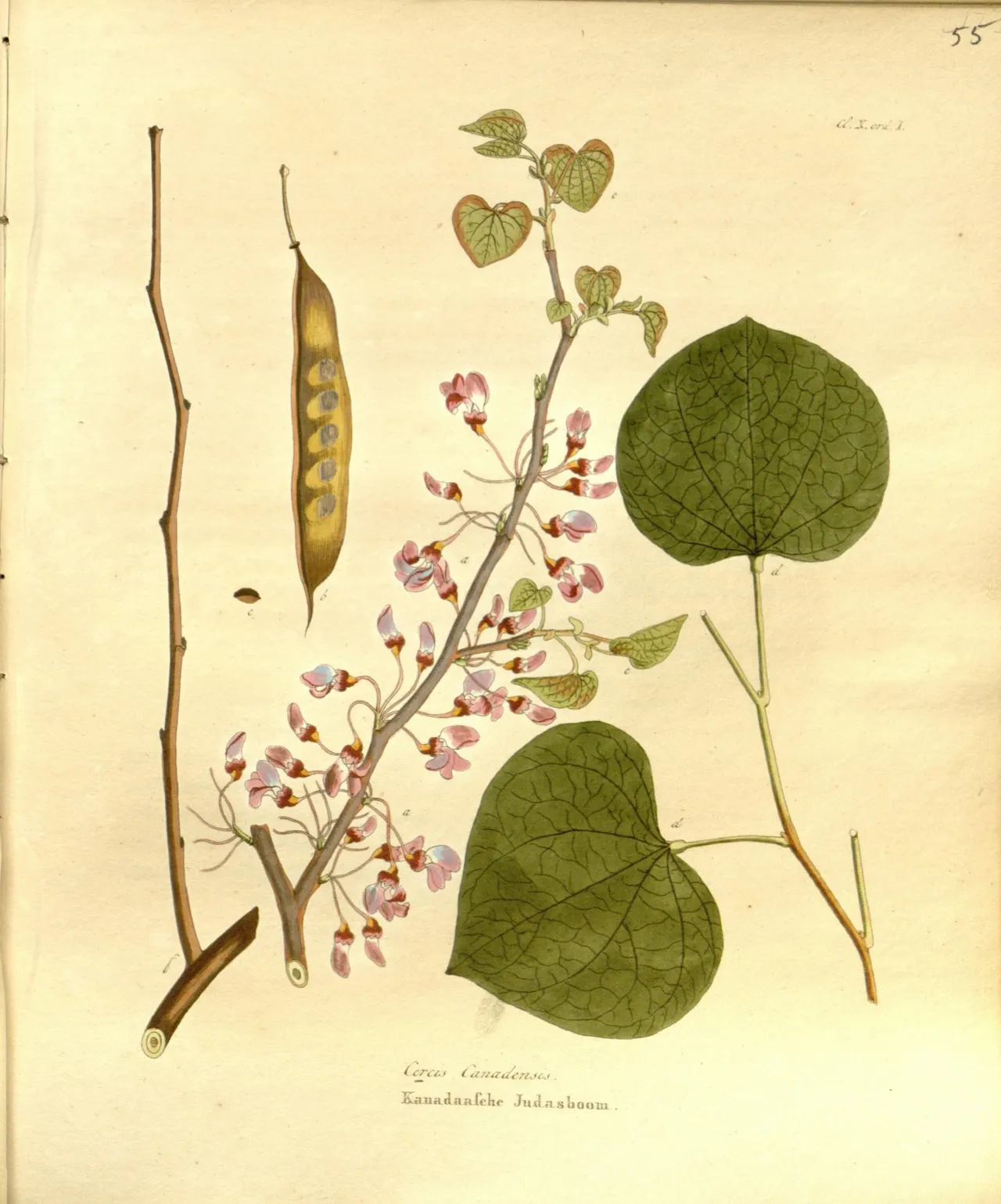 1 of 3
Native to much of the USA
Florida to Texas, north to Pennsylvania, Ohio, southern Michigan, southern Iowa and southeastern Nebraska, south to Veracruz in eastern Mexico
- Light Part shade to shade Sun tolerance
- Moisture Moist Moisture preference
- Zones 5–9 Cold to heat range
- Bloom Mar–May Flowering time
- Height up to 30 ft to 9.1 m
- Life cycle Perennial Annual to perennial
In the garden
A woodland shrub for part to full shade and evenly moist soil. At up to 30 ft, it needs room in shade gardens and woodland edges. Hardy in USDA zones 5–9.
Growing conditions
Light
Full sun Partial shade Full shade
Moisture
Dry Moist Wet
Hardiness zones
Find your zone:
Pollinators & wildlife
- Bees Common Eastern Bumble Bee
also Western Honey Bee, Eastern Carpenter Bee, Brown-belted Bumble Bee +51 more
Two-spotted Bumble Bee, American Bumble Bee, Pure Green Sweat bee, Bombus fervidus, Red-belted Bumble Bee, Perplexing Bumble Bee, Black-and-gold Bumble Bee, Half-black Bumble Bee, Colletes inaequalis, Orange-legged Furrow Bee, Agapostemon texanus, Golden Sweat Bee, Rusty-patched Bumble Bee, Confusing Furrow Bee, Spurred Ceratina, Blue Orchard Bee, Horn-faced Mason Bee, Carlin's Mining Bee, Black-and-yellow Nomad Bee, Silky Striped Sweat Bee, Bufflehead Mason Bee, Asian Shaggy Digger Bee, Bristle Sweat Bee, Cresson's Mining Bee, Anthophora ursina, Blue-Phacelia Miner, Tridentate Miner, Imitator Miner Bee, Experienced Sweat Bee, Osmia pumila, Lasioglossum cinctipes, Maine Blueberry Bee, Osmia conjuncta, Toothed Miner Bee, Andrena nigrae, Nomada affabilis, Blueberry Digger Bee, Xylocopa virginica virginica, Milwaukee Mining Bee, Early Mining Bee, Xenoglossa strenua, Pseudopanurgus passiflorae, Andrena sayi, Cuneate Nomad Bee, Denticulate Nomad, Eucera belfragei, Augochlora nominata, Nomada sayi, Forbes's Sweat Bee, Tetragona dissecta, Zephyr Sweat Bee - Butterflies Monarch
also Eastern Tiger Swallowtail, Red Admiral, Silver-spotted Skipper +10 more
Gray Hairstreak, American Lady, Funereal Duskywing, Sleepy Duskywing, Henry's Elfin, Cyaniris neglecta, Juvenal's Duskywing, Mitoura gryneus, Protographium marcellus, Elkalyce comyntas - Moths American and Large Gray Daggers and Allies
also Snowberry Clearwing, Eight-spotted Forester Moth, Grapevine Epimenis Moth +4 more
Red-humped Caterpillar Moth and Allies, Western Red-Humped Caterpillar Moth, Celery Leaftier Moth, Morning-glory Prominent - Also visited by
- Flower flies:
Long-tailed Aphideater, Greater Bee Fly +4 more
Black-shouldered Drone Fly, Short-tailed Aphideater, Sphaerophoria cylindricus, Hemipenthes sinuosus - Beetles:
Ant-like Longhorn Beetle, Redbud Borer +3 more
Bimaculate Longhorn Beetle, Chlorophorus glaucus, Chilocorus stigma - Birds:
American Robin, Baltimore Oriole +1 more
White-eyed Vireo - Hummingbirds: Ruby-throated Hummingbird
- Wasps: Polistes exclamans
- Flower flies:
Butterflies that use this plant
Documented host and nectar records. Each links to a planting guide for that butterfly.
- American ladynectar
- Dainty sulphurnectar
- Eastern tiger swallowtailnectar
- Gray hairstreaknectar
- Juniper hairstreaknectar
- Monarch butterflynectar
- Red admiralnectar
- Silver-spotted skippernectar
- Summer azurenectar
- Zebra swallowtailnectar
Full plant details
Where it grows
- Habitat
- WoodlandThe wild plant community it grows in.
- Native range
- Much of the USAUnited States (27): AL, AR, DC, DE, FL, GA, IA, IL, IN, KS, KY, LA, MD, MI, MO, MS, NC, NE, NJ, OH, OK, PA, SC, TN, TX, VA, WV. Where it grows wild on its own, by state and province.
- Native distribution
- Florida to Texas, north to Pennsylvania, Ohio, southern Michigan, southern Iowa and southeastern Nebraska, south to Veracruz in eastern MexicoThe same native range, usually more exact than the state list, and often noting where it has spread beyond it.
Growing conditions
- Light
- Part shade to shadeHow much sun it takes, from full sun to full shade.
- Moisture
- MoistThe soil dampness it prefers, from dry to wet.
- Hardiness zones
- USDA 5–9 · Canadian 5–7The cold-to-heat climate range it survives.
- Soil
- Moist, fertile, well-drained soilsThe soils it grows in naturally.
- Soil texture
- Light to medium (sandy to loamy)The soil grade it prefers, from sand to clay.
- Soil pH
- 5.0–7.9The acidity to alkalinity it tolerates (7 is neutral).
- Soil quality
- LowHow rich a soil it needs. Many natives prefer lean soil and flop in rich beds.
- Water use
- LowHow thirsty it is, a rough guide to how often to water.
- Salinity tolerance
- NoneHow well it copes with salty soil, near roads or the coast.
- Lime (CaCO₃) tolerance
- LowHow well it copes with chalky, lime-rich soil.
Growth & form
- Height
- up to 30 ft (to 9.1 m)Typical mature height.
- Spread
- ~33 ft (10 m)How wide one plant gets, a guide to spacing.
- Life cycle
- PerennialWhether it lives a single season (annual), two (biennial), or returns for years (perennial).
- Growth rate
- SlowA relative ranking versus other plants of the same type (USDA), not an absolute rate.
- Shape
- ErectIts overall silhouette.
- Root depth
- 24+ in (61+ cm)How far the roots reach, a guide to drought resilience and transplanting.
Flowers, foliage & fruit
- Type
- ShrubWhat kind of plant it is.
- Bloom
- Mar–MayWhen it flowers.
- Flower color
- PinkThe bloom color, or colors.
- Toxicity
- None knownWhether any part is poisonous to people or pets.
Propagation & seed
- Cold stratification
- Required (cold, moist)Whether seed needs a cold, moist spell before it will germinate.
- Propagation
- Bare root, container, cuttings, seedHow to start new plants.
- Seed
- ~0.0 million seeds per poundNotes on the seed and how to sow it.
- Seed spread rate
- ModerateHow readily it self-sows. Slow or none means well-behaved, not a spreader.
- Seedling vigor
- MediumHow strongly young seedlings establish.
- Vegetative spread
- NoneWhether it creeps outward or stays put in a clump.