wetland wildflower
Marsh Rattlesnake Master
Eryngium aquaticum
Also known as Rattlesnakemaster, Rattlesnake-master, Snakeroot
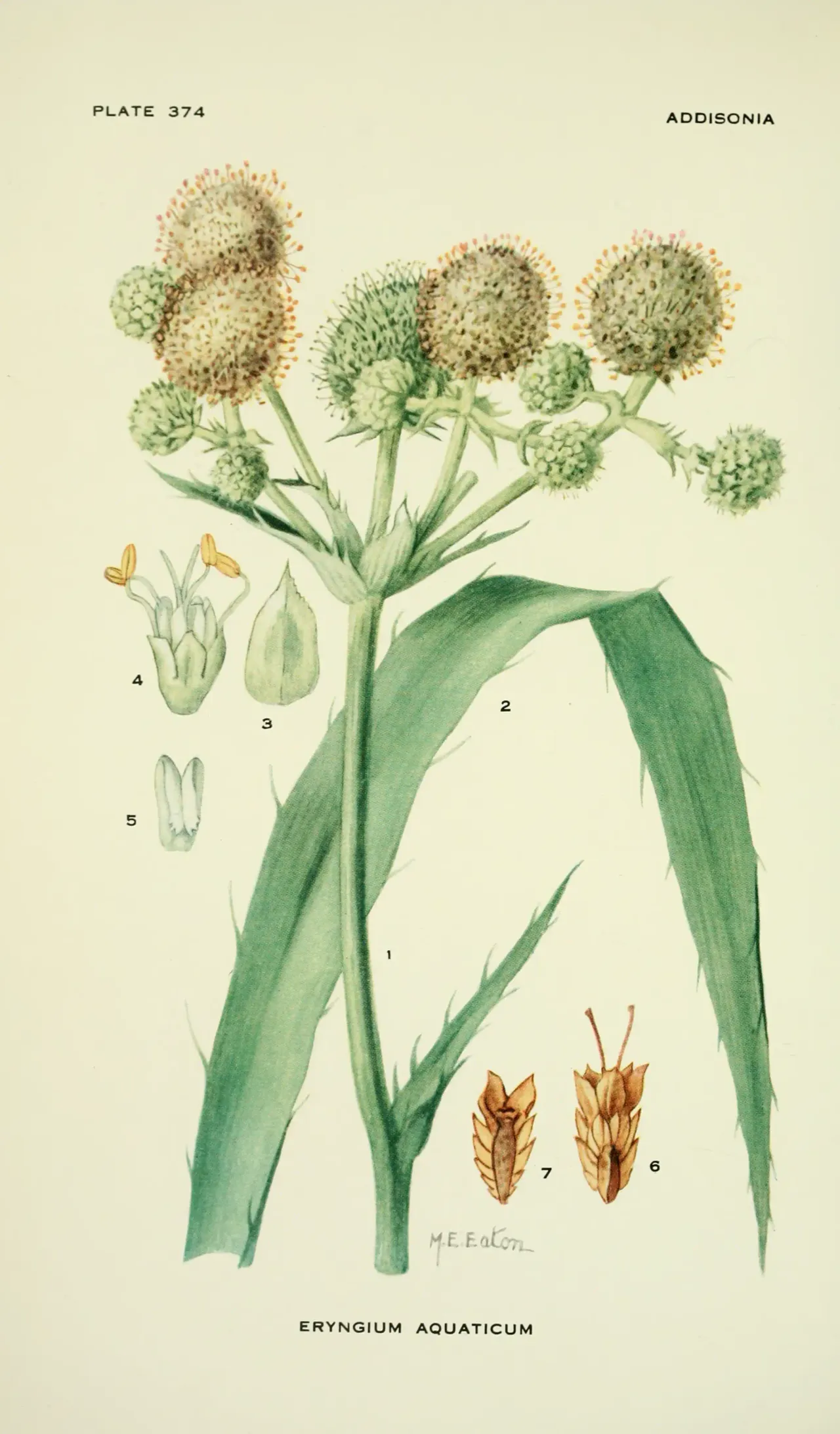 1 of 2
Native to the Southeast and the Northeast
Coastal areas from southeastern New Jersey to Florida and Mississippi
- Light Partial shade Sun tolerance
- Moisture Wet Moisture preference
- Zones 7–10 Cold to heat range
- Bloom Jul–Nov Flowering time
- Height up to 6 ft to 1.8 m
- Life cycle Biennial Annual to perennial
In the garden
A wetland wildflower for partial shade and wet soil. Its green flowers peak in August. At up to 6 ft, it needs room in rain gardens, pond edges, and damp low spots. Hardy in USDA zones 7–10.
Growing conditions
Light
Full sun Partial shade Full shade
Moisture
Dry Moist Wet
Hardiness zones
Find your zone:
When it blooms
The Marsh Rattlesnake Master's green flowers bloom July to November, peaking in August. This late-summer display draws butterflies and wasps.
Marsh Rattlesnake Master blooms greenFoliage
Pollinators & wildlife
- Butterflies Monarch
also Eastern Tiger Swallowtail, Fiery Skipper, Queen +10 more
Spicebush Swallowtail, Cloudless Sulphur, American Snout, Horace's Duskywing, Palamedes Swallowtail, Byssus Skipper, Atrytone delaware, Panoquina ocola, White Peacock, Mitoura gryneus - Wasps Fraternal Potter Wasp also Red-marked Pachodynerus Wasp, Hidalgo Mason Wasp, Zethus spinipes variegatus
- Bees Common Eastern Bumble Bee also Southern Carpenter Bee, Southern Plains Bumble Bee, Sumac Cellophane-Cuckoo
- Also visited by
- Moths: Hummingbird Clearwing
Butterflies that use this plant
Documented host and nectar records. Each links to a planting guide for that butterfly.
- American snoutnectar
- Cloudless sulphurnectar
- Eastern tiger swallowtailnectar
- Fiery skippernectar
- Juniper hairstreaknectar
- Monarch butterflynectar
- Palamedes swallowtailnectar
- Queennectar
- Spicebush swallowtailnectar
Full plant details
Where it grows
- Habitat
- WetlandThe wild plant community it grows in.
- Native range
- The Southeast and the NortheastUnited States (11): AL, DC, DE, FL, GA, MD, MS, NC, NJ, SC, VA. Where it grows wild on its own, by state and province.
- Native distribution
- Coastal areas from southeastern New Jersey to Florida and MississippiThe same native range, usually more exact than the state list, and often noting where it has spread beyond it.
Growing conditions
- Light
- Partial shadeHow much sun it takes, from full sun to full shade.
- Moisture
- WetThe soil dampness it prefers, from dry to wet.
- Hardiness zones
- USDA 7–10The cold-to-heat climate range it survives.
- Soil
- Wet, somewhat acid, soilsThe soils it grows in naturally.
- Soil texture
- Light to medium (sandy to loamy)The soil grade it prefers, from sand to clay.
- Soil pH
- Mildly acid to mildly alkalineThe acidity to alkalinity it tolerates (7 is neutral).
- Soil quality
- Low (tolerates poor soil)How rich a soil it needs. Many natives prefer lean soil and flop in rich beds.
Growth & form
- Height
- up to 6 ft (to 1.8 m)Typical mature height.
- Life cycle
- BiennialWhether it lives a single season (annual), two (biennial), or returns for years (perennial).
Flowers, foliage & fruit
- Type
- WildflowerWhat kind of plant it is.
- Bloom
- Jul–NovWhen it flowers.
- Flower color
- GreenThe bloom color, or colors.
- Fruit/Seeds
- SchizocarpThe seed or fruit it sets after flowering.
- Toxicity
- None knownWhether any part is poisonous to people or pets.