woodland shrub
Southern arrowwood
Viburnum dentatum
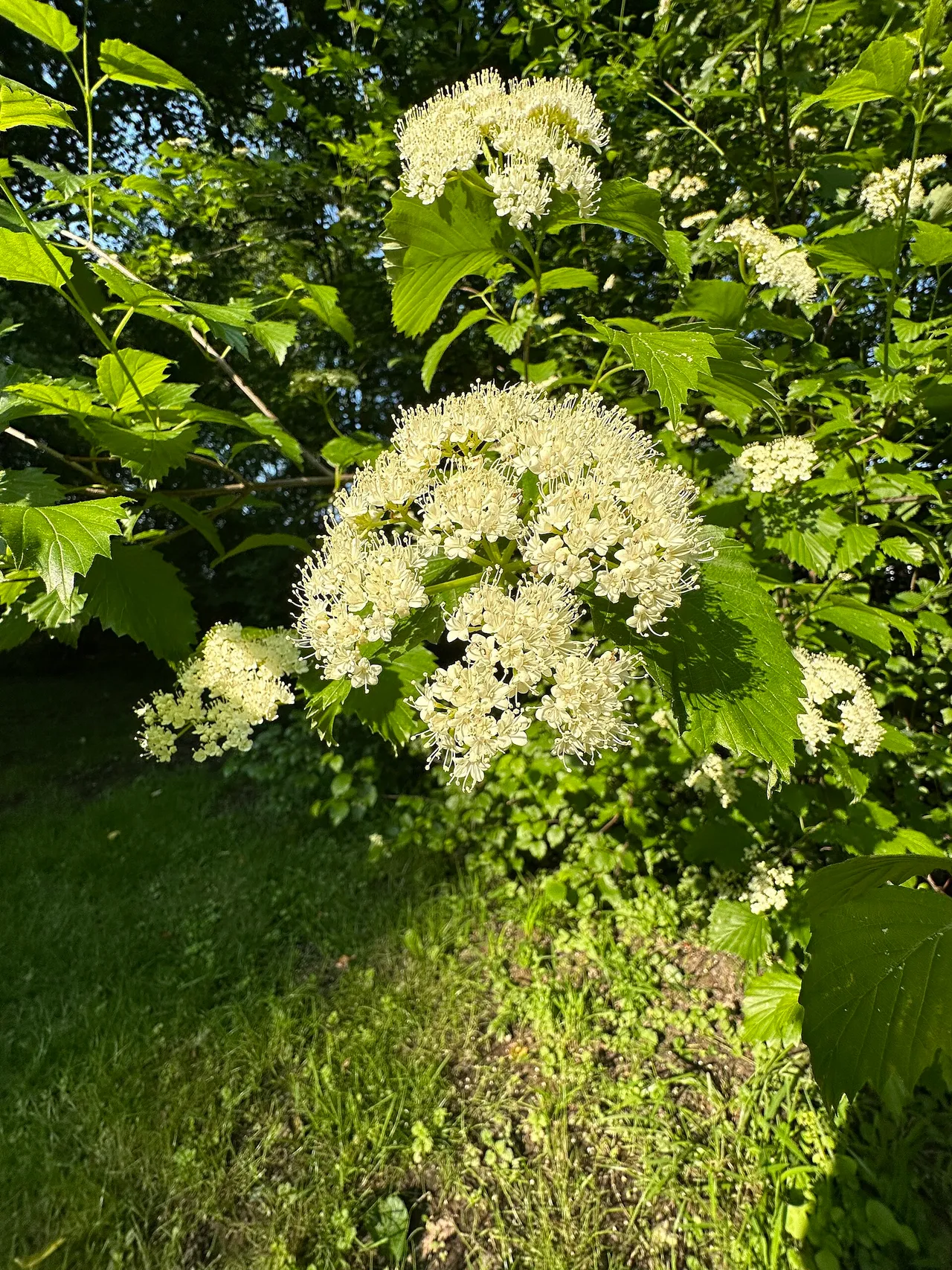 1 of 2
Native to much of the USA
Florida to eastern Texas, northern, especially on the Coastal Plain to Massachusetts and Ohio
- Light Full sun to shade Sun tolerance
- Moisture Moist Moisture preference
- Zones 4–9 Cold to heat range
- Bloom May–Jul Flowering time
- Height
- Life cycle Perennial Annual to perennial
In the garden
A woodland shrub for sun through shade and evenly moist soil. Hardy in USDA zones 4–9.
Growing conditions
Light
Full sun Partial shade Full shade
Moisture
Dry Moist Wet
Hardiness zones
Find your zone:
Pollinators & wildlife
- Bees Common Eastern Bumble Bee
also Western Honey Bee, Eastern Carpenter Bee, American Bumble Bee +39 more
Orange-legged Furrow Bee, Sculptured Resin Bee, Golden Sweat Bee, Hawthorn Mining Bee, Carlin's Mining Bee, Neighborly Mining Bee, Rufous-backed Cellophane Bee, Rugose-chested Sweat Bee, Eastern Miner Bee, Cresson's Mining Bee, Squash Longhorn-Cuckoo, Cherry Mining Bee, Allegheny Mining Bee, Nude Mining Bee, Ceratina dupla, Hylaeus affinis, Cresson's Sweat Bee, Imitator Miner Bee, Experienced Sweat Bee, Osmia pumila, Osmia conjuncta, Forbes' Mining Bee, Big-cheeked Angled-Mason, Toothed Miner Bee, Fox's Sweat Bee, Goatsbeard Miner Bee, Andrena personata, Sphecodes smilacinae, Box-headed Furrow Bee, Small Willow Miner Bee, Xylocopa virginica virginica, Milwaukee Mining Bee, Pseudopanurgus passiflorae, Svastra compta, Andrena sayi, Short-horned Yellow-face Bee, Robertson's Miner Bee, Hylaeus illinoisensis, Tetragona dissecta - Butterflies Eastern Tiger Swallowtail
also Red Admiral, Silver-spotted Skipper, Pipevine Swallowtail +14 more
American Lady, Great Spangled Fritillary, Question Mark, Peck's Skipper, Eastern Comma, Checkered White, American Red Admiral, Banded Hairstreak, Little Glassywing, Common Sootywing, Lycaena hypophlaeas hypophlaeas, Incisalia niphon, Papilio cresphontes, Cyaniris neglecta - Beetles Asian Lady Beetle
also Margined Leatherwing Beetle, Strangalepta Flower Longhorn Beetle, Emerald Flower Scarab +13 more
Slender Flower Longhorn Beetle, Althaeus hibisci, Onthophagus pennsylvanicus, Disonycha limbicollis, Mordellistena aspersa, Yellow-shouldered Tumbling Flower Beetle, Trichiotinus affinis, Mordellistena biplagiata, Euderces picipes, Bimaculate Longhorn Beetle, Callimoxys sanguinicollis, Mordellistena grammica, Chilocorus stigma - Also visited by
- Flower flies:
Margined Calligrapher, Transverse-banded Flower Fly +5 more
Oblique Streaktail, Thick-legged Hover Fly, Yellow-legged Flower Fly, Short-tailed Aphideater, Wasp-like Falsehorn - Birds:
Red-winged Blackbird, Yellow-rumped Warbler +2 more
White-throated Sparrow, Great Crested Flycatcher - Moths:
Virginia Ctenucha Moth, Hummingbird Clearwing +2 more
Eight-spotted Forester Moth, Virginia Creeper Sphinx - Wasps:
Fraternal Potter Wasp, Pseudodynerus quadrisectus +1 more
German Yellowjacket
- Flower flies:
Butterflies that use this plant
Documented host and nectar records. Each links to a planting guide for that butterfly.
- Summer azurehost & nectar
- American ladynectar
- Banded hairstreaknectar
- Checkered whitenectar
- Eastern commanectar
- Eastern pine elfinnectar
- Eastern tiger swallowtailnectar
- Giant swallowtailnectar
- Great spangled fritillarynectar
- Pipevine swallowtailnectar
- Question marknectar
- Red admiralnectar
- Silver-spotted skippernectar
Full plant details
Where it grows
- Habitat
- WoodlandThe wild plant community it grows in.
- Native range
- Much of the USAUnited States (27): AL, AR, CT, DC, DE, FL, GA, IL, IN, KY, LA, MA, MD, MO, MS, NC, NH, NJ, NY, OH, PA, RI, SC, TN, TX, VA, WV. Where it grows wild on its own, by state and province.
- Native distribution
- Florida to eastern Texas, northern, especially on the Coastal Plain to Massachusetts and OhioThe same native range, usually more exact than the state list, and often noting where it has spread beyond it.
Growing conditions
- Light
- Full sun to shadeHow much sun it takes, from full sun to full shade.
- Moisture
- MoistThe soil dampness it prefers, from dry to wet.
- Hardiness zones
- USDA 4–9 · Canadian 4–7The cold-to-heat climate range it survives.
- Soil
- Dry to wet, acid soils and sandsThe soils it grows in naturally.
- Soil texture
- Light to heavy (sandy to clay)The soil grade it prefers, from sand to clay.
- Soil pH
- Mildly acid to mildly alkalineThe acidity to alkalinity it tolerates (7 is neutral).
Growth & form
- Life cycle
- PerennialWhether it lives a single season (annual), two (biennial), or returns for years (perennial).
- Growth rate
- RapidA relative ranking versus other plants of the same type (USDA), not an absolute rate.
Flowers, foliage & fruit
- Type
- ShrubWhat kind of plant it is.
- Bloom
- May–JulWhen it flowers.
- Flower color
- WhiteThe bloom color, or colors.
- Toxicity
- None knownWhether any part is poisonous to people or pets.