woodland wildflower
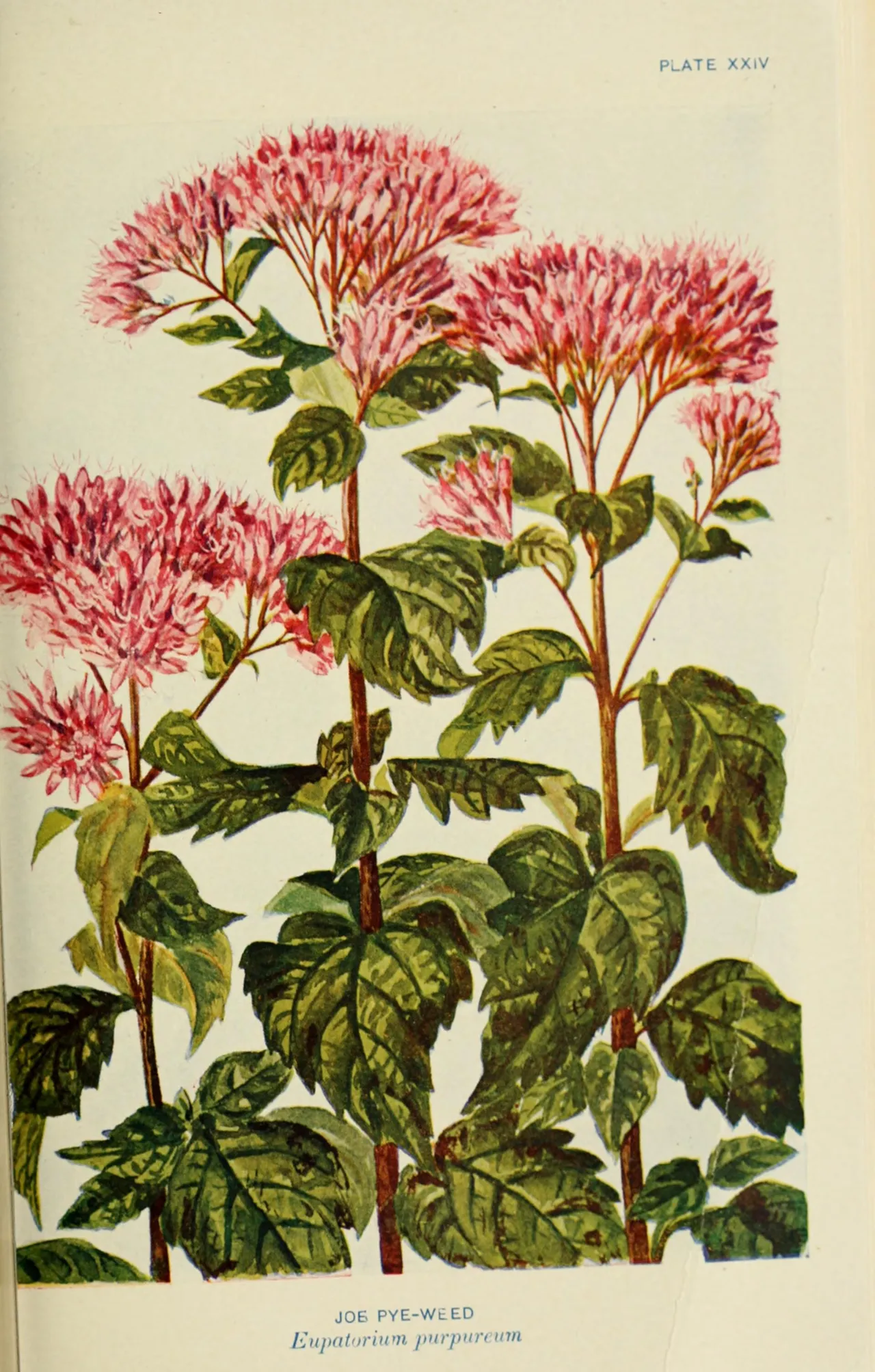
Sweet Joe-Pye-weed
Eutrochium purpureum
Also known as Purple Joepyeweed, Sweet-scented Joepyeweed, Sweet Joepyeweed, sweetscented joe pye weed
 1 of 3
Native to much of the USA and southern Canada
Southern New Hampshire to Pennsylvania and mountains to Georgia, west to western Minnesota, southeastern Nebraska and Oklahoma
- Light Full sun to shade Sun tolerance
- Moisture Moist Moisture preference
- Zones 4–8 Cold to heat range
- Bloom Jul–Sep Flowering time
- Height up to 6 ft to 1.8 m
- Life cycle Perennial Annual to perennial
In the garden
A woodland wildflower for sun through shade and evenly moist soil. Its pink and purple flowers peak in August. At up to 6 ft, it needs room in shade gardens and woodland edges. Hardy in USDA zones 4–8.
Growing conditions
Hardiness zones
When it blooms
The Sweet Joe-Pye-weed's pink and purple flowers bloom July to September, peaking in August. This late-summer display draws bees and butterflies.
Sweet Joe-Pye-weed blooms pink & purpleFoliage
Pollinators & wildlife
- Bees Common Eastern Bumble Bee
also Western Honey Bee, Eastern Carpenter Bee, Brown-belted Bumble Bee +27 more
Two-spotted Bumble Bee, Tricolored Bumble Bee, Pure Green Sweat bee, Bombus fervidus, Red-belted Bumble Bee, Two-spotted Longhorn Bee, Black-and-gold Bumble Bee, Half-black Bumble Bee, Lemon Cuckoo Bumble Bee, Yellow-banded Bumble Bee, Carpenter-mimic Leafcutter Bee, Flat-tailed Leafcutter Bee, Oblong Woolcarder Bee, Rusty-patched Bumble Bee, Spurred Ceratina, Yellowish Cuckoo Bumble bee, Sunflower Mining Bee, Agile Longhorn Bee, Nude Mining Bee, Obscure Sweat Bee, white-winged sweat bee, Lunate Longhorn-cuckoo Bee, Coelioxys brevis, Pseudopanurgus parvus, Sunflower Cuckoo Nomad Bee, Pseudopanurgus passiflorae, Two-banded Cellophane-cuckoo Bee - Butterflies Monarch
also Eastern Tiger Swallowtail, Red Admiral, Common Buckeye +25 more
Fiery Skipper, Silver-spotted Skipper, Painted Lady, Pipevine Swallowtail, Gray Hairstreak, American Lady, Spicebush Swallowtail, Zabulon Skipper, Peck's Skipper, Checkered White, Horace's Duskywing, Dun Skipper, Wild Indigo Duskywing, Arogos Skipper, Dukes' Skipper, Epargyreus clarus clarus, Panoquina ocola, Papilio cresphontes, Cyaniris neglecta, Danaus plexippus plexippus, Leonard's Skipper, Thecla edwardsi, Silvery Checkerspot, Polites coras, Anosia plexippus - Moths Snowberry Clearwing
also Yellow-collared Scape Moth, Large Maple Spanworm Moth, Hummingbird Clearwing +18 more
Lucerne Moth, North American Common Gray, Tulip-tree Beauty, Corn Earworm Moth, Confused Eusarca Moth, Delicate Cycnia Moth, Spotted Beet Webworm Moth, Dark-banded Owlet, Common Grass-veneer, Minor Angle, Cross-striped Cabbageworm Moth, Signate Quaker, Unspotted Looper Moth, Hahncappsia marculenta, Saucrobotys fumoferalis, Zebra Conchylodes Moth, Patalene olyzonaria, Plusia precationis - Also visited by
- Flower flies:
Eastern Hornet Fly, Exoprosopa fasciata +4 more
Yellow-legged Bog Fly, grasshopper bee fly, Ocyptamus costatus, Volucella vesiculosa - Beetles:
Seven-spotted Lady Beetle, Convergent Lady Beetle +4 more
Spotted Cucumber Beetle, Banded Longhorn Beetle, Tomentous Soldier Beetle, Mordellistena comata - Wasps:
Fraternal Potter Wasp, Perennial Mason Wasp +1 more
Pseudodynerus quadrisectus
- Flower flies:
Butterflies that use this plant
Documented host and nectar records. Each links to a planting guide for that butterfly.
- American ladynectar
- Checkered whitenectar
- Common buckeyenectar
- Eastern tiger swallowtailnectar
- Edwards' hairstreaknectar
- Fiery skippernectar
- Giant swallowtailnectar
- Gray hairstreaknectar
- Monarch butterflynectar
- Painted ladynectar
- Pipevine swallowtailnectar
- Red admiralnectar
- Silver-spotted skippernectar
- Silvery checkerspotnectar
- Spicebush swallowtailnectar
- Summer azurenectar
Full plant details
Where it grows
- Habitat
- WoodlandThe wild plant community it grows in.
- Native range
- Much of the USA and southern CanadaUnited States (34): AL, AR, CT, DC, DE, GA, IA, IL, IN, KS, KY, LA, MA, MD, ME, MI, MN, MO, MS, NC, NE, NH, NJ, NY, OH, OK, PA, RI, SC, TN, VA, VT, WI, WV. Canada (1): ON. Where it grows wild on its own, by state and province.
- Native distribution
- Southern New Hampshire to Pennsylvania and mountains to Georgia, west to western Minnesota, southeastern Nebraska and OklahomaThe same native range, usually more exact than the state list, and often noting where it has spread beyond it.
Growing conditions
- Light
- Full sun to shadeHow much sun it takes, from full sun to full shade.
- Moisture
- MoistThe soil dampness it prefers, from dry to wet.
- Hardiness zones
- USDA 4–8 · Canadian 5–7The cold-to-heat climate range it survives.
- Soil
- Moist soilsThe soils it grows in naturally.
Growth & form
- Height
- up to 6 ft (to 1.8 m)Typical mature height.
- Life cycle
- PerennialWhether it lives a single season (annual), two (biennial), or returns for years (perennial).
Flowers, foliage & fruit
- Type
- WildflowerWhat kind of plant it is.
- Bloom
- Jul–SepWhen it flowers.
- Flower color
- Pink, PurpleThe bloom color, or colors.
- Fruit/Seeds
- Achene; ripens Aug–OctThe seed or fruit it sets after flowering.
- Toxicity
- None knownWhether any part is poisonous to people or pets.