wetland wildflower
Blue vervain
Verbena hastata
Also known as Swamp Verbena, Blue Verbena, Simpler's Joy
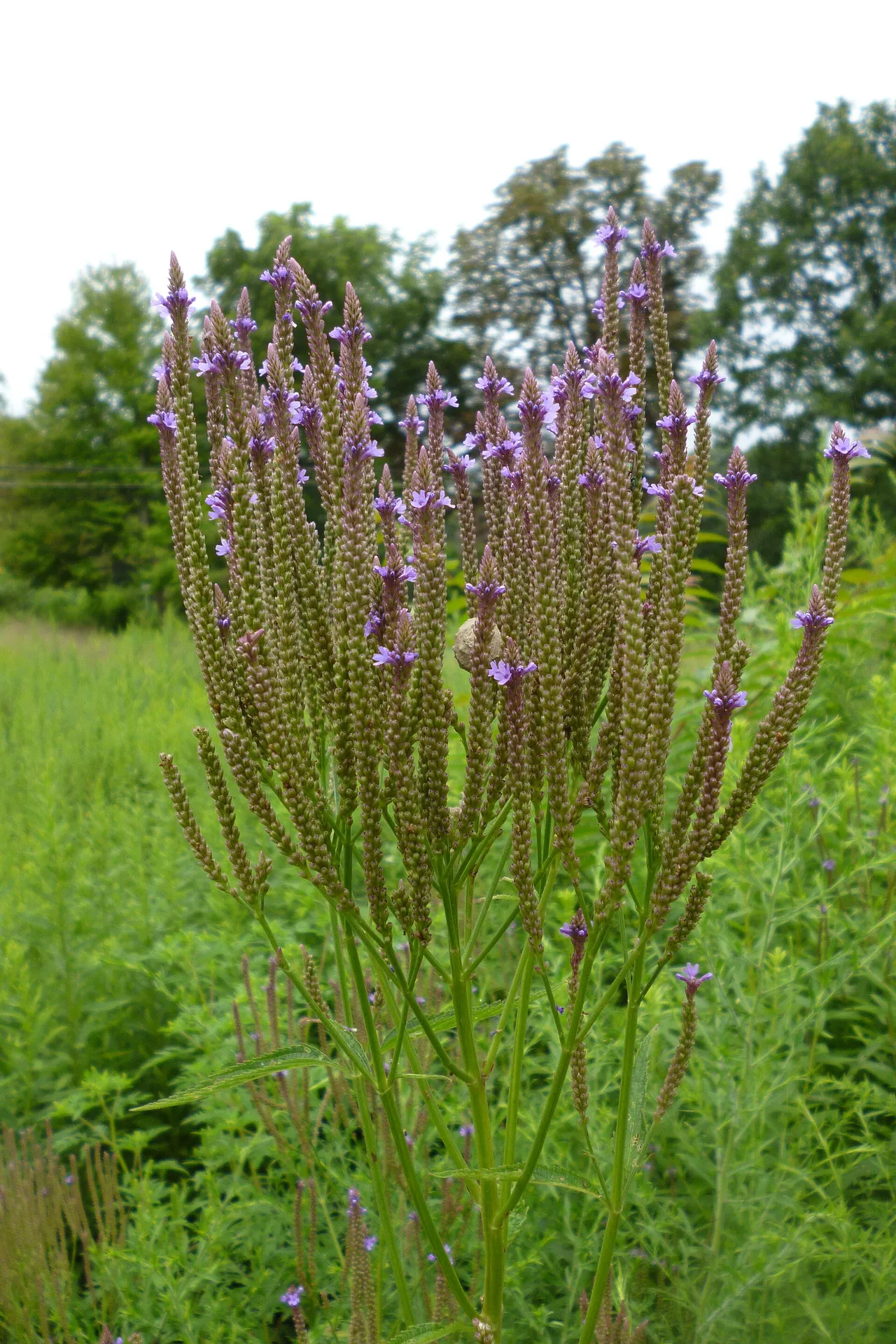 1 of 2
Native to most of the USA and southern Canada
Nova Scotia to British Columbia, south to Florida, Kansas, New Mexico and California
- Light Full sun to shade Sun tolerance
- Moisture Moist to wet Moisture preference
- Zones 3–8 Cold to heat range
- Bloom Jun–Sep Flowering time
- Height up to 6 ft to 1.8 m
- Life cycle Biennial or perennial Annual to perennial
In the garden
A wetland wildflower for sun through shade and consistently moist to wet soil. At up to 6 ft, it needs room in rain gardens, pond edges, and damp low spots. Hardy in USDA zones 3–8.
Growing conditions
Light
Full sun Partial shade Full shade
Moisture
Dry Moist Wet
Hardiness zones
Find your zone:
Pollinators & wildlife
- Bees Common Eastern Bumble Bee
also Western Honey Bee, Eastern Carpenter Bee, Brown-belted Bumble Bee +80 more
Two-spotted Bumble Bee, American Bumble Bee, Ligated Furrow Bee, Tricolored Bumble Bee, Bicolored Striped Sweat Bee, Pure Green Sweat bee, Red-belted Bumble Bee, Hunt's Bumble Bee, Two-spotted Longhorn Bee, Perplexing Bumble Bee, Fuzzy-Horned Bumble Bee, European Woolcarder Bee, Black-and-gold Bumble Bee, Half-black Bumble Bee, Orange-legged Furrow Bee, Lemon Cuckoo Bumble Bee, Northern Amber Bumble Bee, Brown-winged Striped Sweat Bee, Yellow-banded Bumble Bee, Flat-tailed Leafcutter Bee, Sculptured Resin Bee, Oblong Woolcarder Bee, Golden Sweat Bee, Rusty-patched Bumble Bee, Confusing Furrow Bee, Spurred Ceratina, Alfalfa Leafcutter Bee, Yellowish Cuckoo Bumble bee, Dark-veined Longhorn Bee, broad-handed leafcutter bee, Carlin's Mining Bee, Eastern Thistle Longhorn Bee, Hairy-banded Mining Bee, Silky Striped Sweat Bee, Unarmed Leafcutter Bee, Denticulate Longhorn Bee, Northeastern Sweat Bee, Louisiana Painted-Dark bee, Eastern Miner Bee, Silver-tailed Petalcutter, Petulant Leafcutter Bee, Red-footed Cuckoo Leafcutter, Say's Cuckoo Leafcutter Bee, Brown-winged Long-horned Bee, Squash Longhorn-Cuckoo, Cherry Mining Bee, Goldenrod Longhorn-Cuckoo Bee, Agile Longhorn Bee, Megachile brevis, Ceratina dupla, Ceratina mikmaqi, Triepeolus simplex, Osmia conjuncta, Triepeolus cressonii, hoary sweat bee, Broad-faced Masked Bee, Goatsbeard Miner Bee, Melissodes niveus, Melissodes coloradensis, Nomada parva, Pseudopanurgus passiflorae, Anthidiellum notatum notatum, Tifton Nomad Bee, Sunflower Cuckoo Nomad Bee, Coelioxys coturnix, Bellflower Resin Bee, Nimble Ceratina, Lunate Longhorn-cuckoo Bee, Xylocopa virginica virginica, Two-banded Cellophane-cuckoo Bee, Drury's Long-horned Bee, Augochlora feronia, Coelioxys brevis, Zephyr Sweat Bee, Melissodes dentiventris, Svastra atripes, Triepeolus concavus, Coelioxys modesta, Coelioxys octodentata, Calliopsis nebraskensis - Butterflies Monarch
also Eastern Tiger Swallowtail, Black Swallowtail, Pearl Crescent +38 more
Common Buckeye, Fiery Skipper, Silver-spotted Skipper, Gray Hairstreak, American Lady, Orange Sulphur, Eastern Tailed-Blue, Great Spangled Fritillary, Spicebush Swallowtail, Viceroy, Zabulon Skipper, Clouded Sulphur, Eastern Black Swallowtail, Peck's Skipper, Checkered White, Common Wood-Nymph, Dun Skipper, Dainty Sulphur, Woodland Skipper, Least Skipper, American Copper, Tawny-edged Skipper, Atlantis Fritillary, Common Sootywing, Melissa Blue, Broad-winged Skipper, Cassius Blue, American Silver-bordered Fritillary, Dion Skipper, Mulberry Wing, Boloria selene nebraskensis, Epargyreus clarus clarus, Cyaniris neglecta, Atalopedes campestris, Pyrgus communis, Clossiana toddi ammiralis, Silvery Checkerspot, Polites coras - Flower flies Margined Calligrapher
also Eastern Calligrapher, Common Drone Fly, Thick-legged Hover Fly +10 more
American Snout Fly, Band-winged Bee Fly, Bald-faced Hornet Fly, Exoprosopa fasciata, Systropus macer, Eastern Catkin Fly, Black Pegleg, Pseudodoros clavatus, grasshopper bee fly, Geron rufipes - Also visited by
- Moths:
Snowberry Clearwing, Yellow-collared Scape Moth +10 more
Hummingbird Clearwing, Garden Webworm Moth, Arcigera Flower Moth, Squash Vine Borer, Chestnut-marked Pondweed Moth, Purple-backed Cabbageworm Moth, Verbena Moth, Fine-lined Sallow, Lycaena hyllus, Lycaena dione - Beetles:
Goldenrod Soldier Beetle, Inserted Case-bearing Leaf Beetle +2 more
Flat-headed Baldcypress Sapwood Beetle, Chauliognathus pennsylvanicus - Hummingbirds: Ruby-throated Hummingbird, Tufted Coquette
- Wasps: Bald-faced Hornet
- Moths:
Butterflies that use this plant
Documented host and nectar records. Each links to a planting guide for that butterfly.
- American coppernectar
- American ladynectar
- American snoutnectar
- Black swallowtailnectar
- Checkered whitenectar
- Clouded sulphurnectar
- Common buckeyenectar
- Common wood-nymphnectar
- Dainty sulphurnectar
- Eastern tailed-bluenectar
- Eastern tiger swallowtailnectar
- Fiery skippernectar
- Gray hairstreaknectar
- Great spangled fritillarynectar
- Melissa bluenectar
- Monarch butterflynectar
- Orange sulphurnectar
- Pearl crescentnectar
- Silver-bordered fritillarynectar
- Silver-spotted skippernectar
- Silvery checkerspotnectar
- Spicebush swallowtailnectar
- Summer azurenectar
- Viceroynectar
Full plant details
Where it grows
- Habitat
- WetlandThe wild plant community it grows in.
- Native range
- Most of the USA and southern CanadaUnited States (48): AL, AR, AZ, CA, CO, CT, DC, DE, GA, IA, ID, IL, IN, KS, KY, LA, MA, MD, ME, MI, MN, MO, MS, MT, NC, ND, NE, NH, NJ, NM, NV, NY, OH, OK, OR, PA, RI, SC, SD, TN, TX, UT, VA, VT, WA, WI, WV, WY. Canada (7): BC, MB, NB, NS, ON, QC, SK. Where it grows wild on its own, by state and province.
- Native distribution
- Nova Scotia to British Columbia, south to Florida, Kansas, New Mexico and CaliforniaThe same native range, usually more exact than the state list, and often noting where it has spread beyond it.
Growing conditions
- Light
- Full sun to shadeHow much sun it takes, from full sun to full shade.
- Moisture
- Moist to wetThe soil dampness it prefers, from dry to wet.
- Hardiness zones
- USDA 3–8 · Canadian 3–7The cold-to-heat climate range it survives.
- Soil
- Moist soilsThe soils it grows in naturally.
- Soil texture
- Light to heavy (sandy to clay)The soil grade it prefers, from sand to clay.
- Soil pH
- Mildly acid to mildly alkalineThe acidity to alkalinity it tolerates (7 is neutral).
Growth & form
- Height
- up to 6 ft (to 1.8 m)Typical mature height.
- Spread
- ~2 ft (0.6 m)How wide one plant gets, a guide to spacing.
- Life cycle
- Biennial or perennialWhether it lives a single season (annual), two (biennial), or returns for years (perennial).
Flowers, foliage & fruit
- Type
- WildflowerWhat kind of plant it is.
- Bloom
- Jun–SepWhen it flowers.
- Flower color
- Blue, PurpleThe bloom color, or colors.
- Fruit/Seeds
- SchizocarpThe seed or fruit it sets after flowering.
- Toxicity
- None knownWhether any part is poisonous to people or pets.