woodland grass
Culver's root
Veronicastrum virginicum
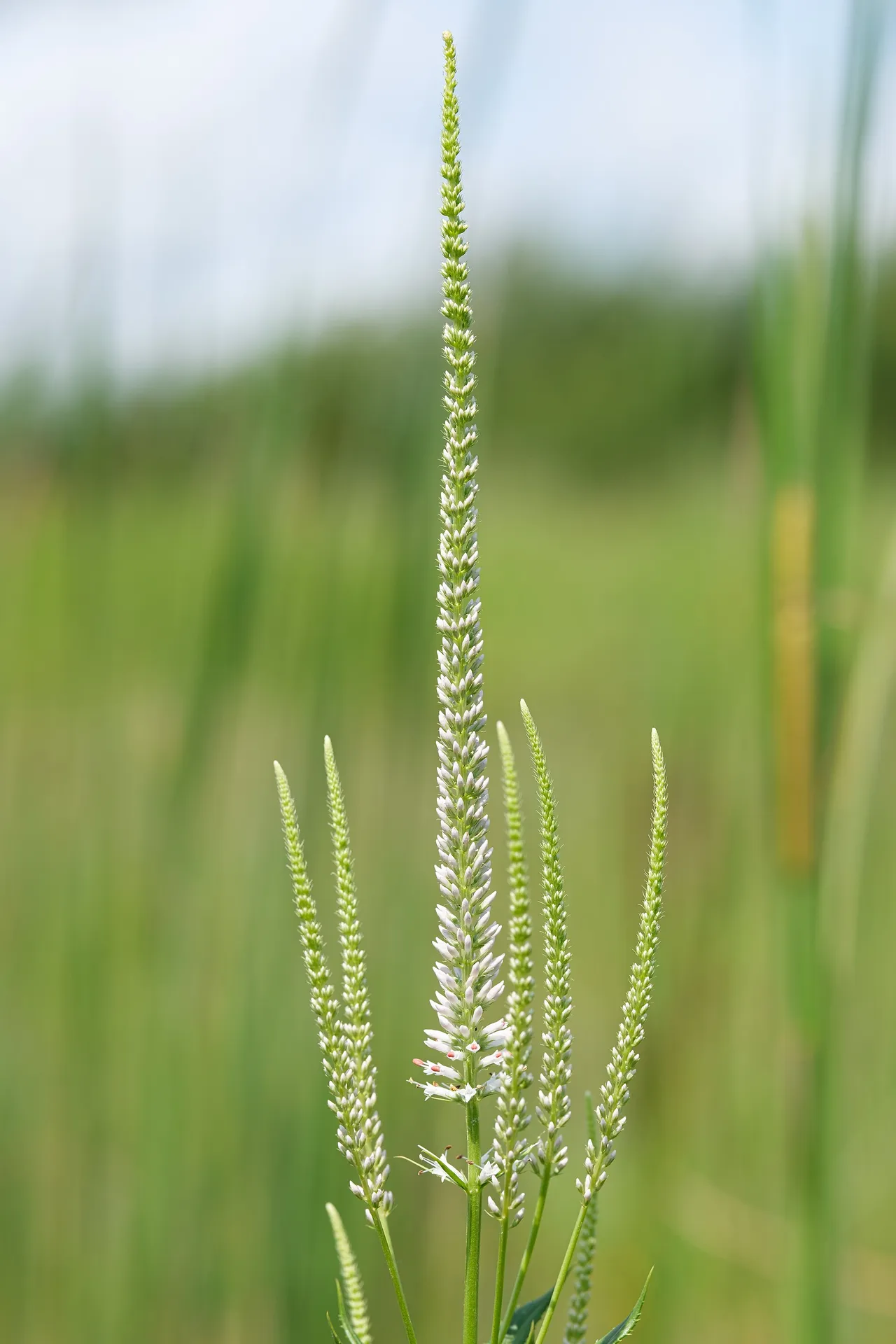
Native to much of the USA and southern Canada
Vermont to Ontario, south to Georgia, Louisiana and Oklahoma
- Light Full sun to part shade Sun tolerance
- Moisture Moist Moisture preference
- Zones 3–8 Cold to heat range
- Bloom Jul–Sep Flowering time
- Height up to 6 ft to 1.8 m
- Life cycle Perennial Annual to perennial
In the garden
A woodland grass for full sun to part shade and evenly moist soil. At up to 6 ft, it needs room in shade gardens and woodland edges. Hardy in USDA zones 3–8.
Growing conditions
Light
Full sun Partial shade Full shade
Moisture
Dry Moist Wet
Hardiness zones
Find your zone:
Pollinators & wildlife
- Bees Common Eastern Bumble Bee
also Western Honey Bee, Eastern Carpenter Bee, Brown-belted Bumble Bee +58 more
Two-spotted Bumble Bee, American Bumble Bee, Ligated Furrow Bee, Tricolored Bumble Bee, Pure Green Sweat bee, Bombus fervidus, Red-belted Bumble Bee, Hunt's Bumble Bee, Two-spotted Longhorn Bee, Perplexing Bumble Bee, European Woolcarder Bee, Black-and-gold Bumble Bee, Half-black Bumble Bee, Orange-legged Furrow Bee, Agapostemon texanus, Lemon Cuckoo Bumble Bee, Northern Amber Bumble Bee, Yellow-banded Bumble Bee, Carpenter-mimic Leafcutter Bee, Flat-tailed Leafcutter Bee, Sculptured Resin Bee, Rusty-patched Bumble Bee, Yellowish Cuckoo Bumble bee, Southern Plains Bumble Bee, Orange-tipped Wood-digger, Carlin's Mining Bee, Western Bumble Bee, Lucorum-group Bumble Bees, Louisiana Painted-Dark bee, Bristle Sweat Bee, Patchwork Leafcutter Bee, Brown-winged Long-horned Bee, Squash Longhorn-Cuckoo, Ceratina dupla, Hylaeus affinis, Hairy masked Bee, Experienced Sweat Bee, False Sunflower Cuckoo Nomad Bee, Virginia Mining Bee, Buff-tailed Bumble Bee, Red-tailed Bumble Bee, Megachile frugalis, Xylocopa virginica virginica, Coelioxys modesta, Two-banded Cellophane-cuckoo Bee, Green Furrow Bee, Early Bumble Bee, Pseudopanurgus passiflorae, Forest Cuckoo Bumble bee, Garden Bumble Bee, Common Carder Bumble Bee, Augochlora feronia, Agapostemon viridulus, Hoplitis pilosifrons, Coelioxys brevis, Short-horned Yellow-face Bee, Dilated-horned Small-Mason, Leavitt's Armored-Resin bee - Butterflies Monarch
also Eastern Tiger Swallowtail, Red Admiral, Common Buckeye +18 more
Silver-spotted Skipper, Gray Hairstreak, American Lady, Great Spangled Fritillary, Viceroy, Zabulon Skipper, Checkered White, Horace's Duskywing, Common Wood-Nymph, Red-banded Hairstreak, Reakirt's Blue, Wild Indigo Duskywing, Common Sootywing, Striped Hairstreak, Acadian Hairstreak, Limenitis arthemis arthemis, Cyaniris neglecta, Elkalyce comyntas - Flower flies Margined Calligrapher
also Eastern Calligrapher, Common Drone Fly, Transverse-banded Flower Fly +9 more
Oblique Streaktail, Thick-legged Hover Fly, Common Lagoon Fly, Orange-legged Drone Fly, Banded Thintail, Bare-eyed Bee-mimic Fly, Bald-faced Hornet Fly, Exoprosopa fasciata, Maize Calligrapher - Also visited by
- Moths:
Yellow-collared Scape Moth, Eight-spotted Forester Moth +10 more
Master's Dart, Carrot Seed Moth, Squash Vine Borer, Black-and-yellow Lichen Moth, Orange Mint Moth, Small Magpie, Toadflax Brocade Moth, Hologram Moth, Rush Veneer, Pink-spotted Dart - Beetles:
Goldenrod Soldier Beetle, Margined Leatherwing Beetle +7 more
Banded Longhorn Beetle, Mournful Long-horned Beetle, Mordellistena comata, Ditemnus bidentatus, Onthophagus pennsylvanicus, Tumbling Ragdoll, Chlorophorus glaucus - Wasps:
Bald-faced Hornet, Fraternal Potter Wasp +2 more
Four-toothed Mason Wasp, Tapered Mason Wasp - Hummingbirds: Ruby-throated Hummingbird
- Moths:
Butterflies that use this plant
Documented host and nectar records. Each links to a planting guide for that butterfly.
- American ladynectar
- Banded hairstreaknectar
- Checkered whitenectar
- Common buckeyenectar
- Common wood-nymphnectar
- Eastern tiger swallowtailnectar
- Gray hairstreaknectar
- Great spangled fritillarynectar
- Monarch butterflynectar
- Reakirt's bluenectar
- Red admiralnectar
- Red-banded hairstreaknectar
- Red-spotted purplenectar
- Silver-spotted skippernectar
- Summer azurenectar
- Viceroynectar
Full plant details
Where it grows
- Habitat
- WoodlandThe wild plant community it grows in.
- Native range
- Much of the USA and southern CanadaUnited States (31): AL, AR, CT, DC, DE, GA, IA, IL, IN, KS, KY, LA, MA, MD, MI, MN, MO, MS, NC, NJ, NY, OH, OK, PA, SC, TN, TX, VA, VT, WI, WV. Canada (1): ON. Where it grows wild on its own, by state and province.
- Native distribution
- Vermont to Ontario, south to Georgia, Louisiana and OklahomaThe same native range, usually more exact than the state list, and often noting where it has spread beyond it.
Growing conditions
- Light
- Full sun to part shadeHow much sun it takes, from full sun to full shade.
- Moisture
- MoistThe soil dampness it prefers, from dry to wet.
- Hardiness zones
- USDA 3–8 · Canadian 3–7The cold-to-heat climate range it survives.
- Soil
- Moist, rich soilsThe soils it grows in naturally.
- Soil texture
- Light to heavy (sandy to clay)The soil grade it prefers, from sand to clay.
- Soil pH
- Mildly acid to mildly alkalineThe acidity to alkalinity it tolerates (7 is neutral).
Growth & form
- Height
- up to 6 ft (to 1.8 m)Typical mature height.
- Spread
- ~2 ft (0.5 m)How wide one plant gets, a guide to spacing.
- Life cycle
- PerennialWhether it lives a single season (annual), two (biennial), or returns for years (perennial).
- Growth rate
- RapidA relative ranking versus other plants of the same type (USDA), not an absolute rate.
Flowers, foliage & fruit
- Type
- GrassWhat kind of plant it is.
- Bloom
- Jul–SepWhen it flowers.
- Flower color
- White, Pink, BlueThe bloom color, or colors.
- Toxicity
- None knownWhether any part is poisonous to people or pets.