prairie wildflower
Firewheel
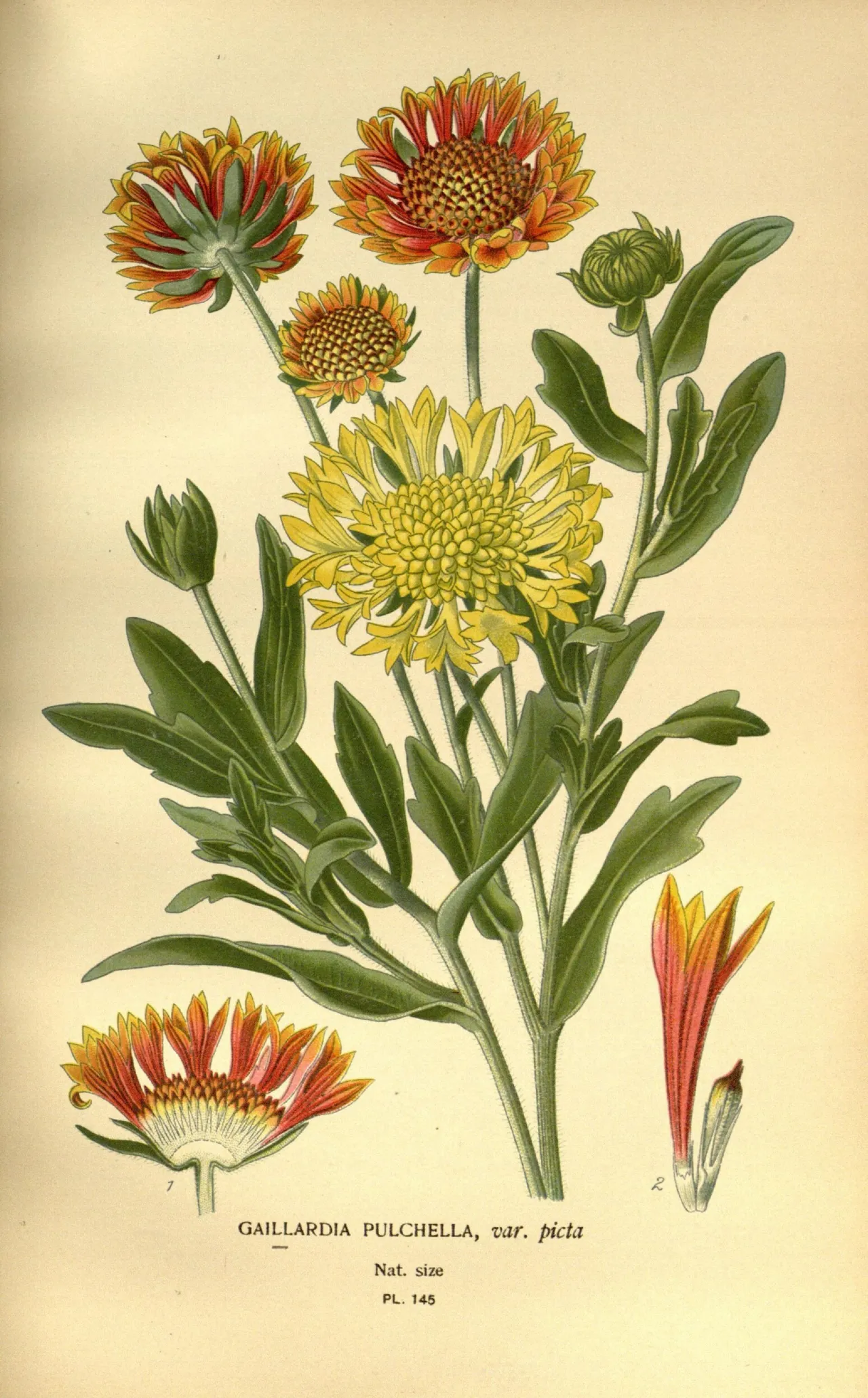
Gaillardia pulchella
Also known as Indian Blanket, Girasol Rojo
 1 of 3
Native to the Great Plains, the Southeast, and the Southwest
Western South Dakota to Kansas and Louisiana, west to Colorado and Arizona; naturalized east to the Atlantic states and west to California, south to Oaxaca in southern Mexico. The following native range is sometimes recognized: Sporadic distribution from North Carolina to Florida, west to South Dakota, Colorado and Arizona; a casual migrant or escape northeastward.
- Light Full sun to part shade Sun tolerance
- Moisture Dry Moisture preference
- Zones 3–11 Cold to heat range
- Bloom Mar–Nov Flowering time
- Height up to 2 ft to 0.6 m
- Life cycle Annual, Biennial, or perennial Annual to perennial
In the garden
A prairie wildflower for full sun to part shade and lean, dry soil. Its red flowers peak in April. At up to 2 ft, it suits meadows and sunny borders. Hardy in USDA zones 3–11.
Growing conditions
Hardiness zones
When it blooms
The Firewheel's red flowers bloom March to November, peaking in April. This spring display draws bees and butterflies.
Firewheel blooms red, yellow & brownFoliage
Pollinators & wildlife
- Bees Common Eastern Bumble Bee
also Western Honey Bee, Eastern Carpenter Bee, Brown-belted Bumble Bee +58 more
Two-spotted Bumble Bee, American Bumble Bee, Ligated Furrow Bee, Bicolored Striped Sweat Bee, Hunt's Bumble Bee, Two-spotted Longhorn Bee, Half-black Bumble Bee, Lemon Cuckoo Bumble Bee, Brown-winged Striped Sweat Bee, Carpenter-mimic Leafcutter Bee, Poey's Furrow Bee, Spurred Ceratina, Western Leafcutter Bee, Urbane Digger Bee, broad-handed leafcutter bee, Southern Plains Bumble Bee, Common Longhorn Bee, Cryptic Bumble Bee, Nomada vegana, Hoary Leafcutter Bee, Megachile albitarsis, Fervid Nomad Bee, Barrel Cactus Longhorn, Angeles Striped Sweat Bee, Sandhills Longhorn bee, Honey-tailed Miner, Megachile prosopidis, Triepeolus quadrifasciatus atlanticus, Bronze-winged Bamboo-Carpenter, Golden Furrow Bee, Epimelissodes petulcus, Norton's Alkali Bee, Agapostemon poeyi, Nimble Ceratina, Giant Sweat Bee, Lunate Longhorn-cuckoo Bee, Red Dwarf Honey Bee, Melissodes dentiventris, Megachile policaris, Svastra obliqua, Sonoran Bumble Bee, Halictidae sp., Florida Longhorn-Cuckoo, Lasioglossum pilosum, Drury's Long-horned Bee, Giant Furrow Bee, Coreopsis Fairy Bee, Melissodes communis communis, Great Banded Furrow Bee, Seven-toothed Red Resin bee, Valley Carpenter Bee, Osmia melanogaster, Common Carder Bumble Bee, Ceratina melanoptera, Common Oil-digger-Cuckoo, Prickly-pear Angled-Mason, Triepeolus grandis, Oblique Sweat Bee - Butterflies Monarch
also Gulf Fritillary, Black Swallowtail, Pearl Crescent +44 more
Common Buckeye, Fiery Skipper, Painted Lady, Pipevine Swallowtail, Gray Hairstreak, American Lady, Orange Sulphur, Variegated Fritillary, Queen, Common Checkered-Skipper and Allies, Clouded Sulphur, Cloudless Sulphur, Checkered White, Horace's Duskywing, Clouded Skipper, Dun Skipper, Dainty Sulphur, Phaon Crescent, Long-tailed Skipper, Marine Blue, Funereal Duskywing, Tawny-edged Skipper, Eufala Skipper, Great Southern White, Texan Crescent, Whirlabout, Julia Heliconian, Southern Skipperling, Cassius Blue, Mexican Yellow, Prairie Arogos Skipper, Little Yellow, Colias poliographus, Common Grass Blue, West Indian Mangrove Buckeye, Oak Hairstreak, Abaeis nicippe, Wallengrenia egeremet, Polites mystic, Pyrgus communis, Agraulis vanillae, Mallow Skipper, White-striped Longtail, Panoquina ocola - Flower flies Margined Calligrapher
also Eastern Calligrapher, Common Drone Fly, Oblique Streaktail +8 more
Long-tailed Aphideater, Narrow-headed Marsh Fly, Thick-legged Hover Fly, Yellow-shouldered Drone Fly, Northern Plushback, Common Lagoon Fly, Pseudodoros clavatus, Copestylum violaceum - Also visited by
- Wasps:
Metric Paper Wasp, Red-marked Pachodynerus Wasp +5 more
Euodynerus hidalgo boreoorientalis, Ancistrocerus bustamente, Euodynerus hidalgo hidalgo, Horse Paper Wasp, Hidalgo Mason Wasp - Moths:
Yellow-collared Scape Moth, Eight-spotted Forester Moth +6 more
Genista Broom Moth, Southern Emerald, Orange-spotted Flower Moth, Phoenician Pyrausta Moth and Allies, Tersa Sphinx, Hawaiian Beet Webworm Moth - Beetles:
Seven-spotted Lady Beetle, Goldenrod Soldier Beetle +3 more
Acmaeodera mixta, Acmaeodera neglecta, Mordellistena cervicalis
- Wasps:
Butterflies that use this plant
Documented host and nectar records. Each links to a planting guide for that butterfly.
- American ladynectar
- Black swallowtailnectar
- Checkered whitenectar
- Clouded sulphurnectar
- Cloudless sulphurnectar
- Common buckeyenectar
- Dainty sulphurnectar
- Fiery skippernectar
- Gray hairstreaknectar
- Gulf fritillarynectar
- Little yellownectar
- Marine bluenectar
- Monarch butterflynectar
- Orange sulphurnectar
- Painted ladynectar
- Pearl crescentnectar
- Pipevine swallowtailnectar
- Queennectar
- Sleepy orangenectar
- Summer azurenectar
- Variegated fritillarynectar
Full plant details
Where it grows
- Habitat
- PrairieThe wild plant community it grows in.
- Native range
- The Great Plains, the Southeast, and the SouthwestUnited States (19): AL, AR, AZ, CO, FL, IA, IL, KS, LA, MN, MO, NC, NE, NM, OK, SC, SD, TN, TX. Where it grows wild on its own, by state and province.
- Native distribution
- Western South Dakota to Kansas and Louisiana, west to Colorado and Arizona; naturalized east to the Atlantic states and west to California, south to Oaxaca in southern Mexico. The following native range is sometimes recognized: Sporadic distribution from North Carolina to Florida, west to South Dakota, Colorado and Arizona; a casual migrant or escape northeastward.The same native range, usually more exact than the state list, and often noting where it has spread beyond it.
Growing conditions
- Light
- Full sun to part shadeHow much sun it takes, from full sun to full shade.
- Moisture
- DryThe soil dampness it prefers, from dry to wet.
- Hardiness zones
- USDA 3–11 · Canadian 2–8The cold-to-heat climate range it survives.
- Soil
- Sandy or calcareous soils, often disturbed places, mostly in grasslands or open placesThe soils it grows in naturally.
- Soil pH
- 7.0–8.5The acidity to alkalinity it tolerates (7 is neutral).
- Soil quality
- MediumHow rich a soil it needs. Many natives prefer lean soil and flop in rich beds.
- Water use
- MediumHow thirsty it is, a rough guide to how often to water.
- Salinity tolerance
- NoneHow well it copes with salty soil, near roads or the coast.
- Lime (CaCO₃) tolerance
- HighHow well it copes with chalky, lime-rich soil.
Growth & form
- Height
- up to 2 ft (to 0.6 m)Typical mature height.
- Life cycle
- Annual, biennial, or perennialWhether it lives a single season (annual), two (biennial), or returns for years (perennial).
- Growth rate
- RapidA relative ranking versus other plants of the same type (USDA), not an absolute rate.
- Shape
- DecumbentIts overall silhouette.
- Root depth
- 12+ in (30+ cm)How far the roots reach, a guide to drought resilience and transplanting.
Flowers, foliage & fruit
- Type
- WildflowerWhat kind of plant it is.
- Bloom
- Mar–NovWhen it flowers.
- Flower color
- Red, Yellow, BrownThe bloom color, or colors.
- Fruit/Seeds
- ripens Apr–DecThe seed or fruit it sets after flowering.
- Toxicity
- None knownWhether any part is poisonous to people or pets.
Propagation & seed
- Cold stratification
- Not requiredWhether seed needs a cold, moist spell before it will germinate.
- Propagation
- SeedHow to start new plants.
- Seed
- ~0.2 million seeds per poundNotes on the seed and how to sow it.
- Seed spread rate
- RapidHow readily it self-sows. Slow or none means well-behaved, not a spreader.
- Seedling vigor
- HighHow strongly young seedlings establish.
- Vegetative spread
- NoneWhether it creeps outward or stays put in a clump.