wetland wildflower
Great blue lobelia
Lobelia siphilitica
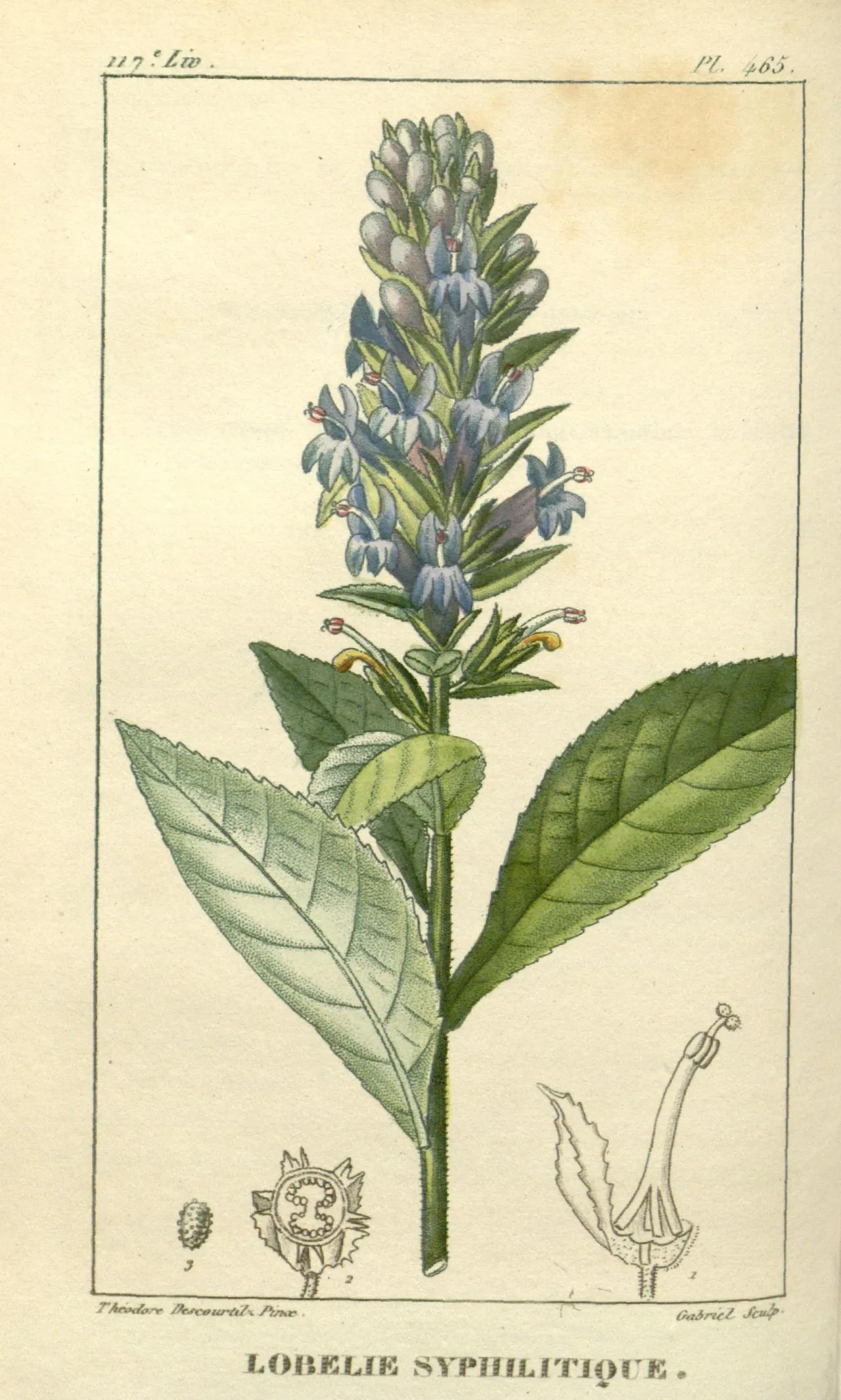 1 of 2
Native to much of the USA and southern Canada
Connecticut to extreme southeastern North Dakota and Goshen county, Wyoming, south to Georgia uplands, Texas and Colorado
- Light Full sun to shade Sun tolerance
- Moisture Moist to wet Moisture preference
- Zones 3–8 Cold to heat range
- Bloom Aug–Oct Flowering time
- Height up to 5 ft to 1.5 m
- Life cycle Perennial Annual to perennial
In the garden
A wetland wildflower for sun through shade and consistently moist to wet soil. Its blue and purple flowers peak in September. At up to 5 ft, it needs room in rain gardens, pond edges, and damp low spots. Hardy in USDA zones 3–8.
Growing conditions
Light
Full sun Partial shade Full shade
Moisture
Dry Moist Wet
Hardiness zones
Find your zone:
When it blooms
The Great blue lobelia's blue and purple flowers bloom August to October, peaking in September. This early-fall display draws bees and butterflies.
Great blue lobelia blooms blue & purpleFoliage
Pollinators & wildlife
- Bees Common Eastern Bumble Bee
also Western Honey Bee, Eastern Carpenter Bee, Brown-belted Bumble Bee +31 more
Two-spotted Bumble Bee, American Bumble Bee, Bombus fervidus, Hunt's Bumble Bee, European Woolcarder Bee, Black-and-gold Bumble Bee, Half-black Bumble Bee, Lemon Cuckoo Bumble Bee, Northern Amber Bumble Bee, Sculptured Resin Bee, Oblong Woolcarder Bee, Golden Sweat Bee, Rusty-patched Bumble Bee, Modest Masked Bee, Spurred Ceratina, Orange-tipped Wood-digger, Cherry Mining Bee, Anthophora walshii, Agile Longhorn Bee, Ceratina dupla, Nomada vincta, Experienced Sweat Bee, Osmia conjuncta, Triepeolus cressonii, Illinois Cuckoo Sweat Bee, white-winged sweat bee, Small Willow Miner Bee, Lasioglossum coriaceum, Tetraloniella albata, Xenoglossa strenua, Florida Masked Bee - Butterflies Monarch
also Eastern Tiger Swallowtail, Black Swallowtail, Fiery Skipper +31 more
Silver-spotted Skipper, Pipevine Swallowtail, Gray Hairstreak, American Lady, Orange Sulphur, Eastern Tailed-Blue, Great Spangled Fritillary, Variegated Fritillary, Spicebush Swallowtail, Zabulon Skipper, Clouded Sulphur, Peck's Skipper, Common Wood-Nymph, Least Skipper, Marine Blue, Tawny-edged Skipper, Eufala Skipper, Common Sootywing, Arogos Skipper, Dotted Roadside-Skipper, Papilio troilus troilus, Epargyreus clarus clarus, Papilio cresphontes, Edwards' Sulphur, Ottoe Skipper, Atalopedes campestris, Pyrgus communis, Speyeria idalia, Cynthia cardui, Polites coras, Anosia plexippus - Moths Large Yellow Underwing
also Snowberry Clearwing, Hummingbird Clearwing, Corn Earworm Moth +11 more
White-striped Black, Bedstraw Hawkmoth, Tobacco Budworm Moth, Orange Mint Moth, Unspotted Looper Moth, Raspberry Pyrausta Moth, Purple-backed Cabbageworm Moth, Ostrinia nubilalis, Common Looper Moth, Diathrausta reconditalis, Tersa Sphinx - Also visited by
- Flower flies:
Common Drone Fly, American Snout Fly +1 more
Hairy Wood Fly - Beetles: Goldenrod Soldier Beetle, Spotted Pink Lady Beetle
- Hummingbirds: Ruby-throated Hummingbird
- Flower flies:
Butterflies that use this plant
Documented host and nectar records. Each links to a planting guide for that butterfly.
- American ladynectar
- American snoutnectar
- Black swallowtailnectar
- Clouded sulphurnectar
- Common wood-nymphnectar
- Eastern tailed-bluenectar
- Eastern tiger swallowtailnectar
- Fiery skippernectar
- Giant swallowtailnectar
- Gray hairstreaknectar
- Great spangled fritillarynectar
- Marine bluenectar
- Monarch butterflynectar
- Orange sulphurnectar
- Pipevine swallowtailnectar
- Silver-spotted skippernectar
- Spicebush swallowtailnectar
- Variegated fritillarynectar
Full plant details
Where it grows
- Habitat
- WetlandThe wild plant community it grows in.
- Native range
- Much of the USA and southern CanadaUnited States (37): AL, AR, CO, CT, DC, DE, GA, IA, IL, IN, KS, KY, LA, MA, MD, MI, MN, MO, MS, NC, ND, NE, NH, NJ, NY, OH, OK, PA, SC, SD, TN, TX, VA, VT, WI, WV, WY. Canada (1): ON. Where it grows wild on its own, by state and province.
- Native distribution
- Connecticut to extreme southeastern North Dakota and Goshen county, Wyoming, south to Georgia uplands, Texas and ColoradoThe same native range, usually more exact than the state list, and often noting where it has spread beyond it.
Growing conditions
- Light
- Full sun to shadeHow much sun it takes, from full sun to full shade.
- Moisture
- Moist to wetThe soil dampness it prefers, from dry to wet.
- Hardiness zones
- USDA 3–8 · Canadian 4–7The cold-to-heat climate range it survives.
- Soil
- Clay, Loam, SandThe soils it grows in naturally.
- Soil texture
- Light to heavy (sandy to clay)The soil grade it prefers, from sand to clay.
- Soil pH
- Mildly acid to mildly alkalineThe acidity to alkalinity it tolerates (7 is neutral).
- Drought tolerance
- LowRelative to plants of the same type and region, inferred from where it grows, not a days-without-water figure.
Growth & form
- Height
- up to 5 ft (to 1.5 m)Typical mature height.
- Spread
- ~1 ft (0.3 m)How wide one plant gets, a guide to spacing.
- Life cycle
- PerennialWhether it lives a single season (annual), two (biennial), or returns for years (perennial).
- Growth rate
- ModerateA relative ranking versus other plants of the same type (USDA), not an absolute rate.
Flowers, foliage & fruit
- Type
- WildflowerWhat kind of plant it is.
- Bloom
- Aug–OctWhen it flowers.
- Flower color
- Blue, PurpleThe bloom color, or colors.
- Fruit/Seeds
- Capsule; ripens Aug–OctThe seed or fruit it sets after flowering.
- Toxicity
- Poisonous if eatenWhether any part is poisonous to people or pets.