wetland wildflower
Virginia mountain mint
Pycnanthemum virginianum
Also known as Virginia mountainmint
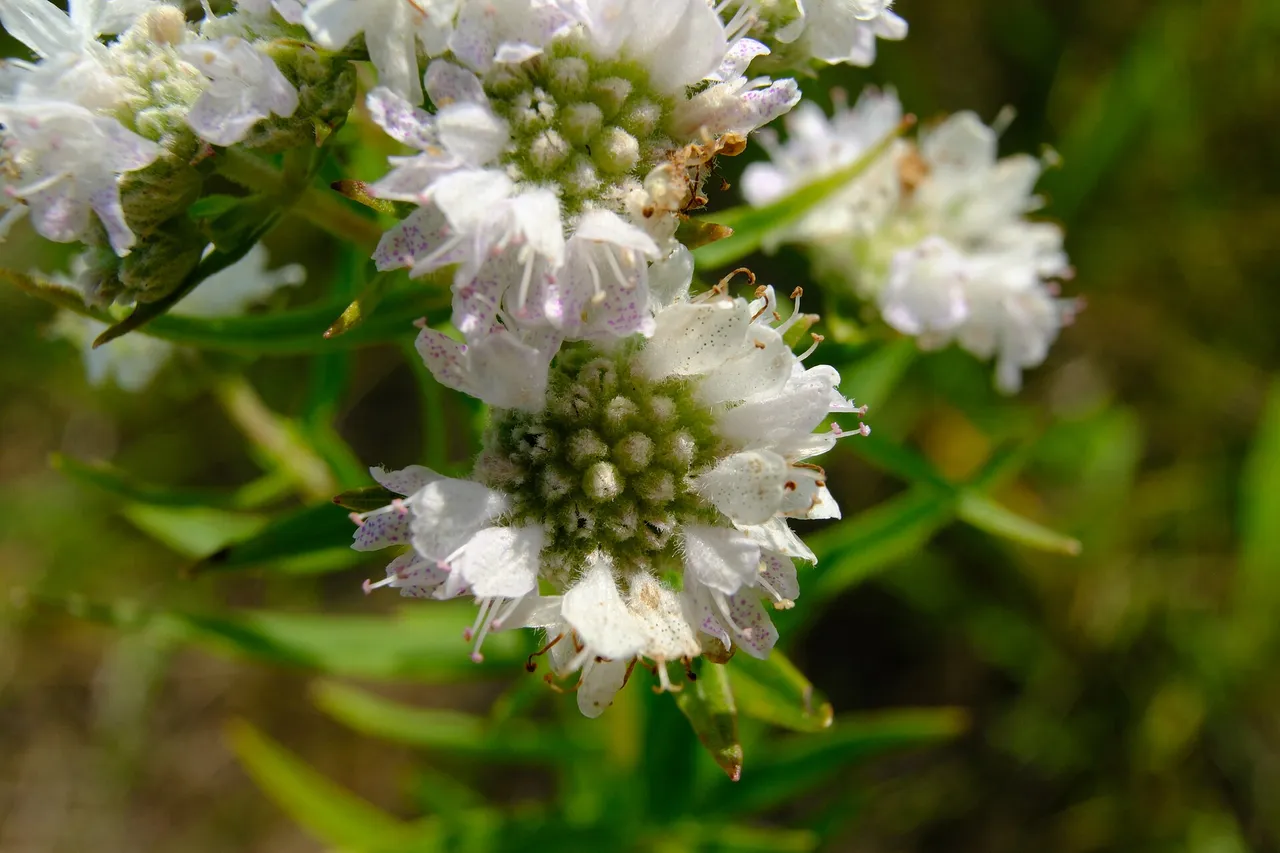 1 of 2
Native to much of the USA and southern Canada
Maine to North Dakota, south to Georgia and Oklahoma
- Light Partial shade Sun tolerance
- Moisture Moist Moisture preference
- Zones 3–8 Cold to heat range
- Bloom Jul–Aug Flowering time
- Height up to 3 ft to 0.9 m
- Life cycle Perennial Annual to perennial
In the garden
A wetland wildflower for partial shade and evenly moist soil. At up to 3 ft, it suits rain gardens, pond edges, and damp low spots. Hardy in USDA zones 3–8.
Growing conditions
Light
Full sun Partial shade Full shade
Moisture
Dry Moist Wet
Hardiness zones
Find your zone:
Pollinators & wildlife
- Bees Common Eastern Bumble Bee
also Western Honey Bee, Eastern Carpenter Bee, Brown-belted Bumble Bee +64 more
Two-spotted Bumble Bee, American Bumble Bee, Yellow-faced Bumble Bee, Ligated Furrow Bee, Tricolored Bumble Bee, Red-belted Bumble Bee, Hunt's Bumble Bee, Two-spotted Longhorn Bee, Perplexing Bumble Bee, Two-form Bumble Bee, Black-and-gold Bumble Bee, Half-black Bumble Bee, Orange-legged Furrow Bee, Lemon Cuckoo Bumble Bee, Brown-winged Striped Sweat Bee, Yellow-banded Bumble Bee, Sculptured Resin Bee, Rusty-patched Bumble Bee, Confusing Furrow Bee, Spurred Ceratina, Alfalfa Leafcutter Bee, Yellowish Cuckoo Bumble bee, Indiscriminate Cuckoo Bumble Bee, broad-handed leafcutter bee, Carlin's Mining Bee, Eastern Thistle Longhorn Bee, Silky Striped Sweat Bee, Northeastern Sweat Bee, Louisiana Painted-Dark bee, Bristle Sweat Bee, Rugose-chested Sweat Bee, Parallel-striped Sweat Bee, Eastern Miner Bee, Sunflower Mining Bee, Brown-winged Long-horned Bee, Cherry Mining Bee, Worthy Longhorn, Small-handed Leaf-cutter Bee, Dark-footed Yellow Loosestrife Bee, Hairy masked Bee, Triepeolus simplex, Experienced Sweat Bee, Thistle Longhorn-Cuckoo, Lasioglossum cinctipes, Osmia conjuncta, white-winged sweat bee, Williston's Cellophane Bee, Ptilothrix bombiformis, California Digger-cuckoo Bee, Coelioxys modesta, Two-banded Cellophane-cuckoo Bee, Nimble Ceratina, Coelioxys brevis, Colletes productus, Pseudopanurgus labrosus, Pseudopanurgus passiflorae, Anthophora aeneiventris, Lunate Longhorn-cuckoo Bee, Sphecodes dichrous, Augochlora feronia, Augochlora nominata, Leavitt's Armored-Resin bee, Sphecodes confertus, Svastra atripes - Butterflies Monarch
also Eastern Tiger Swallowtail, Red Admiral, Pearl Crescent +28 more
Common Buckeye, Fiery Skipper, Silver-spotted Skipper, Gray Hairstreak, Eastern Tailed-Blue, Great Spangled Fritillary, Spicebush Swallowtail, Viceroy, Clouded Sulphur, Peck's Skipper, American Snout, Checkered White, Horace's Duskywing, Red-banded Hairstreak, Tawny-edged Skipper, Banded Hairstreak, Atala, Aphrodite Fritillary, Coral Hairstreak, Sleepy Duskywing, Striped Hairstreak, Hoary Edge, Karner Blue, Junonia coenia coenia, Cyaniris neglecta, Mitoura gryneus, Asterocampa clyton, Limenitis arthemis arthemis - Wasps Fraternal Potter Wasp
also Four-toothed Mason Wasp, Common Aerial Yellowjacket, Euodynerus foraminatus +8 more
Ancistrocerus capra, Pseudodynerus quadrisectus, Euodynerus hidalgo boreoorientalis, Vertical potter wasp, Hidalgo Mason Wasp, Zethus spinipes, Ancistrocerus campestris, One-banded Mason Wasp - Also visited by
- Flower flies:
Common Drone Fly, Long-tailed Aphideater +9 more
Thick-legged Hover Fly, Eurasian Drone Fly, Northern Plushback, Band-winged Bee Fly, Exoprosopa fasciata, Dusky-banded Leafwalker, Systropus macer, Palpada meigenii, Sphaerophoria cylindricus - Moths:
Virginia Ctenucha Moth, Yellow-collared Scape Moth +5 more
Common Tan Wave, Eight-spotted Forester Moth, Orange Mint Moth, Pyrausta acrionalis, Acontia candefacta - Beetles:
Goldenrod Soldier Beetle, Margined Leatherwing Beetle +5 more
Banded Longhorn Beetle, Yellow-horned Flower Longhorn Beetle, Black Diabrotica, Mordellistena comata, Redbud Seed Weevil
- Flower flies:
Butterflies that use this plant
Documented host and nectar records. Each links to a planting guide for that butterfly.
- American snoutnectar
- Aphrodite fritillarynectar
- Banded hairstreaknectar
- Checkered whitenectar
- Clouded sulphurnectar
- Common buckeyenectar
- Coral hairstreaknectar
- Eastern tailed-bluenectar
- Eastern tiger swallowtailnectar
- Fiery skippernectar
- Gray hairstreaknectar
- Great spangled fritillarynectar
- Juniper hairstreaknectar
- Monarch butterflynectar
- Pearl crescentnectar
- Red admiralnectar
- Red-banded hairstreaknectar
- Red-spotted purplenectar
- Silver-spotted skippernectar
- Spicebush swallowtailnectar
- Summer azurenectar
- Viceroynectar
Full plant details
Where it grows
- Habitat
- WetlandThe wild plant community it grows in.
- Native range
- Much of the USA and southern CanadaUnited States (33): AL, AR, CT, DE, GA, IA, IL, IN, KS, KY, MA, MD, ME, MI, MN, MO, MS, NC, ND, NE, NH, NJ, NY, OH, OK, PA, RI, SD, TN, VA, VT, WI, WV. Canada (3): NB, ON, QC. Where it grows wild on its own, by state and province.
- Native distribution
- Maine to North Dakota, south to Georgia and OklahomaThe same native range, usually more exact than the state list, and often noting where it has spread beyond it.
Growing conditions
- Light
- Partial shadeHow much sun it takes, from full sun to full shade.
- Moisture
- MoistThe soil dampness it prefers, from dry to wet.
- Hardiness zones
- USDA 3–8 · Canadian 4–7The cold-to-heat climate range it survives.
- Soil
- Moist, calcareous soilsThe soils it grows in naturally.
- Soil texture
- Light to heavy (sandy to clay)The soil grade it prefers, from sand to clay.
- Soil pH
- Mildly acid to mildly alkalineThe acidity to alkalinity it tolerates (7 is neutral).
Growth & form
- Height
- up to 3 ft (to 0.9 m)Typical mature height.
- Life cycle
- PerennialWhether it lives a single season (annual), two (biennial), or returns for years (perennial).
Flowers, foliage & fruit
- Type
- WildflowerWhat kind of plant it is.
- Bloom
- Jul–AugWhen it flowers.
- Flower color
- WhiteThe bloom color, or colors.
- Fruit/Seeds
- NutletsThe seed or fruit it sets after flowering.
- Toxicity
- None knownWhether any part is poisonous to people or pets.