woodland shrub
Chokecherry
Prunus virginiana
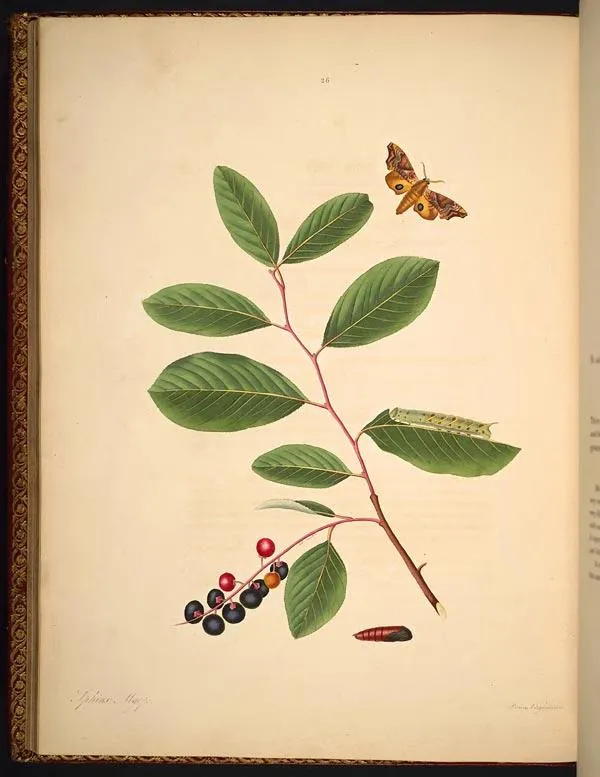
Native to most of the USA and Canada
Newfoundland to British Columbia, south to North Carolina, Tennessee, northern Arkansas, Texas and southern California
- Light Full sun to shade Sun tolerance
- Moisture Dry to moist Moisture preference
- Zones 2–9 Cold to heat range
- Bloom Apr–Jul Flowering time
- Height up to 30 ft to 9.1 m
- Life cycle Perennial Annual to perennial
In the garden
A woodland shrub for sun through shade and dry to moist soil. At up to 30 ft, it needs room in shade gardens and woodland edges. It shrugs off drought once established. Hardy in USDA zones 2–9.
Growing conditions
Light
Full sun Partial shade Full shade
Moisture
Dry Moist Wet
Hardiness zones
Find your zone:
Pollinators & wildlife
- Bees Common Eastern Bumble Bee
also Western Honey Bee, Eastern Carpenter Bee, Brown-belted Bumble Bee +78 more
Two-spotted Bumble Bee, American Bumble Bee, Tricolored Bumble Bee, Red-belted Bumble Bee, Hunt's Bumble Bee, Perplexing Bumble Bee, Two-form Bumble Bee, Half-black Bumble Bee, Colletes inaequalis, Orange-legged Furrow Bee, Yellow-fronted Bumble Bee, Nevada Bumble Bee, Yellow-banded Bumble Bee, Confusing Furrow Bee, Nearctic Bumble Bee, Spurred Ceratina, Blue Orchard Bee, Yellowish Cuckoo Bumble bee, Indiscriminate Cuckoo Bumble Bee, Hawthorn Mining Bee, Carlin's Mining Bee, Prunus Miner Bee, Neighborly Mining Bee, Tansy Mustard Sweat Bee, Western Bumble Bee, Taurus Mason Bee, Silky Striped Sweat Bee, Spotted Nomad Bee, Bristle Sweat Bee, Cresson's Mining Bee, Sphecodes ranunculi, Cherry Mining Bee, Red-tailed Mining Bee, Orange-legged Miner Bee, Nude Mining Bee, Cresson's Sweat Bee, Long-lipped Miner, Tridentate Miner, Snowy Mining Bee, Imitator Miner Bee, Experienced Sweat Bee, Canadian Mining Bee, Perplexed Miner Bee, Illinois Sweat Bee, Kincaid's Cellophane Bee, Forbes' Mining Bee, Porter's Miner Bee, Toothed Miner Bee, Pale-fovea Miner, Sigmund's Mining Bee, W-labrum Miner, Illinois Cuckoo Nomad Bee, Merriam's Miner Bee, Victoria Miner Bee, Buckell's Miner Bee, Subtle Miner Bee, Colletes paniscus, Brown-fovea Miner, Nason's Mining Bee, Milwaukee Mining Bee, Sphecodes sophiae, Ridge-mouthed Miner Bee, Schuh's Miner Bee, Topaz Miner Bee, Southern Mining Bee, Andrena miserabilis, Andrena sayi, Augochlora nominata, Tetragona dissecta, Augochlorella persimilis, Zephyr Sweat Bee, Viereck's Miner Bee, Narrow-legged Miner Bee, Andrena cressonii infasciata, Andrena pertristis carliniformis, Rugose Mining Bee, Andrena cressonii cressonii, Copper-tinted Miner Bee - Flower flies Margined Calligrapher
also Eastern Calligrapher, Transverse-banded Flower Fly, Narrow-headed Marsh Fly +38 more
Thick-legged Hover Fly, Eurasian Drone Fly, Black-shouldered Drone Fly, Yellow-shouldered Drone Fly, Common Grass Skimmer, Oblique-banded Pond Fly, Common Lagoon Fly, Orange-legged Drone Fly, Black-footed Drone Fly, Banded Thintail, Bare-eyed Bee-mimic Fly, American Snout Fly, Wavy Mucksucker, Common Flower Fly, Woolly-tailed Marsh Fly, Long-horned Yellowjacket Fly, Striped Bromeliad Fly, Black-bristled Logsitter, Western Loopwing Aphideater, Hairy Wood Fly, Black-haired Psyllid-killer, Steely Blacklet, Orange-legged Ant Fly, Eristalis meijerei, Black-banded Sapeater, Mount Hood Blacklet, The Dasysyrphus venustus group, Dusky Pufftail, Orange-tailed Wood Fly, Palpada meigenii, Sphaerophoria cylindricus, Pictipennis species group, Black-horned Pufftail, Scaled Pegleg, Mallota cimbiciformis, Yellow-spotted Sapeater, Eristalis obscura, Emarginate Smoothtail - Butterflies Monarch
also Eastern Tiger Swallowtail, Red Admiral, Black Swallowtail +47 more
Pearl Crescent, Silver-spotted Skipper, Gray Hairstreak, Mourning Cloak, American Lady, Eastern Black Swallowtail, Red-banded Hairstreak, Canadian Tiger Swallowtail, Silvery Blue, Hobomok Skipper, Pale Swallowtail, Northern Azure, Boisduval's Blue, Green Comma, Satyr Comma, Dreamy Duskywing, American Silver-bordered Fritillary, Common Alpine, Midsummer Tiger Swallowtail, Gorgone Checkerspot, Camillus Crescent, Cherry Gall Azure, Hops Azure, Chlosyne acastus arkanyon, Coenonympha pamphiloides, Speyeria egleis oweni, Occidryas anicia capella, Speyeria atlantis hesperis, Incisalia eryphon, Siva Juniper Hairstreak, Plebejus glandon, Incisalia irioides, Cyaniris neglecta, Incisalia niphon, Mitoura hesseli, Coenonympha tullia, Mitoura spinetorum, Clossiana toddi ammiralis, Speyeria edwardsii, Uhler's Arctic, Silvery Checkerspot, Gabb's Checkerspot, Callophrys lanoraieensis, Papilio multicaudata multicaudata, Euptychia cymela, Anosia plexippus, Limenitis astyanax - Also visited by
- Beetles:
Asian Lady Beetle, Seven-spotted Lady Beetle +16 more
Margined Leatherwing Beetle, Two-lined Leatherwing, Acmaeodera tubulus, Ant-like Longhorn Beetle, Agrilus cyanescens, Gnathacmaeops pratensis, Euderces pini, Tilloclytus geminatus, Microclytus compressicollis, Cortodera longicornis, Evodinus monticola, Bimaculate Longhorn Beetle, Chlorophorus glaucus, Coccinella transversoguttata richardsoni, Western Polished Lady Beetle, Gonioctena quinquepunctata - Birds:
American Robin, Yellow-rumped Warbler +12 more
Red-bellied Woodpecker, White-throated Sparrow, Eastern Phoebe, Cedar Waxwing, Pileated Woodpecker, Blue-gray Gnatcatcher, Black-and-white Warbler, Scarlet Tanager, Philadelphia Vireo, Wilson's Warbler, Song Thrush, White-breasted Nuthatch - Moths:
Fall Webworm Moth, Banded Tussock Moth +12 more
Hummingbird Clearwing, Cherry and Unmarked Daggers and Allies, Eight-spotted Forester Moth, American Copper Underwing, White-striped Black, White Spring Moth, Grapevine Epimenis Moth, American Angle Shades, White Furcula Moth, Bluish Spring Moth, Radcliffe's Dagger, Linden Looper Moth - Wasps:
Bald-faced Hornet, Eastern Yellowjacket +6 more
Western Yellowjacket, Common Aerial Yellowjacket, Parasitic Aerial Yellowjacket, Canadian potter wasp, Pseudomasaris vespoides, Forest Yellowjacket
- Beetles:
Butterflies that use this plant
Documented host and nectar records. Each links to a planting guide for that butterfly.
- Canadian tiger swallowtailhost & nectar
- Eastern tiger swallowtailhost & nectar
- Pale swallowtailhost & nectar
- Coral hairstreakcaterpillar host
- Red-spotted purplecaterpillar host
- Western tiger swallowtailcaterpillar host
- American coppernectar
- American ladynectar
- American snoutnectar
- Banded hairstreaknectar
- Black swallowtailnectar
- Boisduval's bluenectar
- Common ringletnectar
- Eastern pine elfinnectar
- Edwards' hairstreaknectar
- Gorgone checkerspotnectar
- Gray hairstreaknectar
- Juniper hairstreaknectar
- Monarch butterflynectar
- Mourning cloaknectar
- Pearl crescentnectar
- Red admiralnectar
- Red-banded hairstreaknectar
- Silver-bordered fritillarynectar
- Silver-spotted skippernectar
- Silvery bluenectar
- Silvery checkerspotnectar
- Summer azurenectar
Full plant details
Where it grows
- Habitat
- WoodlandThe wild plant community it grows in.
- Native range
- Most of the USA and CanadaUnited States (44): AR, AZ, CA, CO, CT, DC, DE, GA, IA, ID, IL, IN, KS, KY, MA, MD, ME, MI, MN, MO, MT, NC, ND, NE, NH, NJ, NM, NV, NY, OH, OK, OR, PA, RI, SD, TN, TX, UT, VA, VT, WA, WI, WV, WY. Canada (10): AB, BC, MB, NB, NL, NS, ON, PE, QC, SK. Where it grows wild on its own, by state and province.
- Native distribution
- Newfoundland to British Columbia, south to North Carolina, Tennessee, northern Arkansas, Texas and southern CaliforniaThe same native range, usually more exact than the state list, and often noting where it has spread beyond it.
Growing conditions
- Light
- Full sun to shadeHow much sun it takes, from full sun to full shade.
- Moisture
- Dry to moistThe soil dampness it prefers, from dry to wet.
- Hardiness zones
- USDA 2–9 · Canadian 2–8The cold-to-heat climate range it survives.
- Soil
- Rich, moist soils. Limestone-based, Sandy, Sandy Loam, Medium Loam, Clay Loam, ClayThe soils it grows in naturally.
- Soil texture
- Light to heavy (sandy to clay)The soil grade it prefers, from sand to clay.
- Soil pH
- 5.2–8.4The acidity to alkalinity it tolerates (7 is neutral).
- Soil quality
- MediumHow rich a soil it needs. Many natives prefer lean soil and flop in rich beds.
- Water use
- MediumHow thirsty it is, a rough guide to how often to water.
- Drought tolerance
- HighRelative to plants of the same type and region, inferred from where it grows, not a days-without-water figure.
- Salinity tolerance
- MediumHow well it copes with salty soil, near roads or the coast.
- Lime (CaCO₃) tolerance
- HighHow well it copes with chalky, lime-rich soil.
Growth & form
- Height
- up to 30 ft (to 9.1 m)Typical mature height.
- Life cycle
- PerennialWhether it lives a single season (annual), two (biennial), or returns for years (perennial).
- Growth rate
- RapidA relative ranking versus other plants of the same type (USDA), not an absolute rate.
- Shape
- ErectIts overall silhouette.
- Root depth
- 20+ in (51+ cm)How far the roots reach, a guide to drought resilience and transplanting.
Flowers, foliage & fruit
- Type
- ShrubWhat kind of plant it is.
- Bloom
- Apr–JulWhen it flowers.
- Flower color
- WhiteThe bloom color, or colors.
- Toxicity
- Poisonous if eatenWhether any part is poisonous to people or pets.
Propagation & seed
- Cold stratification
- Required (cold, moist)Whether seed needs a cold, moist spell before it will germinate.
- Propagation
- Bare root, container, seedHow to start new plants.
- Seed
- ~0.0 million seeds per poundNotes on the seed and how to sow it.
- Seed spread rate
- SlowHow readily it self-sows. Slow or none means well-behaved, not a spreader.
- Seedling vigor
- MediumHow strongly young seedlings establish.
- Vegetative spread
- ModerateWhether it creeps outward or stays put in a clump.