wetland wildflower
Scarlet Beebalm
Monarda didyma
Also known as Oswego Tea, Red Bergamot
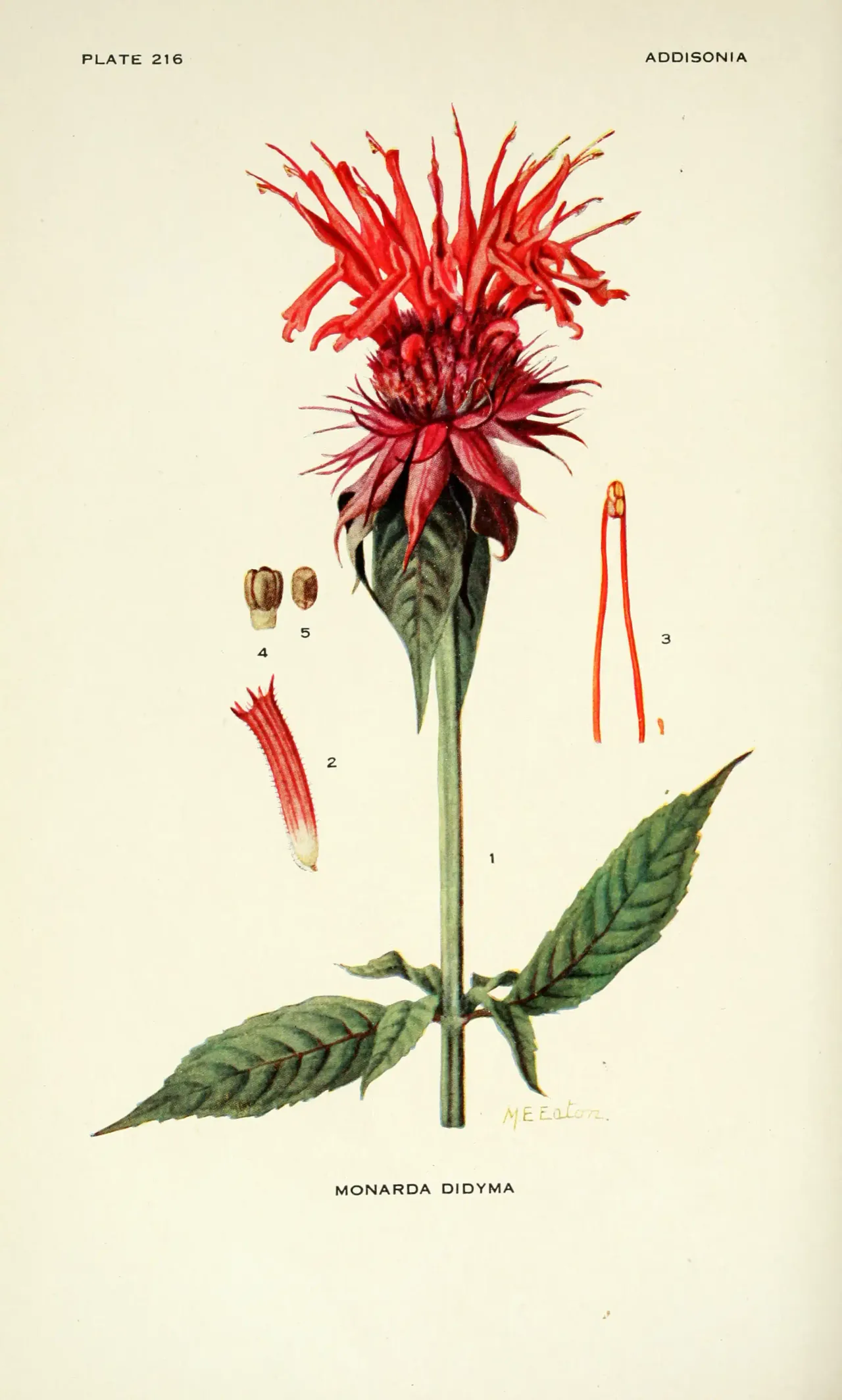 1 of 2
Native to the Southeast and the Northeast
Ohio to New Jersey, south along mountains to Georgia and Tennessee; escaped elsewhere
- Light Full sun to part shade Sun tolerance
- Moisture Moist to wet Moisture preference
- Zones 3–8 Cold to heat range
- Bloom Jun–Aug Flowering time
- Height
- Life cycle Perennial Annual to perennial
In the garden
A wetland wildflower for full sun to part shade and consistently moist to wet soil. Its red flowers peak in July. Hardy in USDA zones 3–8.
Growing conditions
Light
Full sun Partial shade Full shade
Moisture
Dry Moist Wet
Hardiness zones
Find your zone:
When it blooms
The Scarlet Beebalm's red flowers bloom June to August, peaking in July. This midsummer display draws bees and butterflies.
Scarlet Beebalm blooms redFoliage
Pollinators & wildlife
- Bees Common Eastern Bumble Bee
also Western Honey Bee, Eastern Carpenter Bee, Brown-belted Bumble Bee +52 more
Two-spotted Bumble Bee, American Bumble Bee, Yellow-faced Bumble Bee, Ligated Furrow Bee, Tricolored Bumble Bee, Bicolored Striped Sweat Bee, Pure Green Sweat bee, Bombus fervidus, Red-belted Bumble Bee, Hunt's Bumble Bee, Two-spotted Longhorn Bee, Perplexing Bumble Bee, Fuzzy-Horned Bumble Bee, European Woolcarder Bee, Two-form Bumble Bee, Black-and-gold Bumble Bee, Half-black Bumble Bee, Orange-legged Furrow Bee, Yellow-fronted Bumble Bee, Lemon Cuckoo Bumble Bee, Northern Amber Bumble Bee, Nevada Bumble Bee, Yellow-banded Bumble Bee, Golden Sweat Bee, Great Basin Bumble Bee, Rusty-patched Bumble Bee, Confusing Furrow Bee, Spurred Ceratina, Southern Plains Bumble Bee, Orange-tipped Wood-digger, White-shouldered Bumble Bee, Western Bumble Bee, Texas Leafcutter Bee, Van Dyke's Bumble Bee, Silky Striped Sweat Bee, Lucorum-group Bumble Bees, Cryptic Bumble Bee, Morrison's Bumble Bee, Bumblebee-like Digger Bee, Sanderson's Bumble Bee, Bristle Sweat Bee, Anomalous Metallic Sweat Bee, Lasioglossum cinctipes, Four-striped Digger Bee, Peponapis pruinosa, Xylocopa virginica virginica, Abrupt Digger Bee, Lasioglossum zephyrum, Lasioglossum pilosum, Bombus vagans vagans, Garden Bumble Bee, Common Carder Bumble Bee - Butterflies Monarch
also Eastern Tiger Swallowtail, Red Admiral, Black Swallowtail +19 more
Red-spotted Admiral, Pearl Crescent, Silver-spotted Skipper, Pipevine Swallowtail, American Lady, Great Spangled Fritillary, Spicebush Swallowtail, Zabulon Skipper, Eastern Black Swallowtail, Common Wood-Nymph, Dun Skipper, Canadian Tiger Swallowtail, Woodland Skipper, Banded Hairstreak, Little Glassywing, Midsummer Tiger Swallowtail, Atrytone delaware, Papilio cresphontes, Limenitis arthemis arthemis - Moths White-lined Sphinx
also Snowberry Clearwing, Yellow-collared Scape Moth, Hummingbird Clearwing +8 more
Master's Dart, White-striped Black, Nessus Sphinx, Bedstraw Hawkmoth, Orange Mint Moth, Raspberry Pyrausta Moth, Hologram Moth, Clover Looper Moth - Also visited by
- Wasps:
Perennial Mason Wasp, Euodynerus foraminatus +5 more
Pseudodynerus quadrisectus, European tube wasp, Parancistrocerus leionotus, Tapered Mason Wasp, Parancistrocerus histrio - Flower flies:
Eastern Calligrapher, Tiger Bee Fly +4 more
Long-tailed Aphideater, Thick-legged Hover Fly, Dusky-winged Hover Fly, Ocyptamus costatus - Hummingbirds:
Anna's Hummingbird, Ruby-throated Hummingbird +1 more
Rufous Hummingbird - Beetles: Oriental Beetle
- Wasps:
Butterflies that use this plant
Documented host and nectar records. Each links to a planting guide for that butterfly.
- American ladynectar
- Banded hairstreaknectar
- Black swallowtailnectar
- Canadian tiger swallowtailnectar
- Common wood-nymphnectar
- Eastern tiger swallowtailnectar
- Giant swallowtailnectar
- Great spangled fritillarynectar
- Monarch butterflynectar
- Pearl crescentnectar
- Pipevine swallowtailnectar
- Red admiralnectar
- Red-spotted purplenectar
- Silver-spotted skippernectar
- Spicebush swallowtailnectar
Full plant details
Where it grows
- Habitat
- WetlandThe wild plant community it grows in.
- Native range
- The Southeast and the NortheastUnited States (12): GA, KY, MD, NC, NJ, NY, OH, PA, SC, TN, VA, WV. Where it grows wild on its own, by state and province.
- Native distribution
- Ohio to New Jersey, south along mountains to Georgia and Tennessee; escaped elsewhereThe same native range, usually more exact than the state list, and often noting where it has spread beyond it.
Growing conditions
- Light
- Full sun to part shadeHow much sun it takes, from full sun to full shade.
- Moisture
- Moist to wetThe soil dampness it prefers, from dry to wet.
- Hardiness zones
- USDA 3–8 · Canadian 4–7The cold-to-heat climate range it survives.
- Soil
- Rich, moist, acid soils. Juglone tolerantThe soils it grows in naturally.
- Soil texture
- Light to heavy (sandy to clay)The soil grade it prefers, from sand to clay.
- Soil pH
- Mildly acid to mildly alkalineThe acidity to alkalinity it tolerates (7 is neutral).
- Water use
- MediumHow thirsty it is, a rough guide to how often to water.
Growth & form
- Spread
- ~2 ft (0.5 m)How wide one plant gets, a guide to spacing.
- Life cycle
- PerennialWhether it lives a single season (annual), two (biennial), or returns for years (perennial).
- Growth rate
- ModerateA relative ranking versus other plants of the same type (USDA), not an absolute rate.
Flowers, foliage & fruit
- Type
- WildflowerWhat kind of plant it is.
- Bloom
- Jun–AugWhen it flowers.
- Flower color
- RedThe bloom color, or colors.
- Fruit/Seeds
- NutletsThe seed or fruit it sets after flowering.
- Toxicity
- None knownWhether any part is poisonous to people or pets.