prairie wildflower
Spotted horsemint
Monarda punctata
Also known as Spotted Beebalm, Horsemint
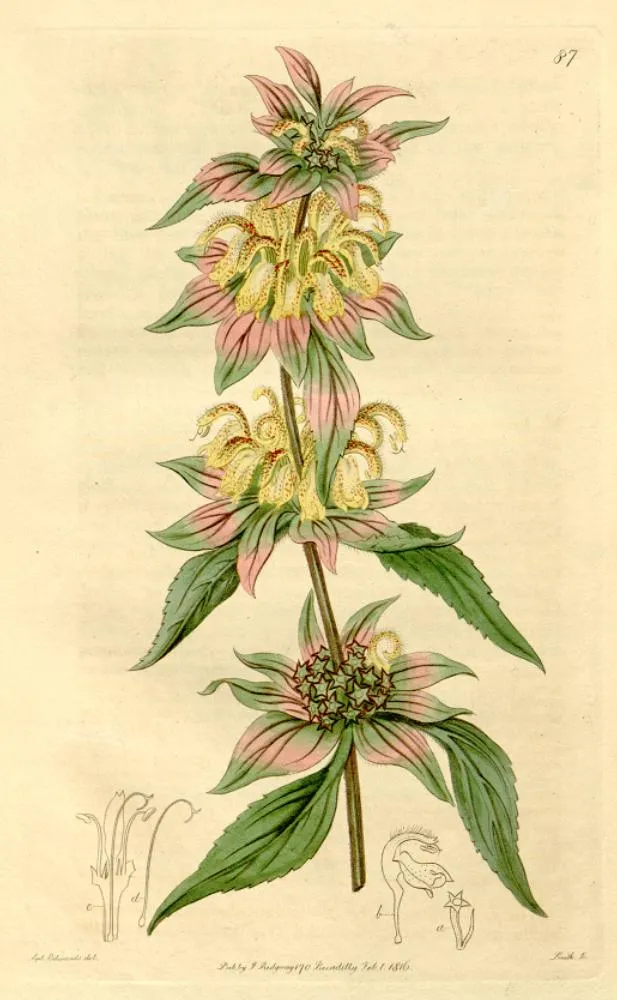 1 of 3
Native to much of the USA and southern Canada
Vermont to Minnesota, south to Texas, New Mexico and north to Kansas, through to eastern coast. Isolated in California.
- Light Full sun Sun tolerance
- Moisture Dry Moisture preference
- Zones 4–10 Cold to heat range
- Bloom Apr–Oct Flowering time
- Height up to 3 ft to 0.9 m
- Life cycle Annual, Biennial, or perennial Annual to perennial
In the garden
A prairie wildflower for full sun and lean, dry soil. At up to 3 ft, it suits meadows and sunny borders. Hardy in USDA zones 4–10.
Growing conditions
Light
Full sun Partial shade Full shade
Moisture
Dry Moist Wet
Hardiness zones
Find your zone:
Pollinators & wildlife
- Bees Common Eastern Bumble Bee
also Western Honey Bee, Eastern Carpenter Bee, Brown-belted Bumble Bee +36 more
Two-spotted Bumble Bee, American Bumble Bee, Tricolored Bumble Bee, Pure Green Sweat bee, Bombus fervidus, Two-spotted Longhorn Bee, European Woolcarder Bee, Black-and-gold Bumble Bee, Half-black Bumble Bee, Southern Carpenter Bee, Lemon Cuckoo Bumble Bee, Northern Amber Bumble Bee, Brown-winged Striped Sweat Bee, Yellow-banded Bumble Bee, Poey's Furrow Bee, Rusty-patched Bumble Bee, Modest Masked Bee, Southern Plains Bumble Bee, Texas Leafcutter Bee, Common Longhorn Bee, Parallel-striped Sweat Bee, Colletes latitarsis, Viereck's Sweat Bee, Anthophora walshii, Aberrant Cellophane Bee, Bee Balm Fairy Bee, Anthidiellum boreale, Protandrena abdominalis, Xylocopa virginica virginica, Svastra atripes, Two-banded Cellophane-cuckoo Bee, Baker's Nomia, Lasioglossum pictum, Norton's Alkali Bee, Perdita gerhardi monardae, Perdita gerhardi gerhardi - Butterflies Monarch
also Eastern Tiger Swallowtail, Gulf Fritillary, Pearl Crescent +27 more
Common Buckeye, Fiery Skipper, Silver-spotted Skipper, Pipevine Swallowtail, Gray Hairstreak, Eastern Tailed-Blue, Variegated Fritillary, Viceroy, Cloudless Sulphur, Eastern Black Swallowtail, Peck's Skipper, Horace's Duskywing, Red-banded Hairstreak, Long-tailed Skipper, American Copper, Tawny-edged Skipper, American Red Admiral, Palamedes Swallowtail, Great Purple Hairstreak, Common Sootywing, Long Dash, Karner Blue, Asbolis capucinus, Panoquina ocola, Protographium marcellus, Papilio cresphontes, Oak Hairstreak - Wasps Bald-faced Hornet
also Metric Paper Wasp, Fraternal Potter Wasp, Four-toothed Mason Wasp +18 more
Common Aerial Yellowjacket, Euodynerus foraminatus, Red-marked Pachodynerus Wasp, Southern Paper Wasp, Pseudodynerus quadrisectus, European tube wasp, Parancistrocerus fulvipes, Euodynerus hidalgo boreoorientalis, Zeta argillaceum, Delta higletti rendalli, Euodynerus hidalgo hidalgo, Polistes major major, Keyhole Wasp, Zethus spinipes variegatus, Zethus spinipes, Vespula vidua, Fine-backed Red Paper Wasp, Hidalgo Mason Wasp - Also visited by
- Moths:
Hummingbird Clearwing, Lucerne Moth +12 more
Spotted Beet Webworm Moth, Polka-Dot Wasp Moth, Common Spragueia Moth, Orange Mint Moth, Orange-spotted Flower Moth, Three-lined Flower Moth, Black-dotted Spragueia Moth, Gray Marvel Moth, Ornate Bella Moth, Hawaiian Beet Webworm Moth, Riley's Clearwing Moth, Darker-spotted Straw Moth - Beetles:
Seven-spotted Lady Beetle, Goldenrod Soldier Beetle +6 more
Common Green June Beetle, Margined Leatherwing Beetle, Oriental Beetle, brunnea species group, Margined Shining Leaf Chafer, Pygmy Chafer - Flower flies:
Margined Calligrapher, Transverse-banded Flower Fly +3 more
Long-tailed Aphideater, Virginia Giant Hover Fly, Eastern Hornet Fly - Hummingbirds: Ruby-throated Hummingbird
- Moths:
Butterflies that use this plant
Documented host and nectar records. Each links to a planting guide for that butterfly.
- American coppernectar
- Banded hairstreaknectar
- Black swallowtailnectar
- Cloudless sulphurnectar
- Common buckeyenectar
- Eastern tailed-bluenectar
- Eastern tiger swallowtailnectar
- Fiery skippernectar
- Giant swallowtailnectar
- Gray hairstreaknectar
- Gulf fritillarynectar
- Monarch butterflynectar
- Palamedes swallowtailnectar
- Pearl crescentnectar
- Pipevine swallowtailnectar
- Red admiralnectar
- Red-banded hairstreaknectar
- Silver-spotted skippernectar
- Variegated fritillarynectar
- Viceroynectar
- Zebra swallowtailnectar
Full plant details
Where it grows
- Habitat
- PrairieThe wild plant community it grows in.
- Native range
- Much of the USA and southern CanadaUnited States (33): AL, AR, CA, CT, DC, DE, FL, GA, IA, IL, IN, KS, KY, LA, MA, MD, MI, MN, MO, MS, NC, NJ, NM, NY, OH, OK, PA, SC, TN, TX, VA, VT, WI. Canada (1): ON. Where it grows wild on its own, by state and province.
- Native distribution
- Vermont to Minnesota, south to Texas, New Mexico and north to Kansas, through to eastern coast. Isolated in California.The same native range, usually more exact than the state list, and often noting where it has spread beyond it.
Growing conditions
- Light
- Full sunHow much sun it takes, from full sun to full shade.
- Moisture
- DryThe soil dampness it prefers, from dry to wet.
- Hardiness zones
- USDA 4–10 · Canadian 4–7The cold-to-heat climate range it survives.
- Soil
- Dry, sandy soilsThe soils it grows in naturally.
- Soil texture
- Light to heavy (sandy to clay)The soil grade it prefers, from sand to clay.
- Soil pH
- Mildly acid to mildly alkalineThe acidity to alkalinity it tolerates (7 is neutral).
- Water use
- LowHow thirsty it is, a rough guide to how often to water.
Growth & form
- Height
- up to 3 ft (to 0.9 m)Typical mature height.
- Spread
- ~1 ft (0.4 m)How wide one plant gets, a guide to spacing.
- Life cycle
- Annual, biennial, or perennialWhether it lives a single season (annual), two (biennial), or returns for years (perennial).
Flowers, foliage & fruit
- Type
- WildflowerWhat kind of plant it is.
- Bloom
- Apr–OctWhen it flowers.
- Flower color
- White, Pink, Yellow, Green, PurpleThe bloom color, or colors.
- Fruit/Seeds
- NutletsThe seed or fruit it sets after flowering.
- Toxicity
- None knownWhether any part is poisonous to people or pets.