prairie wildflower
Stokes' aster
Stokesia laevis
Also known as Stokes Aster
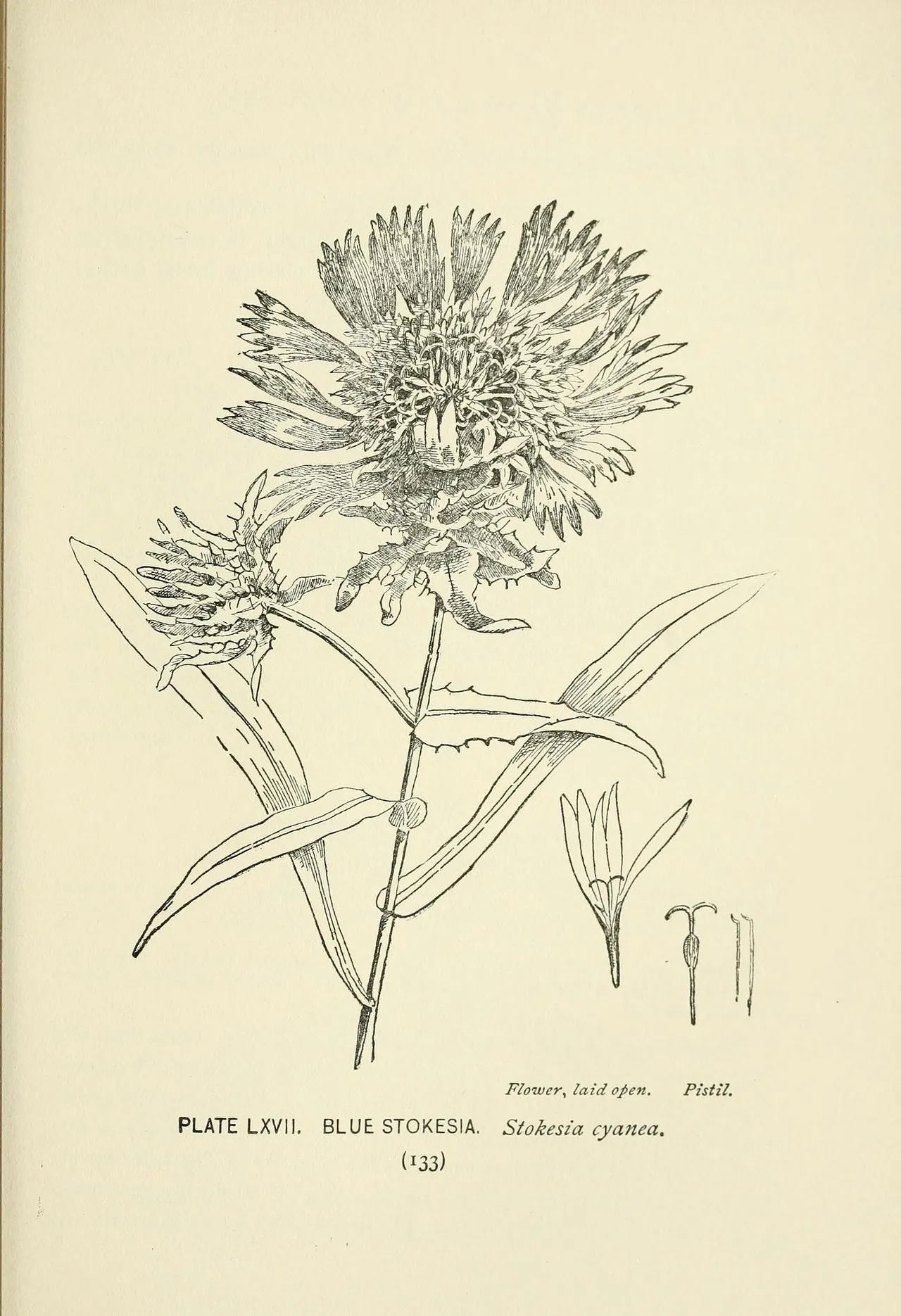 1 of 2
Native to Alabama, Florida, Georgia, Louisiana, Mississippi, North Carolina, and South Carolina
North Carolina to Louisiana, east of the Mississippi River.
- Light Full sun to part shade Sun tolerance
- Moisture Moist Moisture preference
- Zones 6–10 Cold to heat range
- Bloom May–Sep Flowering time
- Height up to 2 ft to 0.6 m
- Life cycle Perennial Annual to perennial
In the garden
A prairie wildflower for full sun to part shade and evenly moist soil. At up to 2 ft, it suits meadows and sunny borders. Hardy in USDA zones 6–10.
Growing conditions
Light
Full sun Partial shade Full shade
Moisture
Dry Moist Wet
Hardiness zones
Find your zone:
Pollinators & wildlife
- Butterflies Monarch
also Eastern Tiger Swallowtail, Gulf Fritillary, Red Admiral +21 more
Black Swallowtail, Common Buckeye, Fiery Skipper, Silver-spotted Skipper, Painted Lady, American Lady, Orange Sulphur, Great Spangled Fritillary, Zabulon Skipper, Eastern Black Swallowtail, Peck's Skipper, Clouded Skipper, Least Skipper, American Red Admiral, Palamedes Swallowtail, Little Glassywing, Whirlabout, Broad-winged Skipper, Twin-spot Skipper, Speyeria cybele, Abaeis nicippe - Bees Common Eastern Bumble Bee
also Western Honey Bee, Eastern Carpenter Bee, Brown-belted Bumble Bee +14 more
Two-spotted Bumble Bee, American Bumble Bee, Ligated Furrow Bee, Bicolored Striped Sweat Bee, Two-spotted Longhorn Bee, Lemon Cuckoo Bumble Bee, Brown-winged Striped Sweat Bee, Carpenter-mimic Leafcutter Bee, Poey's Furrow Bee, Golden Sweat Bee, Ptilothrix bombiformis, Morning Glory Turret Bee, Melissodes tepaneca, Pseudoanthidium nanum - Flower flies Margined Calligrapher also Eastern Calligrapher, Eurasian Drone Fly, Virginia Giant Hover Fly
- Also visited by
- Moths: Snowberry Clearwing, Clymene Moth
- Beetles: Banded Longhorn Beetle
Butterflies that use this plant
Documented host and nectar records. Each links to a planting guide for that butterfly.
- American ladynectar
- Black swallowtailnectar
- Common buckeyenectar
- Eastern tiger swallowtailnectar
- Fiery skippernectar
- Great spangled fritillarynectar
- Gulf fritillarynectar
- Monarch butterflynectar
- Orange sulphurnectar
- Painted ladynectar
- Palamedes swallowtailnectar
- Red admiralnectar
- Silver-spotted skippernectar
- Sleepy orangenectar
Full plant details
Where it grows
- Habitat
- PrairieThe wild plant community it grows in.
- Native range
- Alabama, Florida, Georgia, Louisiana, Mississippi, North Carolina, and South CarolinaUnited States (7): AL, FL, GA, LA, MS, NC, SC. Where it grows wild on its own, by state and province.
- Native distribution
- North Carolina to Louisiana, east of the Mississippi River.The same native range, usually more exact than the state list, and often noting where it has spread beyond it.
Growing conditions
- Light
- Full sun to part shadeHow much sun it takes, from full sun to full shade.
- Moisture
- MoistThe soil dampness it prefers, from dry to wet.
- Hardiness zones
- USDA 6–10The cold-to-heat climate range it survives.
- Soil
- Moist, rich, well-drained soil, acidic sands preferredThe soils it grows in naturally.
- Water use
- Medium to highHow thirsty it is, a rough guide to how often to water.
- Drought tolerance
- LowRelative to plants of the same type and region, inferred from where it grows, not a days-without-water figure.
Growth & form
- Height
- up to 2 ft (to 0.6 m)Typical mature height.
- Life cycle
- PerennialWhether it lives a single season (annual), two (biennial), or returns for years (perennial).
Flowers, foliage & fruit
- Type
- WildflowerWhat kind of plant it is.
- Bloom
- May–SepWhen it flowers.
- Flower color
- White, Blue, PurpleThe bloom color, or colors.
- Toxicity
- None knownWhether any part is poisonous to people or pets.