woodland wildflower
Cutleaf coneflower
Rudbeckia laciniata
Also known as Green-headed Coneflower, Greenhead Coneflower, Wild Goldenglow, Sochan
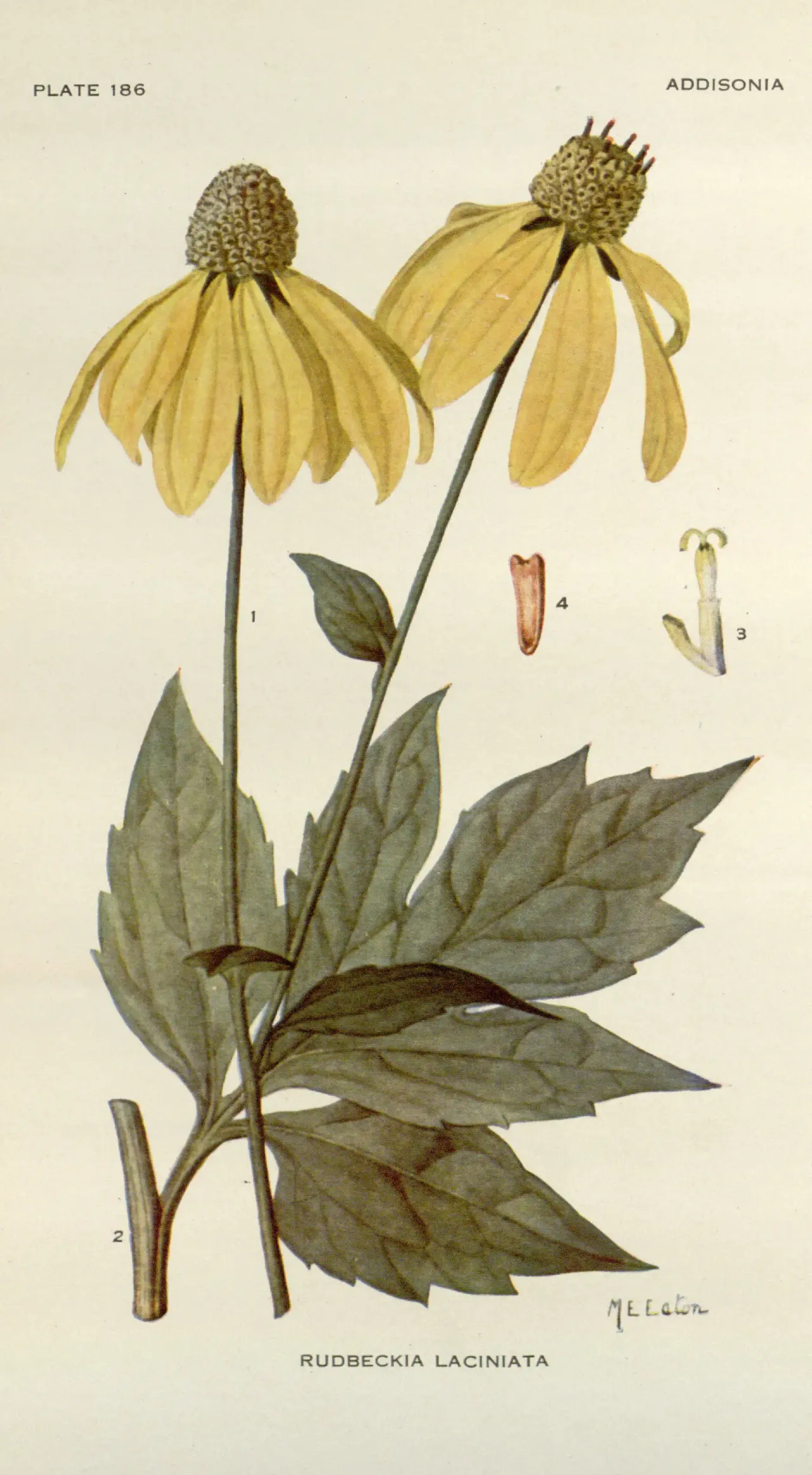 1 of 3
Native to most of the USA and southern Canada
Quebec to northern Florida, west to Idaho and Arizona
- Light Full sun to shade Sun tolerance
- Moisture Moist Moisture preference
- Zones 3–9 Cold to heat range
- Bloom Jul–Sep Flowering time
- Height up to 10 ft to 3.0 m
- Life cycle Perennial Annual to perennial
In the garden
A woodland wildflower for sun through shade and evenly moist soil. Its yellow flowers peak in August. At up to 10 ft, it needs room in shade gardens and woodland edges. Hardy in USDA zones 3–9.
Growing conditions
Light
Full sun Partial shade Full shade
Moisture
Dry Moist Wet
Hardiness zones
Find your zone:
When it blooms
The Cutleaf coneflower's yellow flowers bloom July to September, peaking in August. This late-summer display draws bees and butterflies.
Cutleaf coneflower blooms yellowFoliage
Pollinators & wildlife
- Bees Common Eastern Bumble Bee
also Western Honey Bee, Eastern Carpenter Bee, Brown-belted Bumble Bee +185 more
Two-spotted Bumble Bee, American Bumble Bee, Ligated Furrow Bee, Tricolored Bumble Bee, Bicolored Striped Sweat Bee, Pure Green Sweat bee, Red-belted Bumble Bee, Hunt's Bumble Bee, Two-spotted Longhorn Bee, Perplexing Bumble Bee, Two-form Bumble Bee, Half-black Bumble Bee, Orange-legged Furrow Bee, Lemon Cuckoo Bumble Bee, Brown-winged Striped Sweat Bee, Yellow-banded Bumble Bee, Carpenter-mimic Leafcutter Bee, Flat-tailed Leafcutter Bee, Sculptured Resin Bee, Poey's Furrow Bee, Rusty-patched Bumble Bee, Confusing Furrow Bee, Spurred Ceratina, Alfalfa Leafcutter Bee, Yellowish Cuckoo Bumble bee, Augochloropsis metallica, Dark-veined Longhorn Bee, broad-handed leafcutter bee, Southern Plains Bumble Bee, Pugnacious Leafcutter Bee, Western Bumble Bee, Silky Striped Sweat Bee, Unarmed Leafcutter Bee, Cryptic Bumble Bee, Louisiana Painted-Dark bee, Slender-faced Masked Bee, Sunflower Mining Bee, Petulant Leafcutter Bee, Punctate Masked Bee, Shining Oil-digger Bee, Cherry Mining Bee, Goldenrod Longhorn-Cuckoo Bee, Annulate Masked Bee, Ceratina dupla, Autumnal Cellophane-Cuckoo, Hairy masked Bee, Thistle Longhorn-Cuckoo, Lasioglossum nitidiusculum, Golden-tailed Woodborer, Little Masked Bee, Cresson's Nomad Bee, Common Masked Bee, Nomada affabilis, Variable Cuckoo Bumble Bee, Illinois Cuckoo Sweat Bee, Nomada bifasciata, Large-headed Armoured-Resin bee, Robust Small-Mason, Black Masked Bee, Cockerell's Bumble Bee, Large Masked Bee, Spined Mason Bee, Golden Furrow Bee, Melissodes coloradensis, Linsenmaier's Nomad, Lasioglossum sabulosum, Lasioglossum pleurospeculum, Lasioglossum podolicum, Lasioglossum subfulvicorne, Lasioglossum laevidorsum, Hylaeus glacialis, Hylaeus pfankuchi, Snowy Masked Bee, Lasioglossum tarsatum, Hylaeus moricei, Nomada pleurosticta, Andrena amieti, Lasioglossum euboeense, Halictus carinthiacus, Hylaeus pilosulus, Heriades crenulatus, Translucent Miner, Lasioglossum laeve, Snowy Mason, Hylaeus kahri, Dotted Masked Bee, Nomada integra, Lasioglossum subhirtum, Eucera nigrifacies, Quebec Sweat Bee, Hylaeus alpinus, Hylaeus difformis, Andrena rhenana, Gredler's Masked Bee, Lasioglossum marginatum, Hylaeus taeniolatus, Reed Yellow-face Bee, Davies' Cellophane Bee, Yellow-spotted Cuckoo Nomad Bee, Squat Furrow Bee, Nomada facilis, Hylaeus sinuatus, Small Shiny Furrow Bee, Forest Masked Bee, Osmia rufohirta, Hylaeus euryscapus, Variegated Masked Bee, Bare-saddled Cellophane Bee, Lasioglossum lucidulum, Pseudopanurgus compositarum, Osmia labialis, Andrena livens, Hylaeus duckei, Hylaeus paulus, Lasioglossum bluethgeni, Orange-vented Mason Bee, Pseudapis diversipes, Small-headed Resin Bee, Broad-banded Nomad Bee, Lasioglossum minutulum, Nomada distinguenda, Hylaeus bifasciatus, Eastern Cuckoo Sweat Bee, Peponapis pruinosa, Lasioglossum majus, Chalk Yellow-face Bee, Narrowed Masked Bee, Lasioglossum subfasciatum, Hylaeus tyrolensis, Panurgus dentipes, Hylaeus styriacus, Great Banded Furrow Bee, Common Pantaloon Bee, Osmia scutellaris, Lasioglossum nigripes, Andrena taraxaci, Fringed Furrow Bee, Lasioglossum lineare, Polished Miner, Eucera belfragei, Onion Yellow-face Bee, Pseudopanurgus labrosiformis, Osmia mustelina, Lasioglossum discum, Small Shaggy Bee, Halictus leucaheneus, Lasioglossum aeratum, Grey-banded Mining Bee, Buff-tailed Mining Bee, Hesperian Miner, Hylaeus crassanus, Large Shaggy Bee, Hairy-saddled Cellophane Bee, Common Carder Bumble Bee, Ridge-gastered Furrow Bee, Colletes mlokossewiczi, Lasioglossum interruptum, Lasioglossum marginellum, Megachile melanopyga, White-lipped Yellow-face Bee, Andrena miserabilis, Femoral Nomad, Hylaeus gibbus, Short-horned Yellow-face Bee, White-jawed Yellow-face Bee, Bequaert's Fairy Bee, Ptilothrix bombiformis, Sunflower Burrowing-Resin bee, Lunate Longhorn-cuckoo Bee, Xylocopa virginica virginica, Lasioglossum coriaceum, Coelioxys modesta, Two-banded Cellophane-cuckoo Bee, Crenulate Armoured-Resin bee, Drury's Long-horned Bee, Svastra obliqua, Colletes compactus, Pseudopanurgus rugosus, Yellow-faced Miner Bee, Pseudopanurgus albitarsis, Melissodes dentiventris, Leavitt's Armored-Resin bee, Pseudopanurgus rudbeckiae, Pseudopanurgus labrosus, Pseudopanurgus andrenoides - Butterflies Monarch
also Eastern Tiger Swallowtail, Red Admiral, Red-spotted Admiral +64 more
Pearl Crescent, Common Buckeye, Fiery Skipper, Silver-spotted Skipper, Painted Lady, Pipevine Swallowtail, Gray Hairstreak, American Lady, Eastern Tailed-Blue, Great Spangled Fritillary, Variegated Fritillary, Spicebush Swallowtail, Question Mark, Zabulon Skipper, Clouded Sulphur, Eastern Black Swallowtail, Peck's Skipper, American Snout, Horace's Duskywing, Common Wood-Nymph, Dun Skipper, Red-banded Hairstreak, Woodland Skipper, Wild Indigo Duskywing, American Copper, Green Comma, American Red Admiral, Banded Hairstreak, Little Glassywing, Hoary Comma, American Branded Skipper, White M Hairstreak, Behr's Hairstreak, California Hairstreak, Tailed Copper, Zephyr Comma, Pale Crescent, Common Branded Skipper, European Peacock Butterfly, Mormon Fritillary, Cyaniris neglecta, Danaus plexippus plexippus, Mitoura gryneus, Limenitis astyanax, Silvery Checkerspot, Speyeria atlantis hesperis, Speyeria atlantis sorocko, Phyciodes batesii anasazi, Parnassius smintheus smintheus, Nais Metalmark, Russet Skipperling, Cercyonis oetus, Strymon saepium, Pyrgus communis, Lycaena heteronea, Speyeria aphrodite, Speyeria zerene, Speyeria nokomis, Speyeria callippe, Speyeria edwardsii, Pine White, Colias alexandra, Cynthia cardui, Strymon sylvinus - Moths Yellow-collared Scape Moth
also Common Tan Wave, Lucerne Moth, Grape Leaffolder and Leafroller Moths +28 more
Corn Earworm Moth, Confused Eusarca Moth, Garden Webworm Moth, Changeable Grass-veneer, Speckled Renia Moth, White-striped Black, Dark-banded Owlet, Police Car Moth, Common Grass-veneer, Brown Bark Carpet Moth, Dusky Groundling, Variable Reddish and California Pyrausta Moths, Dogbane Saucrobotys Moth, Black-and-yellow Lichen Moth, Signate Quaker, Ozark Petrophila, Titian Peale's Moth, Tetanolita floridana, Zebra Conchylodes Moth, Slowpoke Moth, Dark-barred Twin-spot Carpet, Faint-spotted Angle, Canadian Petrophila, Bold-feathered Grass Moth, Pyrausta acrionalis, Celery Leaftier Moth, Hawaiian Beet Webworm Moth, Blackberry Looper Moth - Also visited by
- Flower flies:
Margined Calligrapher, Eastern Calligrapher +21 more
Common Drone Fly, Transverse-banded Flower Fly, Thick-legged Hover Fly, Eurasian Drone Fly, Black-shouldered Drone Fly, Virginia Giant Hover Fly, Oblique-banded Pond Fly, Banded Thintail, Bald-faced Hornet Fly, Hunchbacked Bee Fly, Black-horned Smoothtail, Exoprosopa fasciata, Common Flower Fly, Adorned Bee Fly, Eastern Flower Fly, Aldrichia ehrmanii, Epistrophe emarginata, Iridescent Bromeliad Fly, Villa alternata, grasshopper bee fly, Poecilanthrax alcyon - Wasps:
Eastern Yellowjacket, Fraternal Potter Wasp +5 more
Perennial Mason Wasp, European tube wasp, Euodynerus hidalgo boreoorientalis, Hidalgo Mason Wasp, Zethus spinipes - Beetles:
Spotted Cucumber Beetle, Goldenrod Soldier Beetle +4 more
Spotted Pink Lady Beetle, Locust Borer, Sumitrosis inaequalis, Chlorophorus glaucus - Hummingbirds: Ruby-throated Hummingbird
- Birds: American Goldfinch
- Flower flies:
Butterflies that use this plant
Documented host and nectar records. Each links to a planting guide for that butterfly.
- Silvery checkerspothost & nectar
- Gorgone checkerspotcaterpillar host
- American coppernectar
- American ladynectar
- American snoutnectar
- Aphrodite fritillarynectar
- Banded hairstreaknectar
- Black swallowtailnectar
- Clouded sulphurnectar
- Common buckeyenectar
- Common wood-nymphnectar
- Eastern tailed-bluenectar
- Eastern tiger swallowtailnectar
- Edwards' hairstreaknectar
- Fiery skippernectar
- Gray hairstreaknectar
- Great spangled fritillarynectar
- Hedgerow hairstreaknectar
- Juniper hairstreaknectar
- Monarch butterflynectar
- Painted ladynectar
- Pearl crescentnectar
- Pipevine swallowtailnectar
- Question marknectar
- Red admiralnectar
- Red-banded hairstreaknectar
- Silver-spotted skippernectar
- Spicebush swallowtailnectar
- Summer azurenectar
- Variegated fritillarynectar
Full plant details
Where it grows
- Habitat
- WoodlandThe wild plant community it grows in.
- Native range
- Most of the USA and southern CanadaUnited States (45): AL, AR, AZ, CO, CT, DC, DE, FL, GA, IA, ID, IL, IN, KS, KY, LA, MA, MD, ME, MI, MN, MO, MS, MT, NC, ND, NE, NH, NJ, NM, NY, OH, OK, PA, RI, SC, SD, TN, TX, UT, VA, VT, WI, WV, WY. Canada (5): MB, NS, ON, PE, QC. Where it grows wild on its own, by state and province.
- Native distribution
- Quebec to northern Florida, west to Idaho and ArizonaThe same native range, usually more exact than the state list, and often noting where it has spread beyond it.
Growing conditions
- Light
- Full sun to shadeHow much sun it takes, from full sun to full shade.
- Moisture
- MoistThe soil dampness it prefers, from dry to wet.
- Hardiness zones
- USDA 3–9 · Canadian 2–7The cold-to-heat climate range it survives.
- Soil
- Moist, slightly acid soilThe soils it grows in naturally.
- Soil texture
- Light to heavy (sandy to clay)The soil grade it prefers, from sand to clay.
- Soil pH
- 4.5–7.0The acidity to alkalinity it tolerates (7 is neutral).
- Soil quality
- LowHow rich a soil it needs. Many natives prefer lean soil and flop in rich beds.
- Water use
- LowHow thirsty it is, a rough guide to how often to water.
- Salinity tolerance
- NoneHow well it copes with salty soil, near roads or the coast.
- Lime (CaCO₃) tolerance
- MediumHow well it copes with chalky, lime-rich soil.
Growth & form
- Height
- up to 10 ft (to 3.0 m)Typical mature height.
- Spread
- ~3 ft (1 m)How wide one plant gets, a guide to spacing.
- Life cycle
- PerennialWhether it lives a single season (annual), two (biennial), or returns for years (perennial).
- Growth rate
- RapidA relative ranking versus other plants of the same type (USDA), not an absolute rate.
- Shape
- ErectIts overall silhouette.
- Root depth
- 12+ in (30+ cm)How far the roots reach, a guide to drought resilience and transplanting.
Flowers, foliage & fruit
- Type
- WildflowerWhat kind of plant it is.
- Bloom
- Jul–SepWhen it flowers.
- Flower color
- YellowThe bloom color, or colors.
- Fruit/Seeds
- Achene; ripens Aug–OctThe seed or fruit it sets after flowering.
- Toxicity
- None knownWhether any part is poisonous to people or pets.
Propagation & seed
- Cold stratification
- Not requiredWhether seed needs a cold, moist spell before it will germinate.
- Propagation
- Container, seedHow to start new plants.
- Seed
- ~0.3 million seeds per poundNotes on the seed and how to sow it.
- Seed spread rate
- SlowHow readily it self-sows. Slow or none means well-behaved, not a spreader.
- Seedling vigor
- MediumHow strongly young seedlings establish.
- Vegetative spread
- ModerateWhether it creeps outward or stays put in a clump.