prairie wildflower
Showy milkweed
Asclepias speciosa
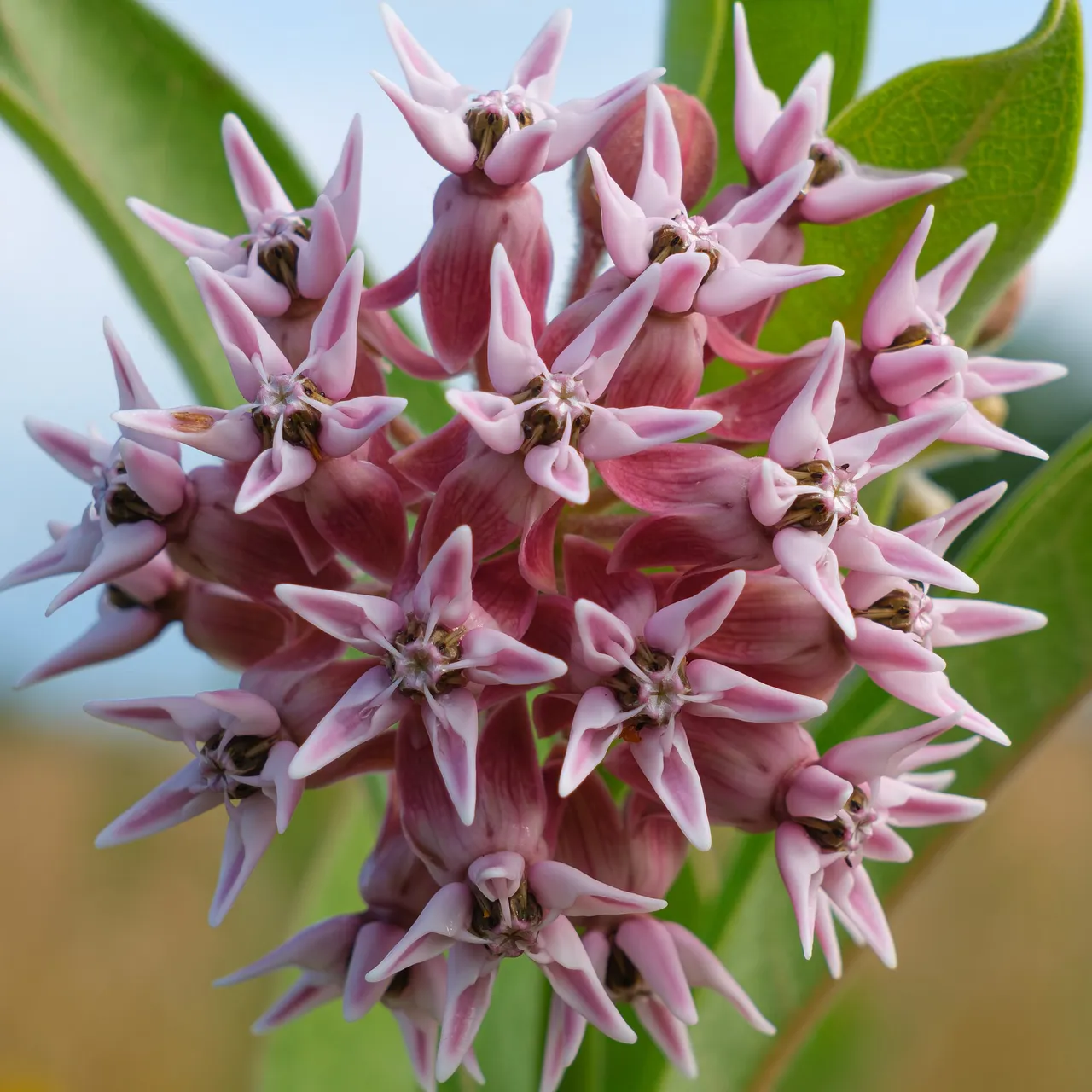 1 of 2
Native to the Pacific Coast, the Southwest, and the Rockies and southern Canada
Southern Manitoba and western Minnesota to British Columbia, south to Texas and California
- Light Full sun Sun tolerance
- Moisture Moist Moisture preference
- Zones 2–10 Cold to heat range
- Bloom Jun–Jul Flowering time
- Height 2–3 ft 0.6–0.9 m
- Life cycle Perennial Annual to perennial
In the garden
A prairie wildflower for full sun and evenly moist soil. Its pink flowers peak in June. At 2–3 ft, it suits meadows and sunny borders. Hardy in USDA zones 2–10.
Growing conditions
Light
Full sun Partial shade Full shade
Moisture
Dry Moist Wet
Hardiness zones
Find your zone:
When it blooms
The Showy milkweed's pink flowers bloom June to July, peaking in June. This early-summer display draws butterflies and bees.
Showy milkweed blooms pink, green & purpleFoliage
Pollinators & wildlife
- Butterflies Monarch
also Eastern Tiger Swallowtail, Red Admiral, Black Swallowtail +66 more
Silver-spotted Skipper, Gray Hairstreak, Mourning Cloak, American Lady, Orange Sulphur, Variegated Fritillary, Queen, Clouded Sulphur, Eastern Black Swallowtail, Checkered White, Western Tiger Swallowtail, Common Wood-Nymph, Dun Skipper, Dainty Sulphur, Canadian Tiger Swallowtail, Woodland Skipper, Pale Swallowtail, California Pipevine Swallowtail, Two-tailed Swallowtail, Tawny-edged Skipper, Weidemeyer's Admiral, Coral Hairstreak, Taxiles Skipper, Striated Queen, Gorgone Checkerspot, Behr's Hairstreak, California Hairstreak, Acadian Hairstreak, Tailed Copper, Garita Skipperling, Gray Copper, Arogos Skipper, Old World Swallowtail, Dotted Roadside-Skipper, Uncas Skipper, Lindsey's Skipper, Edwards's Skipperling, Western Regal Fritillary, Speyeria atlantis hesperis, Occidryas anicia capella, Speyeria cybele cybele, Argynnis cybele letona, Siva Juniper Hairstreak, Russet Skipperling, Western Green Hairstreak, Green Skipper, Occidryas colon, Lethe eurydice, Limenitis bredowii californica, Harkenclenus titus, Plebejus acmon, Ottoe Skipper, Polites origenes, Polites mystic, Atalopedes campestris, Thecla tetra, Strymon saepium, Two-spotted Skipper, Mitoura gryneus, Dotted Checkerspot, Poanes taxiles, Speyeria aphrodite, Pine White, Cynthia cardui, Strymon sylvinus, Danaus plexippus plexippus - Bees Brown-belted Bumble Bee
also Western Honey Bee, Two-spotted Bumble Bee, American Bumble Bee +33 more
Yellow-faced Bumble Bee, Black-tailed Bumble Bee, Bombus fervidus, Red-belted Bumble Bee, Hunt's Bumble Bee, Perplexing Bumble Bee, Fuzzy-Horned Bumble Bee, Orange-legged Furrow Bee, Yellow-fronted Bumble Bee, Northern Amber Bumble Bee, Nevada Bumble Bee, Western Carpenter Bee, Nearctic Bumble Bee, Western Leafcutter Bee, Urbane Digger Bee, Indiscriminate Cuckoo Bumble Bee, Southern Plains Bumble Bee, Crotch's Bumble Bee, White-shouldered Bumble Bee, Western Bumble Bee, Texas Leafcutter Bee, Arizona Carpenter Bee, Morrison's Bumble Bee, Meadow Parsnip Miner Bee, Megachile gemula gemula, Anthophora occidentalis, Valley Carpenter Bee, Megachile gentilis, Xylocopa californica californica, Ceratina sp., Alkali Nomia, Megachile coquilletti, Lasioglossum zephyrum - Moths White-lined Sphinx
also Alfalfa Looper, Wild Forget-me-not Moth, Confusing Petrophila +7 more
Kearfott's Petrophila, Angel Lichen Moth, Schinia perminuta, Four-spotted Moth, Lycaena hyllus, Lycaena dione, Lycaena rubidus - Also visited by
- Beetles:
Asian Lady Beetle, Seven-spotted Lady Beetle +6 more
Convergent Lady Beetle, Spotted Pink Lady Beetle, Spotless Lady Beetle, Two-spotted Lady Beetle, Chrysochus cobaltinus, Red-femured Milkweed Borer - Hummingbirds:
Anna's Hummingbird, Ruby-throated Hummingbird +2 more
Calliope Hummingbird, Broad-tailed Hummingbird - Wasps: Western Yellowjacket, Euodynerus annulatus
- Flower flies: Margined Calligrapher
- Beetles:
Butterflies that use this plant
Documented host and nectar records. Each links to a planting guide for that butterfly.
- Monarch butterflyhost & nectar
- Queenhost & nectar
- Acmon bluenectar
- American ladynectar
- Aphrodite fritillarynectar
- Black swallowtailnectar
- Canadian tiger swallowtailnectar
- Checkered whitenectar
- Clouded sulphurnectar
- Common wood-nymphnectar
- Coral hairstreaknectar
- Dainty sulphurnectar
- Eastern tiger swallowtailnectar
- Gorgone checkerspotnectar
- Gray hairstreaknectar
- Great spangled fritillarynectar
- Hedgerow hairstreaknectar
- Juniper hairstreaknectar
- Mourning cloaknectar
- Orange sulphurnectar
- Pale swallowtailnectar
- Pipevine swallowtailnectar
- Red admiralnectar
- Silver-spotted skippernectar
- Variegated fritillarynectar
- Western tiger swallowtailnectar
Full plant details
Where it grows
- Habitat
- PrairieThe wild plant community it grows in.
- Native range
- The Pacific Coast, the Southwest, and the Rockies and southern CanadaUnited States (19): AZ, CA, CO, IA, ID, KS, MN, MT, ND, NE, NM, NV, OK, OR, SD, TX, UT, WA, WY. Canada (4): AB, BC, MB, SK. Where it grows wild on its own, by state and province.
- Native distribution
- Southern Manitoba and western Minnesota to British Columbia, south to Texas and CaliforniaThe same native range, usually more exact than the state list, and often noting where it has spread beyond it.
Growing conditions
- Light
- Full sunHow much sun it takes, from full sun to full shade.
- Moisture
- MoistThe soil dampness it prefers, from dry to wet.
- Hardiness zones
- USDA 2–10 · Canadian 2–9The cold-to-heat climate range it survives.
- Soil
- Can grow in course, medium, and fine soilsThe soils it grows in naturally.
- Soil texture
- Light to medium (sandy to loamy)The soil grade it prefers, from sand to clay.
- Soil pH
- 5.0–7.0The acidity to alkalinity it tolerates (7 is neutral).
- Soil quality
- MediumHow rich a soil it needs. Many natives prefer lean soil and flop in rich beds.
- Water use
- MediumHow thirsty it is, a rough guide to how often to water.
- Salinity tolerance
- NoneHow well it copes with salty soil, near roads or the coast.
- Lime (CaCO₃) tolerance
- MediumHow well it copes with chalky, lime-rich soil.
Growth & form
- Height
- 2–3 ft (0.6–0.9 m)Typical mature height.
- Spread
- ~2 ft (0.6 m)How wide one plant gets, a guide to spacing.
- Life cycle
- PerennialWhether it lives a single season (annual), two (biennial), or returns for years (perennial).
- Growth rate
- ModerateA relative ranking versus other plants of the same type (USDA), not an absolute rate.
- Shape
- ErectIts overall silhouette.
- Root depth
- 18+ in (46+ cm)How far the roots reach, a guide to drought resilience and transplanting.
Flowers, foliage & fruit
- Type
- WildflowerWhat kind of plant it is.
- Bloom
- Jun–JulWhen it flowers.
- Flower color
- Pink, Green, PurpleThe bloom color, or colors.
- Fruit/Seeds
- Follicle (seed pod); ripens Jul–OctThe seed or fruit it sets after flowering.
- Toxicity
- Poisonous if eatenWhether any part is poisonous to people or pets.
Propagation & seed
- Cold stratification
- Not requiredWhether seed needs a cold, moist spell before it will germinate.
- Propagation
- Container, seedHow to start new plants.
- Seed
- ~0.1 million seeds per poundNotes on the seed and how to sow it.
- Seed spread rate
- ModerateHow readily it self-sows. Slow or none means well-behaved, not a spreader.
- Seedling vigor
- MediumHow strongly young seedlings establish.
- Vegetative spread
- NoneWhether it creeps outward or stays put in a clump.