woodland vine
Virgin's-bower
Clematis virginiana
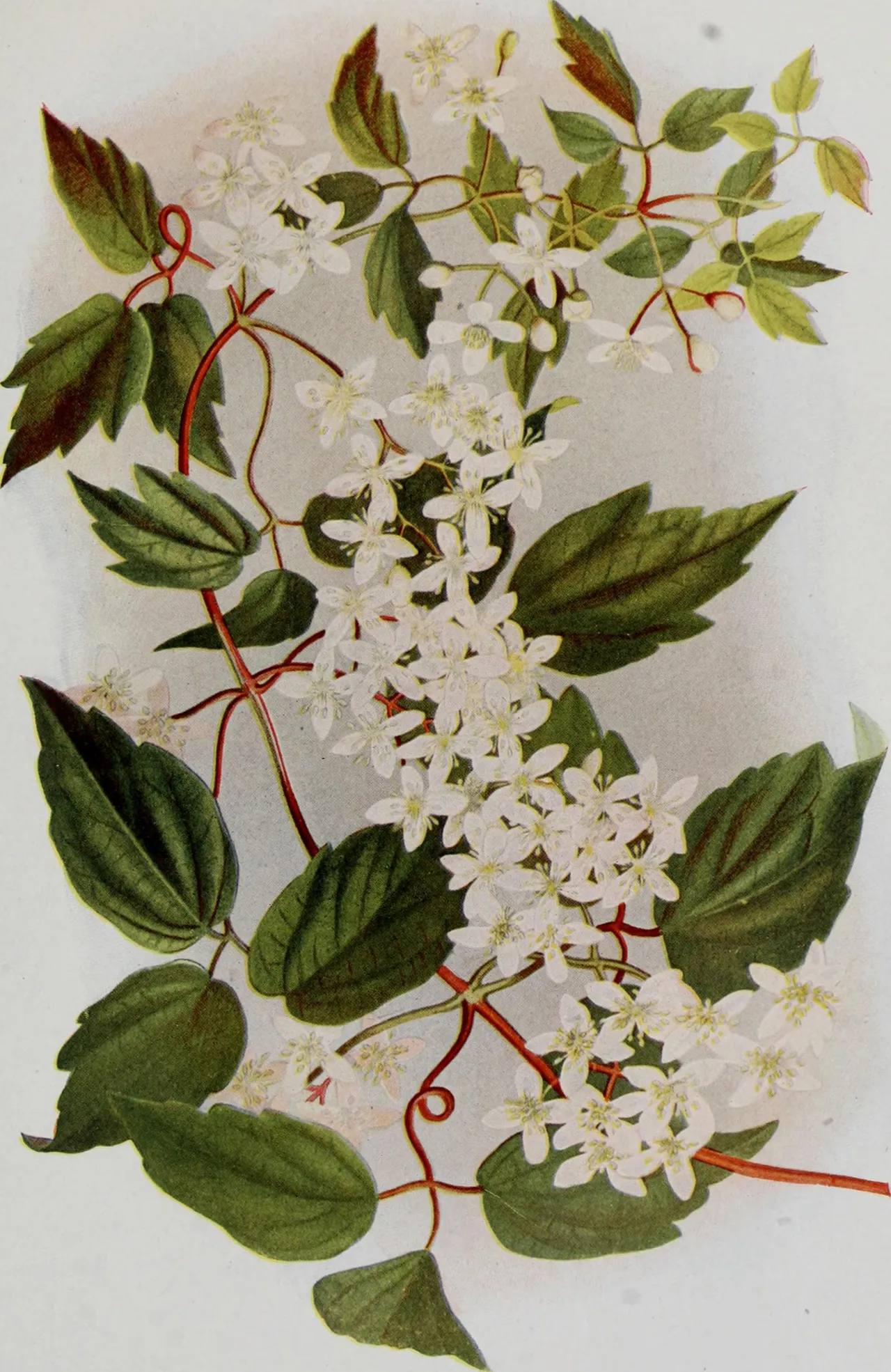
Native to much of the USA and southern Canada
Nova Scotia to Manitoba, south to Georgia, Louisiana and Oklahoma
- Light Full sun to shade Sun tolerance
- Moisture Dry to moist Moisture preference
- Zones 3–9 Cold to heat range
- Bloom Jul–Sep Flowering time
- Height
- Life cycle Perennial Annual to perennial
In the garden
A woodland vine for sun through shade and dry to moist soil. Hardy in USDA zones 3–9.
Growing conditions
Light
Full sun Partial shade Full shade
Moisture
Dry Moist Wet
Hardiness zones
Find your zone:
Pollinators & wildlife
- Bees Common Eastern Bumble Bee
also Western Honey Bee, Eastern Carpenter Bee, Two-spotted Bumble Bee +24 more
Tricolored Bumble Bee, Red-belted Bumble Bee, Half-black Bumble Bee, Orange-legged Furrow Bee, Agapostemon texanus, Yellow-banded Bumble Bee, Rusty-patched Bumble Bee, Modest Masked Bee, Dark-veined Longhorn Bee, Silky Striped Sweat Bee, Bristle Sweat Bee, Hylaeus affinis, Experienced Sweat Bee, Nelumbo Masked Bee, Illinois Sweat Bee, Obscure Sweat Bee, Pseudopanurgus passiflorae, Pseudopanurgus labrosus, Xylocopa virginica virginica, Lasioglossum zephyrum, Sphecodes dichrous, Zephyr Sweat Bee, Clematis Blood Bee, Coelioxys octodentata - Moths Snowberry Clearwing
also Yellow-collared Scape Moth, Large Maple Spanworm Moth, Common Tan Wave +28 more
Lucerne Moth, Grape Leaffolder and Leafroller Moths, Bristly Cutworm Moth, Corn Earworm Moth, Confused Eusarca Moth, Ipsilon Dart Moth, Master's Dart, White-striped Black, Dark-banded Owlet, Brown Bark Carpet Moth, Exposed Bird Dropping Moth, Common Carpet Moth, Subgothic and Tricose Darts, Cross-striped Cabbageworm Moth, Dogbane Saucrobotys Moth, Common Spragueia Moth, Signate Quaker, Texas Mocis Moth, Thoreau's Flower Moth, Ambiguous Moth, Porcelain Gray, Bold-feathered Grass Moth, Pyrausta acrionalis, Titan Sphinx, Common Looper Moth, Celery Leaftier Moth, Canadian Petrophila, Isabella Tiger Moth - Butterflies Monarch
also Gulf Fritillary, Painted Lady, American Lady +17 more
Viceroy, Eastern Comma, Common Ringlet, Dun Skipper, Red-banded Hairstreak, Canadian Tiger Swallowtail, Silvery Blue, Tawny-edged Skipper, American Red Admiral, Aphrodite Fritillary, Striped Hairstreak, Prairie Ringlet, Limenitis archippus archippus, Cyaniris neglecta, Limenitis arthemis arthemis, Asterocampa clyton, Silvery Checkerspot - Also visited by
- Wasps:
Bald-faced Hornet, Eastern Yellowjacket +13 more
Fraternal Potter Wasp, Four-toothed Mason Wasp, Common Aerial Yellowjacket, Bramble Mason Wasp, Downy Yellowjacket, Blackjacket, Pseudodynerus quadrisectus, Parasitic Aerial Yellowjacket, Euodynerus hidalgo boreoorientalis, Northern Aerial Yellowjacket, Zethus spinipes variegatus, Ancistrocerus campestris, Vespula vidua - Flower flies:
Margined Calligrapher, Eastern Calligrapher +12 more
Common Drone Fly, Transverse-banded Flower Fly, Oblique Streaktail, Thick-legged Hover Fly, Eurasian Drone Fly, Dusky-winged Hover Fly, Eastern Hornet Fly, Oblique-banded Pond Fly, Bald-faced Hornet Fly, Sphaerophoria cylindricus, Broad-banded Hornet Fly, Meadow Sedgesitter - Beetles:
Asian Lady Beetle, Goldenrod Soldier Beetle +4 more
Twenty-spotted Lady Beetle, Striped Cucumber Beetle, Onthophagus pennsylvanicus, Double-lined Longhorn Beetle
- Wasps:
Butterflies that use this plant
Documented host and nectar records. Each links to a planting guide for that butterfly.
- American ladynectar
- Aphrodite fritillarynectar
- Banded hairstreaknectar
- Canadian tiger swallowtailnectar
- Common ringletnectar
- Eastern commanectar
- Eastern tiger swallowtailnectar
- Gulf fritillarynectar
- Monarch butterflynectar
- Painted ladynectar
- Red admiralnectar
- Red-banded hairstreaknectar
- Red-spotted purplenectar
- Silvery bluenectar
- Silvery checkerspotnectar
- Summer azurenectar
- Viceroynectar
Full plant details
Where it grows
- Habitat
- WoodlandThe wild plant community it grows in.
- Native range
- Much of the USA and southern CanadaUnited States (36): AL, AR, CT, DC, DE, GA, IA, IL, IN, KS, KY, LA, MA, MD, ME, MI, MN, MO, MS, NC, ND, NE, NH, NJ, NY, OH, OK, PA, RI, SC, SD, TN, VA, VT, WI, WV. Canada (6): MB, NB, NS, ON, PE, QC. Where it grows wild on its own, by state and province.
- Native distribution
- Nova Scotia to Manitoba, south to Georgia, Louisiana and OklahomaThe same native range, usually more exact than the state list, and often noting where it has spread beyond it.
Growing conditions
- Light
- Full sun to shadeHow much sun it takes, from full sun to full shade.
- Moisture
- Dry to moistThe soil dampness it prefers, from dry to wet.
- Hardiness zones
- USDA 3–9 · Canadian 3–7The cold-to-heat climate range it survives.
- Soil
- Prefers moist, rich soils, but will also thrive in dry shadeThe soils it grows in naturally.
- Soil pH
- 5.0–6.8The acidity to alkalinity it tolerates (7 is neutral).
- Soil quality
- MediumHow rich a soil it needs. Many natives prefer lean soil and flop in rich beds.
- Water use
- MediumHow thirsty it is, a rough guide to how often to water.
- Salinity tolerance
- NoneHow well it copes with salty soil, near roads or the coast.
- Lime (CaCO₃) tolerance
- LowHow well it copes with chalky, lime-rich soil.
Growth & form
- Life cycle
- PerennialWhether it lives a single season (annual), two (biennial), or returns for years (perennial).
- Growth rate
- SlowA relative ranking versus other plants of the same type (USDA), not an absolute rate.
- Shape
- ClimbingIts overall silhouette.
- Root depth
- 14+ in (36+ cm)How far the roots reach, a guide to drought resilience and transplanting.
Flowers, foliage & fruit
- Type
- VineWhat kind of plant it is.
- Bloom
- Jul–SepWhen it flowers.
- Flower color
- White, Green, BrownThe bloom color, or colors.
- Toxicity
- Poisonous if eatenWhether any part is poisonous to people or pets.
Propagation & seed
- Cold stratification
- Required (cold, moist)Whether seed needs a cold, moist spell before it will germinate.
- Propagation
- Bare root, container, cuttings, seedHow to start new plants.
- Seed
- ~0.2 million seeds per poundNotes on the seed and how to sow it.
- Seed spread rate
- SlowHow readily it self-sows. Slow or none means well-behaved, not a spreader.
- Seedling vigor
- LowHow strongly young seedlings establish.
- Vegetative spread
- SlowWhether it creeps outward or stays put in a clump.