prairie wildflower
Butterfly milkweed
Asclepias tuberosa
Also known as Butterflyweed, Butterfly Weed, Orange Milkweed, Pleurisy Root, Chigger Flower, Chiggerweed
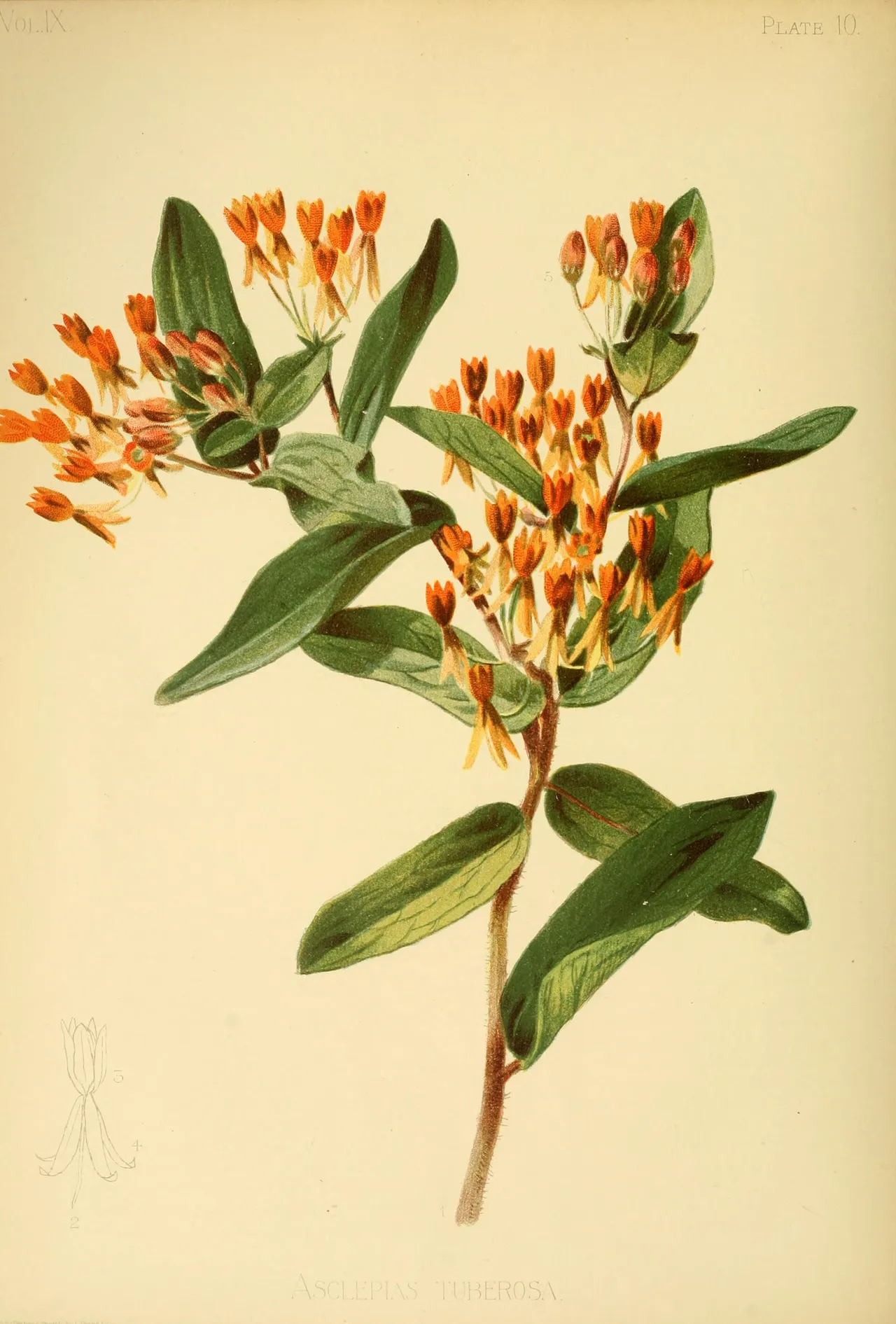 1 of 2
Native to most of the USA and southern Canada
Ontario to Newfoundland; New England south to Florida; west to Texas; north through Colorado to Minnesota.
- Light Full sun Sun tolerance
- Moisture Dry to moist Moisture preference
- Zones 3–9 Cold to heat range
- Bloom May–Aug Flowering time
- Height 1–2 ft 0.3–0.6 m
- Life cycle Perennial Annual to perennial
In the garden
A prairie wildflower for full sun and dry to moist soil. Its orange and yellow flowers peak in June. At 1–2 ft, it suits meadows and sunny borders. It shrugs off drought once established. Hardy in USDA zones 3–9.
Growing conditions
Hardiness zones
When it blooms
The Butterfly milkweed's orange and yellow flowers bloom May to August, peaking in June. This early-summer display draws bees and butterflies.
Butterfly milkweed blooms orange & yellowFoliage
Pollinators & wildlife
- Bees Common Eastern Bumble Bee
also Western Honey Bee, Eastern Carpenter Bee, Brown-belted Bumble Bee +119 more
Two-spotted Bumble Bee, American Bumble Bee, Yellow-faced Bumble Bee, Ligated Furrow Bee, Tricolored Bumble Bee, Bicolored Striped Sweat Bee, Pure Green Sweat bee, Bombus fervidus, Red-belted Bumble Bee, Hunt's Bumble Bee, Two-spotted Longhorn Bee, Perplexing Bumble Bee, European Woolcarder Bee, Black-and-gold Bumble Bee, Half-black Bumble Bee, Orange-legged Furrow Bee, Vancouver Bumble Bee, Agapostemon texanus, Lemon Cuckoo Bumble Bee, Northern Amber Bumble Bee, Brown-winged Striped Sweat Bee, Yellow-banded Bumble Bee, Carpenter-mimic Leafcutter Bee, Flat-tailed Leafcutter Bee, Sculptured Resin Bee, Oblong Woolcarder Bee, Golden Sweat Bee, Rusty-patched Bumble Bee, Modest Masked Bee, Confusing Furrow Bee, Spurred Ceratina, Western Leafcutter Bee, Alfalfa Leafcutter Bee, Urbane Digger Bee, Wilke's Mining Bee, Yellowish Cuckoo Bumble bee, Indiscriminate Cuckoo Bumble Bee, Dark-veined Longhorn Bee, broad-handed leafcutter bee, Southern Plains Bumble Bee, Orange-tipped Wood-digger, Wide-striped Sweat Bee, Dark-winged Sweat Bee, Pugnacious Leafcutter Bee, Texas Leafcutter Bee, Silky Striped Sweat Bee, Nomada vegana, Northeastern Sweat Bee, Arizona Carpenter Bee, Bumblebee-like Digger Bee, Louisiana Painted-Dark bee, Northern Rotund-Resin Bee, Slender-faced Masked Bee, Rugose-chested Sweat Bee, Hoary Leafcutter Bee, Silver-tailed Petalcutter, Colletes simulans, Patchwork Leafcutter Bee, Frigid Leafcutter Bee, Megachile exilis, Say's Cuckoo Leafcutter Bee, Megachile albitarsis, Brown-winged Long-horned Bee, Squash Longhorn-Cuckoo, Megachile apicalis, Perplexing Rotund-Resin bee, Anthophora walshii, Sumac Cellophane-Cuckoo, Small-handed Leaf-cutter Bee, Megachile brevis, Ceratina dupla, Spot-fronted Wool-carder Bee, Augochloropsis humeralis, Colletes nudus, Lasioglossum lusorium, Carinate Armored-Resin bee, Northeastern Pebble Bee, Thistle Longhorn-Cuckoo, Triepeolus cressonii, Broad-faced Masked Bee, Illinois Cuckoo Nomad Bee, Eastern Scaly Miner Bee, Williston's Cellophane Bee, Anthidiellum notatum notatum, Coelioxys obtusiventris, Protandrena cockerelli, Megachile frugalis, Bellflower Resin Bee, Sunflower Burrowing-Resin bee, Melissodes bimaculatus bimaculatus, California Digger-cuckoo Bee, Megachile pugnata pugnata, Nimble Ceratina, Lunate Longhorn-cuckoo Bee, Xylocopa virginica virginica, Melissodes dentiventris, Megachile policaris, Coelioxys octodentata, stunning sweat bee, Abrupt Digger Bee, Lasioglossum coriaceum, cranberry leafcutter bee, Coelioxys modesta, Two-banded Cellophane-cuckoo Bee, Sonoran Bumble Bee, Coelioxys alternata, Cactus Bee, Melissodes tepaneca, Halictus sp., Tetragona dissecta, Augochlora feronia, Xeromelecta californica, Coelioxys brevis, Ceratina sp., Bombus sp., Pseudopanurgus parvus, Augochlorella persimilis, Florida Masked Bee, Anthidiellum robertsoni - Butterflies Monarch
also Eastern Tiger Swallowtail, Gulf Fritillary, Red Admiral +104 more
Black Swallowtail, Pearl Crescent, Common Buckeye, Fiery Skipper, Silver-spotted Skipper, Painted Lady, Pipevine Swallowtail, Gray Hairstreak, American Lady, Orange Sulphur, Eastern Tailed-Blue, Great Spangled Fritillary, Variegated Fritillary, Queen, Spicebush Swallowtail, Question Mark, Viceroy, Clouded Sulphur, Cloudless Sulphur, Eastern Black Swallowtail, Peck's Skipper, American Snout, Western Tiger Swallowtail, Horace's Duskywing, Common Wood-Nymph, Dun Skipper, Red-banded Hairstreak, Phaon Crescent, Variable Checkerspot, Anise Swallowtail, Least Skipper, Wild Indigo Duskywing, American Copper, Tawny-edged Skipper, American Red Admiral, Palamedes Swallowtail, Banded Hairstreak, Southern Dogface, Little Glassywing, Polyommatus icarus, Atlantis Fritillary, Common Sootywing, Aphrodite Fritillary, Fatal Metalmark, Cassius Blue, American Silver-bordered Fritillary, Bronze Copper, Coral Hairstreak, Striped Hairstreak, Midsummer Tiger Swallowtail, White M Hairstreak, Karner Blue, Little Metalmark, Acadian Hairstreak, Hickory Hairstreak, Gray Copper, Northern Metalmark, Prairie Arogos Skipper, Crocale Bordered Patch, Plain Tiger Butterfly, Hermes Satyr, Pioneer White, Callophrys gryneus gryneus, Argynnis cybele cybele, Papilio troilus troilus, Crossline Skipper, Regal Fritillary, Diana Fritillary, Satyrium favonius ontario, Common Jezebel, Common Pierrot, Oak Hairstreak, Common Gull, Common Crow, Tailed Jay, Lycaena hypophlaeas hypophlaeas, Papilio palamedes palamedes, Papilio cresphontes, Abaeis nicippe, Cyaniris neglecta, Danaus plexippus plexippus, Wallengrenia egeremet, Tawny Coster, Protographium marcellus, Eurema hecabe, Euphydryas phaeton, Silvery Checkerspot, Mitoura gryneus, Euptychia cymela, Edwards' Hairstreak, Clossiana toddi ammiralis, Pieris protodice, Dark Buckeye, Anthanassa texana texana, Danaus gilippus strigosa, Battus philenor philenor, Harkenclenus titus, Pyrgus communis, Speyeria cybele, Little Yellow, Atalopedes campestris, Polites mystic, Speyeria aphrodite, Speyeria idalia - Moths Green Cloverworm Moth
also Elegant Grass-veneer, Large Lace-border Moth, Snowberry Clearwing +21 more
Virginia Ctenucha Moth, Lucerne Moth, Double-banded Grass-veneer, Eight-spotted Forester Moth, Delicate Cycnia Moth, Bent-winged Owlet, White-striped Black, Squash Vine Borer, Common Spragueia Moth, Black-and-yellow Lichen Moth, Raspberry Pyrausta Moth, Unexpected Cycnia Moth, Strawberry Crown Moth, Orange-spotted Idia Moth, Lettered Fan-foot, Green Leuconycta Moth, Wavy-lined Fan-foot, Two-banded Petrophila, Milkweed Tussock Moth, Celery Leaftier Moth, Variable Fan-foot - Also visited by
- Flower flies:
Margined Calligrapher, Eastern Calligrapher +20 more
Transverse-banded Flower Fly, Oblique Streaktail, Long-tailed Aphideater, Narrow-headed Marsh Fly, Thick-legged Hover Fly, Eurasian Drone Fly, Black-shouldered Drone Fly, Large-tailed Aphideater, The Merodon equestris Group, Tufted Globetail, Eastern Hornet Fly, Common Lagoon Fly, Banded Thintail, Common Copperback, Yellow-legged Bog Fly, White-faced bee fly, Tropidia quadrata, Bald Bee Fly, Pseudodoros clavatus, Toxomeris marginatus - Beetles:
Asian Lady Beetle, Seven-spotted Lady Beetle +17 more
Goldenrod Soldier Beetle, Margined Leatherwing Beetle, Spotted Pink Lady Beetle, Oriental Beetle, Fourteen-spotted Lady Beetle, Acmaeodera tubulus, Zebra Longhorn Beetle, Goldenrod Leafminer, Yellow-horned Flower Longhorn Beetle, Onthophagus pennsylvanicus, Blackened Milkweed Beetle, Ursine Spurleg, Swamp Milkweed Leaf Beetle, Redbud Seed Weevil, Tetraopes quinquemaculatus, Tumbling Ragdoll, Calligrapha multipunctata - Wasps:
Bald-faced Hornet, Eastern Yellowjacket +9 more
Metric Paper Wasp, Fraternal Potter Wasp, Four-toothed Mason Wasp, Common Aerial Yellowjacket, Perennial Mason Wasp, Parancistrocerus fulvipes, Euodynerus hidalgo boreoorientalis, Polistes exclamans, Forest Yellowjacket - Hummingbirds: Ruby-throated Hummingbird
- Flower flies:
Butterflies that use this plant
Documented host and nectar records. Each links to a planting guide for that butterfly.
- Monarch butterflyhost & nectar
- Queenhost & nectar
- American coppernectar
- American ladynectar
- American snoutnectar
- Aphrodite fritillarynectar
- Banded hairstreaknectar
- Black swallowtailnectar
- Checkered whitenectar
- Clouded sulphurnectar
- Cloudless sulphurnectar
- Common buckeyenectar
- Common wood-nymphnectar
- Coral hairstreaknectar
- Eastern tailed-bluenectar
- Eastern tiger swallowtailnectar
- Edwards' hairstreaknectar
- Fiery skippernectar
- Giant swallowtailnectar
- Gray hairstreaknectar
- Great spangled fritillarynectar
- Gulf fritillarynectar
- Juniper hairstreaknectar
- Little yellownectar
- Orange sulphurnectar
- Painted ladynectar
- Palamedes swallowtailnectar
- Pearl crescentnectar
- Pipevine swallowtailnectar
- Question marknectar
- Red admiralnectar
- Red-banded hairstreaknectar
- Silver-bordered fritillarynectar
- Silver-spotted skippernectar
- Silvery checkerspotnectar
- Sleepy orangenectar
- Spicebush swallowtailnectar
- Summer azurenectar
- Variegated fritillarynectar
- Viceroynectar
- Western tiger swallowtailnectar
- Zebra swallowtailnectar
Full plant details
Where it grows
- Habitat
- PrairieThe wild plant community it grows in.
- Native range
- Most of the USA and southern CanadaUnited States (41): AL, AR, AZ, CO, CT, DC, DE, FL, GA, IA, IL, IN, KS, KY, LA, MA, MD, ME, MI, MN, MO, MS, NC, NE, NH, NJ, NM, NY, OH, OK, PA, RI, SC, SD, TN, TX, UT, VA, VT, WI, WV. Canada (3): NL, ON, QC. Where it grows wild on its own, by state and province.
- Native distribution
- Ontario to Newfoundland; New England south to Florida; west to Texas; north through Colorado to Minnesota.The same native range, usually more exact than the state list, and often noting where it has spread beyond it.
Growing conditions
- Light
- Full sunHow much sun it takes, from full sun to full shade.
- Moisture
- Dry to moistThe soil dampness it prefers, from dry to wet.
- Hardiness zones
- USDA 3–9 · Canadian 4–7The cold-to-heat climate range it survives.
- Soil
- Prefers well-drained sandy soils. Tolerates droughtThe soils it grows in naturally.
- Soil texture
- Light to medium (sandy to loamy)The soil grade it prefers, from sand to clay.
- Soil pH
- 4.8–6.8The acidity to alkalinity it tolerates (7 is neutral).
- Soil quality
- LowHow rich a soil it needs. Many natives prefer lean soil and flop in rich beds.
- Water use
- LowHow thirsty it is, a rough guide to how often to water.
- Drought tolerance
- HighRelative to plants of the same type and region, inferred from where it grows, not a days-without-water figure.
- Salinity tolerance
- NoneHow well it copes with salty soil, near roads or the coast.
- Lime (CaCO₃) tolerance
- MediumHow well it copes with chalky, lime-rich soil.
Growth & form
- Height
- 1–2 ft (0.3–0.6 m)Typical mature height.
- Spread
- ~2 ft (0.5 m)How wide one plant gets, a guide to spacing.
- Life cycle
- PerennialWhether it lives a single season (annual), two (biennial), or returns for years (perennial).
- Growth rate
- SlowA relative ranking versus other plants of the same type (USDA), not an absolute rate.
- Shape
- ErectIts overall silhouette.
- Root depth
- 16+ in (41+ cm)How far the roots reach, a guide to drought resilience and transplanting.
Flowers, foliage & fruit
- Type
- WildflowerWhat kind of plant it is.
- Bloom
- May–AugWhen it flowers.
- Flower color
- Orange, YellowThe bloom color, or colors.
- Fruit/Seeds
- Follicle (seed pod); ripens Jul–OctThe seed or fruit it sets after flowering.
- Toxicity
- Poisonous if eatenWhether any part is poisonous to people or pets.
Propagation & seed
- Cold stratification
- Not requiredWhether seed needs a cold, moist spell before it will germinate.
- Propagation
- Container, seedHow to start new plants.
- Seed
- ~0.1 million seeds per poundNotes on the seed and how to sow it.
- Seed spread rate
- SlowHow readily it self-sows. Slow or none means well-behaved, not a spreader.
- Seedling vigor
- LowHow strongly young seedlings establish.
- Vegetative spread
- NoneWhether it creeps outward or stays put in a clump.