woodland wildflower
Flat-topped goldenrod
Euthamia graminifolia
Also known as Flat-top Goldentop, Grass-leaved Goldenrod
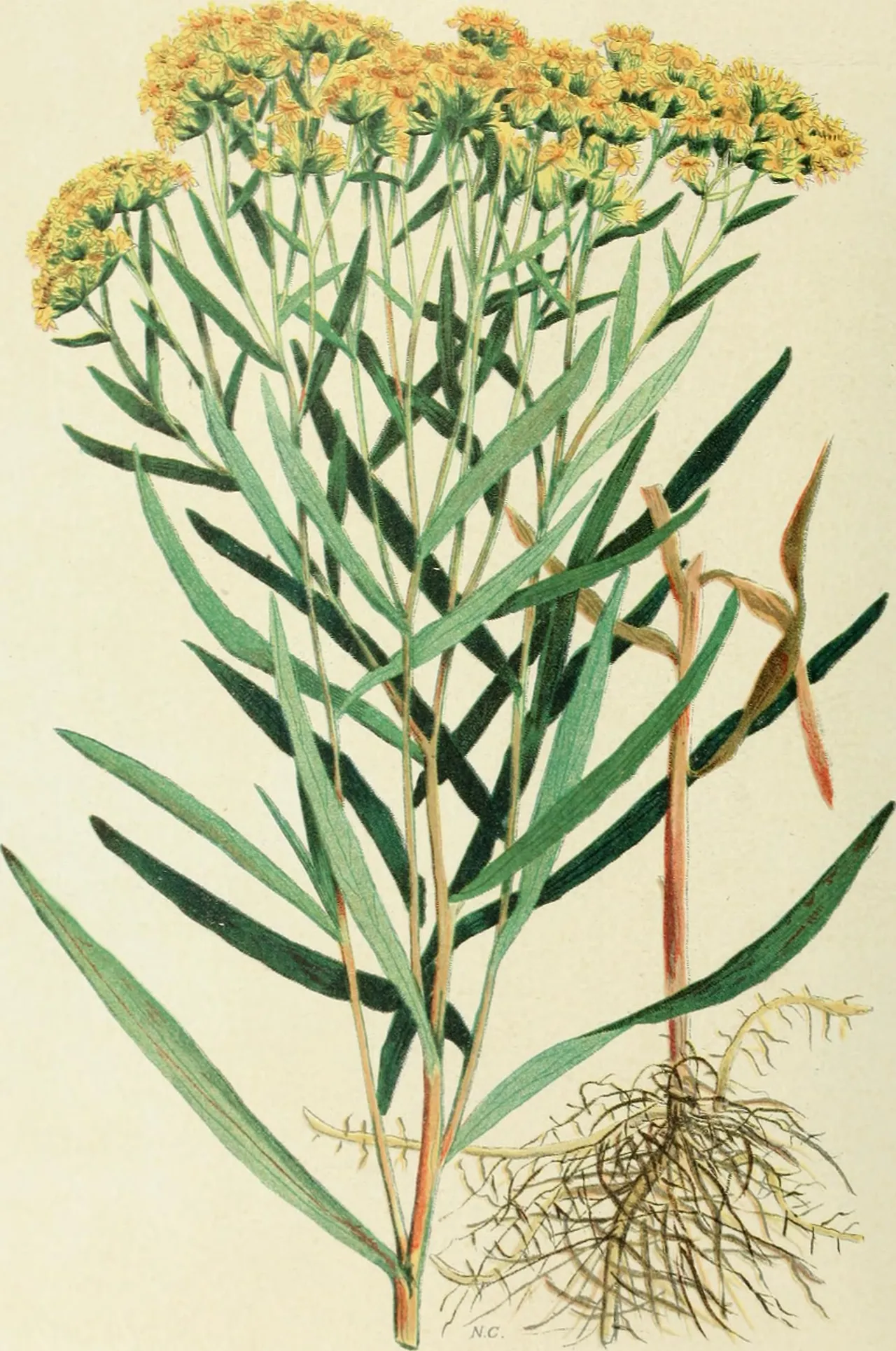 1 of 2
Native to much of the USA and Canada
Quebec to Maryland, west to North Dakota, Kansas and rarely to Oklahoma
- Light Full sun Sun tolerance
- Moisture Moist Moisture preference
- Zones 2–8 Cold to heat range
- Bloom Jul–Sep Flowering time
- Height up to 5 ft to 1.5 m
- Life cycle Perennial Annual to perennial
In the garden
A woodland wildflower for full sun and evenly moist soil. Its yellow flowers peak in August. At up to 5 ft, it needs room in shade gardens and woodland edges. Hardy in USDA zones 2–8.
Growing conditions
Light
Full sun Partial shade Full shade
Moisture
Dry Moist Wet
Hardiness zones
Find your zone:
When it blooms
The Flat-topped goldenrod's yellow flowers bloom July to September, peaking in August. This late-summer display draws bees and butterflies.
Flat-topped goldenrod blooms yellowFoliage
Pollinators & wildlife
- Bees Common Eastern Bumble Bee
also Western Honey Bee, Eastern Carpenter Bee, Brown-belted Bumble Bee +189 more
American Bumble Bee, Ligated Furrow Bee, Tricolored Bumble Bee, Bicolored Striped Sweat Bee, Pure Green Sweat bee, Red-belted Bumble Bee, Hunt's Bumble Bee, Perplexing Bumble Bee, Half-black Bumble Bee, Orange-legged Furrow Bee, Southern Carpenter Bee, Lemon Cuckoo Bumble Bee, Northern Amber Bumble Bee, Brown-winged Striped Sweat Bee, Yellow-banded Bumble Bee, Carpenter-mimic Leafcutter Bee, Flat-tailed Leafcutter Bee, Sculptured Resin Bee, Oblong Woolcarder Bee, Rusty-patched Bumble Bee, Modest Masked Bee, Confusing Furrow Bee, Spurred Ceratina, Indiscriminate Cuckoo Bumble Bee, broad-handed leafcutter bee, Dark-winged Sweat Bee, Pugnacious Leafcutter Bee, Hairy-banded Mining Bee, Silky Striped Sweat Bee, Cryptic Bumble Bee, Northeastern Sweat Bee, Cloudy-winged Mining Bee, Louisiana Painted-Dark bee, Bristle Sweat Bee, Slender-faced Masked Bee, Eastern Miner Bee, Aster Mining Bee, Colletes simulans, Bolster's Bumble Bee, Red-footed Cuckoo Leafcutter, Say's Cuckoo Leafcutter Bee, Megachile albitarsis, Squash Longhorn-Cuckoo, Punctate Masked Bee, Notch-backed Cellophane-cuckoo Bee, Perplexing Rotund-Resin bee, Davis's Cuckoo Sweat Bee, Eastern Spine-shouldered Cellophane Bee, Goldenrod Longhorn-Cuckoo Bee, Annulate Masked Bee, Black-and-green Metallic-Sweat bee, Hairy masked Bee, Andrena braccata, Lasioglossum nitidiusculum, Golden-tailed Woodborer, Osmia conjuncta, Little Masked Bee, Common Masked Bee, Large-headed Armoured-Resin bee, Nomada bifasciata, Black-tailed Long-horned Bee, Robust Small-Mason, Black Masked Bee, Large Masked Bee, Spined Mason Bee, Golden Furrow Bee, Placid Nomad Bee, Tifton Nomad Bee, Coelioxys coturnix, Valiant Long-horned Bee, Nimble Ceratina, Lunate Longhorn-cuckoo Bee, Xylocopa virginica virginica, Colletes compactus compactus, Melissodes dentiventris, Pseudopanurgus andrenoides, Coelioxys modesta, Drury's Long-horned Bee, Coelioxys octodentata, Carolina Cellophane-cuckoo Bee, Hylaeus cardioscapus, Linsenmaier's Nomad, Lasioglossum sabulosum, Lasioglossum pleurospeculum, Lasioglossum podolicum, Lasioglossum subfulvicorne, Lasioglossum laevidorsum, Hylaeus glacialis, Hylaeus pfankuchi, Snowy Masked Bee, Lasioglossum tarsatum, Hylaeus moricei, Nomada pleurosticta, Andrena amieti, Lasioglossum euboeense, Lasioglossum lissonotum, Lasioglossum alpigenum, Halictus carinthiacus, Hylaeus pilosulus, Heriades crenulatus, Translucent Miner, Lasioglossum laeve, Hylaeus bifasciatus, Femoral Nomad, Two-banded Cellophane-cuckoo Bee, Grey-banded Mining Bee, Buff-tailed Mining Bee, Lasioglossum aeratum, Lasioglossum subfasciatum, Colletes mlokossewiczi, Hylaeus duckei, Hylaeus euryscapus, Small-headed Resin Bee, Hylaeus crassanus, Hylaeus alpinus, Eucera nigrifacies, Megachile genalis, Nomada facilis, Hylaeus gibbus, Osmia labialis, Megachile flabellipes, White-lipped Yellow-face Bee, Panurgus dentipes, Lasioglossum bluethgeni, Hylaeus sinuatus, Small Shiny Furrow Bee, Lasioglossum marginellum, Halictus leucaheneus, Chalk Yellow-face Bee, Lasioglossum majus, Hylaeus tyrolensis, Dotted Masked Bee, Osmia scutellaris, Narrowed Masked Bee, Forest Masked Bee, Shiny Dufourea, Polished Miner, Orange-vented Mason Bee, Broad-banded Nomad Bee, Nomada integra, Osmia mustelina, Hylaeus styriacus, Hairy-saddled Cellophane Bee, Reed Yellow-face Bee, Hylaeus difformis, Hylaeus paulus, Andrena livens, White-lipped Blood Bee, Hesperian Miner, Osmia rufohirta, Andrena nigroolivacea, Megachile melanopyga, Large Shaggy Bee, Small Shaggy Bee, Halictus seladonius, White-jawed Yellow-face Bee, Nomada distinguenda, Lasioglossum albocinctum, Andrena taraxaci, Andrena rhenana, Hylaeus kahri, Hylaeus imparilis, Hylaeus taeniolatus, Horned Masked Bee, Lasioglossum interruptum, Pseudapis diversipes, Snowy Mason, Lasioglossum minutulum, Ridge-gastered Furrow Bee, Lasioglossum lucidulum, Squat Furrow Bee, Lasioglossum subhirtum, Common Pantaloon Bee, Davies' Cellophane Bee, Gredler's Masked Bee, Fringed Furrow Bee, Lasioglossum discum, Onion Yellow-face Bee, Variegated Masked Bee, Lasioglossum lineare, Lasioglossum marginatum, Lasioglossum nigripes, Great Banded Furrow Bee, Short-horned Yellow-face Bee, Foveolate Sweat Bee, Yellow-spotted Cuckoo Nomad Bee, Macropis steironematis, Bare-saddled Cellophane Bee, Vertical Masked Bee - Butterflies Monarch
also Eastern Tiger Swallowtail, Red Admiral, Black Swallowtail +64 more
Red-spotted Admiral, Pearl Crescent, Common Buckeye, Fiery Skipper, Silver-spotted Skipper, Painted Lady, Gray Hairstreak, Mourning Cloak, American Lady, Orange Sulphur, Eastern Tailed-Blue, Great Spangled Fritillary, Variegated Fritillary, Queen, Common Checkered-Skipper and Allies, Viceroy, Zabulon Skipper, Clouded Sulphur, Eastern Black Swallowtail, Peck's Skipper, American Snout, Eastern Comma, Common Ringlet, Common Wood-Nymph, Dun Skipper, Red-banded Hairstreak, Least Skipper, Lorquin's Admiral, Wild Indigo Duskywing, American Copper, Green Comma, Tawny-edged Skipper, Palamedes Swallowtail, Banded Hairstreak, Milbert's Tortoiseshell, Great Purple Hairstreak, Purplish Copper, Atlantis Fritillary, Aphrodite Fritillary, American Branded Skipper, American Silver-bordered Fritillary, Bronze Copper, White M Hairstreak, Pink-edged Sulphur, Common Branded Skipper, Map, Scarce Copper, Small Heath, Limenitis archippus archippus, Junonia coenia coenia, Panoquina ocola, Papilio cresphontes, Cyaniris neglecta, Leonard's Skipper, Mitoura gryneus, Clossiana toddi ammiralis, Limenitis arthemis arthemis, Limenitis astyanax, Wallengrenia otho, White Peacock, Holly Blue, Little Yellow, Strymon sylvinus, Asterocampa clyton - Moths Fall Webworm Moth
also Green Cloverworm Moth, Large Yellow Underwing, Yellow-collared Scape Moth +44 more
Large Maple Spanworm Moth, Lucerne Moth, Lesser Maple Spanworm Moth, Grape Leaffolder and Leafroller Moths, Bristly Cutworm Moth, Corn Earworm Moth, Confused Eusarca Moth, Ipsilon Dart Moth, Garden Webworm Moth, Baltimore Snout, Delicate Cycnia Moth, Master's Dart, Dingy Cutworm Moth, Spotted Grass Moth, Spotted Beet Webworm Moth, Red-headed Inchworm Moth, Carrot Seed Moth, Celery Looper Moth, Arcigera Flower Moth, Pondside Crambid Moth, Subgothic and Tricose Darts, Common Spragueia Moth, Black-and-yellow Lichen Moth, Orange Mint Moth, Signate Quaker, Rubbed Dart and Allies, Verbena Moth, Chain-dotted Geometer, Goldenrod Flower Moth, Dogwood Borer Moth, Gray Hooded Owlet, Boneset Borer Moth, Synanthedon sigmoidea, Mint Root Borer Moth, Rheumaptera undulata, Clymene Moth, Scalloped Sallow, Wedgling Moth, Trichordestra legitima, Common Looper Moth, Bronzed Cutworm Moth, Hawaiian Beet Webworm Moth, Celery Leaftier Moth, Blackberry Looper Moth - Also visited by
- Wasps:
Bald-faced Hornet, Eastern Yellowjacket +33 more
Metric Paper Wasp, European Hornet, Fraternal Potter Wasp, Four-toothed Mason Wasp, Common Aerial Yellowjacket, Euodynerus foraminatus, Bramble Mason Wasp, Southern Paper Wasp, Ancistrocerus capra, Perennial Mason Wasp, Blackjacket, Ancistrocerus catskill, Pseudodynerus quadrisectus, European tube wasp, Euodynerus megaera, Parasitic Aerial Yellowjacket, Euodynerus hidalgo boreoorientalis, Cross Potter Wasp, Canadian potter wasp, Parancistrocerus leionotus, Parancistrocerus pedestris, One-banded Mason Wasp, Northern Aerial Yellowjacket, American Yellowjacket, Hidalgo Mason Wasp, Ancistrocerus campestris, Zethus spinipes, Vespula vidua, Eumenes coronatus, Yellow-legged Hornet, German Yellowjacket, White-banded Potter Wasp, Forest Yellowjacket - Flower flies:
Margined Calligrapher, Eastern Calligrapher +39 more
Common Drone Fly, Transverse-banded Flower Fly, Long-tailed Aphideater, Narrow-headed Marsh Fly, Thick-legged Hover Fly, Eurasian Drone Fly, Black-shouldered Drone Fly, Virginia Giant Hover Fly, Variable Duskyface Fly, Common Grass Skimmer, Tufted Globetail, Eastern Hornet Fly, Oblique-banded Pond Fly, Common Lagoon Fly, Orange-legged Drone Fly, Yellow-legged Flower Fly, Bald-faced Hornet Fly, Black-horned Smoothtail, Exoprosopa fasciata, Four-lined Hornet Fly, Hairy-eyed Flower Fly, Adorned Bee Fly, Poecilanthrax tegminipennis, Dimorphic Sickleleg, Yellow-margined Marsh Fly, Systropus macer, Yellow-legged Bog Fly, Black-haired Psyllid-killer, Trivittate Marsh Fly, Aster Bee Fly, Orange-spotted Drone Fly, Palpada agrorum, Tropical Plushback, Stripe-backed Brusheye, Tapered Drone Fly, Short-haired Wrinklehead, Eastern Orange-tailed Leafwalker, Sericomyia militaris, Black-legged Gossamer - Beetles:
Seven-spotted Lady Beetle, Spotted Cucumber Beetle +15 more
Goldenrod Soldier Beetle, Margined Leatherwing Beetle, Spotted Pink Lady Beetle, Locust Borer, Fourteen-spotted Lady Beetle, Banded Longhorn Beetle, Striped Cucumber Beetle, Acmaeodera tubulus, Yellow-horned Flower Longhorn Beetle, Six-spotted Flower Longhorn Beetle, Notated Lady Beetle, Bidentate Leaf Beetle, Propylaea quatuordecimpunctata, Raspberry Cane Borer, Disonycha glabrata
- Wasps:
Butterflies that use this plant
Documented host and nectar records. Each links to a planting guide for that butterfly.
- American coppernectar
- American ladynectar
- American snoutnectar
- Aphrodite fritillarynectar
- Banded hairstreaknectar
- Black swallowtailnectar
- Clouded sulphurnectar
- Common buckeyenectar
- Common ringletnectar
- Common wood-nymphnectar
- Eastern commanectar
- Eastern tailed-bluenectar
- Eastern tiger swallowtailnectar
- Fiery skippernectar
- Giant swallowtailnectar
- Gray hairstreaknectar
- Great spangled fritillarynectar
- Juniper hairstreaknectar
- Little yellownectar
- Milbert's tortoiseshellnectar
- Monarch butterflynectar
- Mourning cloaknectar
- Orange sulphurnectar
- Painted ladynectar
- Palamedes swallowtailnectar
- Pearl crescentnectar
- Queennectar
- Red admiralnectar
- Red-banded hairstreaknectar
- Red-spotted purplenectar
- Silver-bordered fritillarynectar
- Silver-spotted skippernectar
- Summer azurenectar
- Variegated fritillarynectar
- Viceroynectar
Full plant details
Where it grows
- Habitat
- WoodlandThe wild plant community it grows in.
- Native range
- Much of the USA and CanadaUnited States (32): AL, CT, DC, DE, IA, IL, IN, KY, LA, MA, MD, ME, MI, MN, MO, MS, NC, ND, NH, NJ, NY, OH, OK, PA, RI, SC, SD, TN, VA, VT, WI, WV. Canada (8): MB, NB, NL, NS, ON, PE, QC, SK. Where it grows wild on its own, by state and province.
- Native distribution
- Quebec to Maryland, west to North Dakota, Kansas and rarely to OklahomaThe same native range, usually more exact than the state list, and often noting where it has spread beyond it.
Growing conditions
- Light
- Full sunHow much sun it takes, from full sun to full shade.
- Moisture
- MoistThe soil dampness it prefers, from dry to wet.
- Hardiness zones
- USDA 2–8 · Canadian 1–7The cold-to-heat climate range it survives.
- Soil
- Moist, average soilsThe soils it grows in naturally.
- Soil texture
- Light to heavy (sandy to clay)The soil grade it prefers, from sand to clay.
- Soil pH
- Mildly acid to mildly alkalineThe acidity to alkalinity it tolerates (7 is neutral).
Growth & form
- Height
- up to 5 ft (to 1.5 m)Typical mature height.
- Life cycle
- PerennialWhether it lives a single season (annual), two (biennial), or returns for years (perennial).
Flowers, foliage & fruit
- Type
- WildflowerWhat kind of plant it is.
- Bloom
- Jul–SepWhen it flowers.
- Flower color
- YellowThe bloom color, or colors.
- Fruit/Seeds
- ripens Aug–NovThe seed or fruit it sets after flowering.
- Toxicity
- None knownWhether any part is poisonous to people or pets.