woodland wildflower
Spreading dogbane
Apocynum androsaemifolium
Also known as Bitterroot, Flytrap Dogbane
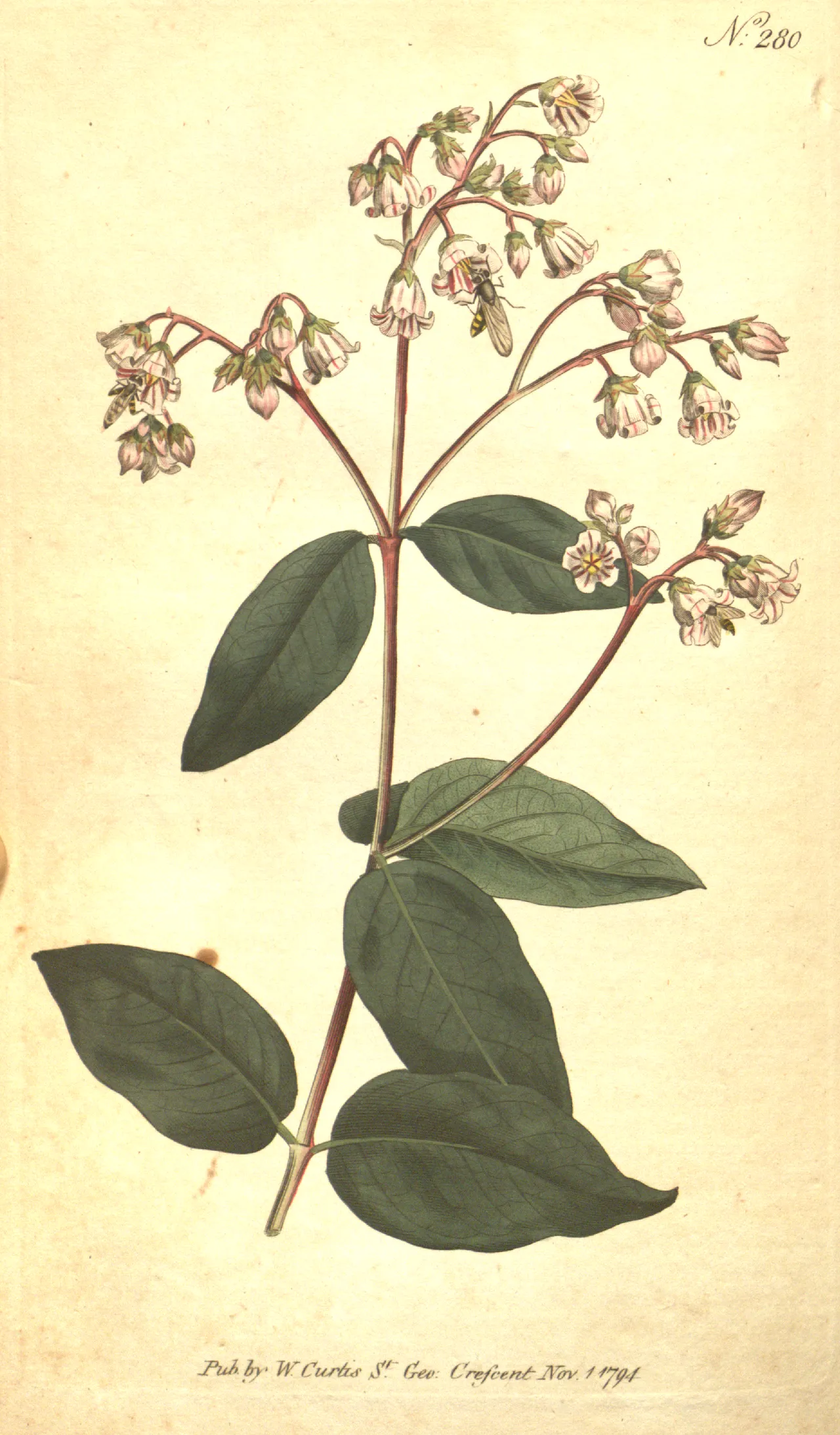 1 of 2
Native to most of the USA and Canada
Newfoundland to British Columbia, south to Georgia mountains and Arizona
- Light Full sun to shade Sun tolerance
- Moisture Dry Moisture preference
- Zones 2–9 Cold to heat range
- Bloom Jun–Aug Flowering time
- Height up to 3 ft to 0.9 m
- Life cycle Perennial Annual to perennial
In the garden
A woodland wildflower for sun through shade and lean, dry soil. Its pink flowers peak in July. At up to 3 ft, it suits shade gardens and woodland edges. It shrugs off drought once established. Hardy in USDA zones 2–9.
Growing conditions
Light
Full sun Partial shade Full shade
Moisture
Dry Moist Wet
Hardiness zones
Find your zone:
When it blooms
The Spreading dogbane's pink flowers bloom June to August, peaking in July. This midsummer display draws butterflies and bees.
Spreading dogbane blooms pinkFoliage
Pollinators & wildlife
- Butterflies Monarch
also Eastern Tiger Swallowtail, Red Admiral, Red-spotted Admiral +149 more
Pearl Crescent, Common Buckeye, Silver-spotted Skipper, Painted Lady, Gray Hairstreak, Mourning Cloak, American Lady, Orange Sulphur, Eastern Tailed-Blue, Great Spangled Fritillary, Variegated Fritillary, Spicebush Swallowtail, Viceroy, Clouded Sulphur, Eastern Black Swallowtail, Peck's Skipper, Eastern Comma, Checkered White, Western Tiger Swallowtail, Horace's Duskywing, Common Ringlet, Common Wood-Nymph, Dun Skipper, Canadian Tiger Swallowtail, Woodland Skipper, Silvery Blue, Anise Swallowtail, Least Skipper, Lorquin's Admiral, Marine Blue, California Tortoiseshell, Hobomok Skipper, Echo Azure, Acmon Blue, Pale Swallowtail, Northern Cloudywing, West Coast Lady, Boisduval's Blue, Green Comma, Tawny-edged Skipper, American Red Admiral, Banded Hairstreak, Milbert's Tortoiseshell, Little Glassywing, Purplish Copper, Northern Checkerspot, Atlantis Fritillary, Long Dash, Aphrodite Fritillary, Melissa Blue, Hydaspe Fritillary, Broad-winged Skipper, Weidemeyer's Admiral, Dreamy Duskywing, Propertius Duskywing, Northwestern Fritillary, American Branded Skipper, American Silver-bordered Fritillary, Bronze Copper, Clodius Parnassian, Zerene Fritillary, Coral Hairstreak, Anna's Blue, Persius Duskywing, Pacific Fritillary, Coronis Fritillary, Lotus Hairstreak, Striped Hairstreak, Midsummer Tiger Swallowtail, Gorgone Checkerspot, Pink-edged Sulphur, Behr's Hairstreak, Karner Blue, California Hairstreak, Dion Skipper, Acadian Hairstreak, Tailed Copper, Mulberry Wing, Zephyr Comma, Rocky Mountain Duskywing, Leda Ministreak, Garita Skipperling, Sonoran Skipper, Arogos Skipper, Indra Swallowtail, Nelson's Hairstreak, Camillus Crescent, Semiramis Fritillary, Argynnis callippe macaria, Edwards's Skipperling, Argynnis coronis simaetha, Glorious Silverspot, Texas Oak Hairstreak, Western White Admiral, Indian Skipper, Limenitis archippus archippus, Two-spotted Skipper, Occidryas colon, Pacuvius Duskywing, Clossiana toddi ammiralis, Mastor vialis, Speyeria cybele, Euphydryas phaeton, Juvenal's Duskywing, Atrytone delaware, Strymon saepium, Anicia Checkerspot, Wallengrenia egeremet, Limenitis arthemis arthemis, Lethe eurydice, Strymon sylvinus, Papilio cresphontes, Black Dash, Protographium marcellus, Edwards' Hairstreak, Limenitis astyanax, Occidryas anicia capella, Mastor oslari, Speyeria atlantis hesperis, Speyeria atlantis sorocko, Charon Satyr, Parnassius smintheus smintheus, Nais Metalmark, Siva Juniper Hairstreak, Russet Skipperling, Western Tailed-Blue, Cercyonis oetus, Harkenclenus titus, Polites origenes, Polites mystic, Ochlodes snowi, Dotted Checkerspot, Epidemia helloides, Phaeostrymon alcestis, Lycaena heteronea, Poanes taxiles, Speyeria aphrodite, Speyeria coronis, Speyeria callippe, Mastor aenus, Speyeria edwardsii, Colias alexandra, Silvery Checkerspot, Cynthia cardui, Thorybes pylades, Lilac-bordered Copper, Blue Copper, Gabb's Checkerspot, Eresia aveyrona mylitta - Bees Common Eastern Bumble Bee
also Western Honey Bee, Brown-belted Bumble Bee, Yellow-faced Bumble Bee +64 more
Ligated Furrow Bee, Tricolored Bumble Bee, Pure Green Sweat bee, Bombus fervidus, Red-belted Bumble Bee, Hunt's Bumble Bee, Fuzzy-Horned Bumble Bee, Two-form Bumble Bee, Half-black Bumble Bee, Yellow-fronted Bumble Bee, Vancouver Bumble Bee, Agapostemon texanus, Lemon Cuckoo Bumble Bee, Northern Amber Bumble Bee, Nevada Bumble Bee, Yellow-banded Bumble Bee, Sculptured Resin Bee, Golden Sweat Bee, Great Basin Bumble Bee, Modest Masked Bee, Confusing Furrow Bee, Nearctic Bumble Bee, Urbane Digger Bee, Wilke's Mining Bee, Yellowish Cuckoo Bumble bee, Indiscriminate Cuckoo Bumble Bee, broad-handed leafcutter bee, Crotch's Bumble Bee, Orange-tipped Wood-digger, Pugnacious Leafcutter Bee, White-shouldered Bumble Bee, Western Bumble Bee, Cryptic Bumble Bee, Black-and-gray Leafcutter Bee, Bumblebee-like Digger Bee, Frigid Leafcutter Bee, Articulated Nomad, White-fronted Small-Mason, Small-handed Leaf-cutter Bee, Dark-footed Yellow Loosestrife Bee, Annulate Masked Bee, Snowy Mining Bee, Experienced Sweat Bee, Compressed Dark Bee, Cresson's Nomad Bee, Heriades cressoni, Silver-fronted Small-Mason, white-winged sweat bee, White-sided Mason Bee, Osmia pusilla, Fringed Loosestrife Oil Bee, Short-palped Miner, Two-banded Cellophane-cuckoo Bee, Vertical Masked Bee, Simple Miner Bee, Pseudopanurgus parvus, Stelis sp.B, Lasioglossum sp.F7, Lasioglossum sp.F5, Executioner Cuckoo Carder Bee, Stelis monticola, Zephyr Sweat Bee, Augochlorella persimilis, Bombus flavidus flavidus - Moths White-lined Sphinx
also Snowberry Clearwing, Virginia Ctenucha Moth, Hummingbird Clearwing +21 more
Ipsilon Dart Moth, Delicate Cycnia Moth, Nessus Sphinx, Bedstraw Hawkmoth, Squash Vine Borer, Dogbane Saucrobotys Moth, Rocky Mountain Clearwing, Fireweed Clearwing Moth, Wild Forget-me-not Moth, Strawberry Crown Moth, Slender Clearwing, Western Willow Clearwing Moth, White-ribboned Carpet Moth, Diachrysia aereoides, Toothed Somberwing, Euclidia ardita, Lycaena hyllus, Lycaena dione, Lycaena rubidus, Ctenucha rubroscapa, Milkweed Tussock Moth - Also visited by
- Beetles:
Seven-spotted Lady Beetle, Dogbane Leaf Beetle +9 more
Banded Longhorn Beetle, Acmaeodera tubulus, Strangalepta Flower Longhorn Beetle, Bee-mimic Beetle, Slender Flower Longhorn Beetle, Chestnut Longhorn Beetle, chestnut bark borer, Metacmaeops vittata, Chrysochus cobaltinus - Flower flies:
Margined Calligrapher, Transverse-banded Flower Fly +4 more
Black-shouldered Drone Fly, Orange-legged Drone Fly, Sphaerophoria cylindricus, Eastern Orange-tailed Leafwalker - Wasps:
Bald-faced Hornet, Common Aerial Yellowjacket +1 more
Vespula vidua
- Beetles:
Butterflies that use this plant
Documented host and nectar records. Each links to a planting guide for that butterfly.
- Acmon bluenectar
- American ladynectar
- Aphrodite fritillarynectar
- Banded hairstreaknectar
- Black swallowtailnectar
- Boisduval's bluenectar
- Canadian tiger swallowtailnectar
- Checkered whitenectar
- Clouded sulphurnectar
- Common buckeyenectar
- Common ringletnectar
- Common wood-nymphnectar
- Coral hairstreaknectar
- Eastern commanectar
- Eastern tailed-bluenectar
- Eastern tiger swallowtailnectar
- Edwards' hairstreaknectar
- Giant swallowtailnectar
- Gorgone checkerspotnectar
- Gray hairstreaknectar
- Great spangled fritillarynectar
- Hedgerow hairstreaknectar
- Juniper hairstreaknectar
- Marine bluenectar
- Melissa bluenectar
- Milbert's tortoiseshellnectar
- Monarch butterflynectar
- Mourning cloaknectar
- Orange sulphurnectar
- Painted ladynectar
- Pale swallowtailnectar
- Pearl crescentnectar
- Red admiralnectar
- Red-spotted purplenectar
- Silver-bordered fritillarynectar
- Silver-spotted skippernectar
- Silvery bluenectar
- Silvery checkerspotnectar
- Spicebush swallowtailnectar
- Variegated fritillarynectar
- Viceroynectar
- Western tiger swallowtailnectar
- Zebra swallowtailnectar
Full plant details
Where it grows
- Habitat
- WoodlandThe wild plant community it grows in.
- Native range
- Most of the USA and CanadaUnited States (45): AK, AL, AR, AZ, CA, CO, CT, DC, DE, GA, IA, ID, IL, IN, KY, MA, MD, ME, MI, MN, MO, MT, NC, ND, NE, NH, NJ, NM, NV, NY, OH, OK, OR, PA, RI, SD, TN, TX, UT, VA, VT, WA, WI, WV, WY. Canada (12): AB, BC, MB, NB, NL, NS, NT, ON, PE, QC, SK, YT. Where it grows wild on its own, by state and province.
- Native distribution
- Newfoundland to British Columbia, south to Georgia mountains and ArizonaThe same native range, usually more exact than the state list, and often noting where it has spread beyond it.
Growing conditions
- Light
- Full sun to shadeHow much sun it takes, from full sun to full shade.
- Moisture
- DryThe soil dampness it prefers, from dry to wet.
- Hardiness zones
- USDA 2–9 · Canadian 1–9The cold-to-heat climate range it survives.
- Soil
- Sandy or gravelly soilsThe soils it grows in naturally.
- Soil texture
- Light to heavy (sandy to clay)The soil grade it prefers, from sand to clay.
- Soil pH
- Mildly acid to mildly alkalineThe acidity to alkalinity it tolerates (7 is neutral).
- Water use
- MediumHow thirsty it is, a rough guide to how often to water.
- Drought tolerance
- HighRelative to plants of the same type and region, inferred from where it grows, not a days-without-water figure.
Growth & form
- Height
- up to 3 ft (to 0.9 m)Typical mature height.
- Spread
- ~3 ft (1 m)How wide one plant gets, a guide to spacing.
- Life cycle
- PerennialWhether it lives a single season (annual), two (biennial), or returns for years (perennial).
Flowers, foliage & fruit
- Type
- WildflowerWhat kind of plant it is.
- Bloom
- Jun–AugWhen it flowers.
- Flower color
- PinkThe bloom color, or colors.
- Fruit/Seeds
- ripens Jul–SepThe seed or fruit it sets after flowering.
- Toxicity
- Poisonous if eatenWhether any part is poisonous to people or pets.